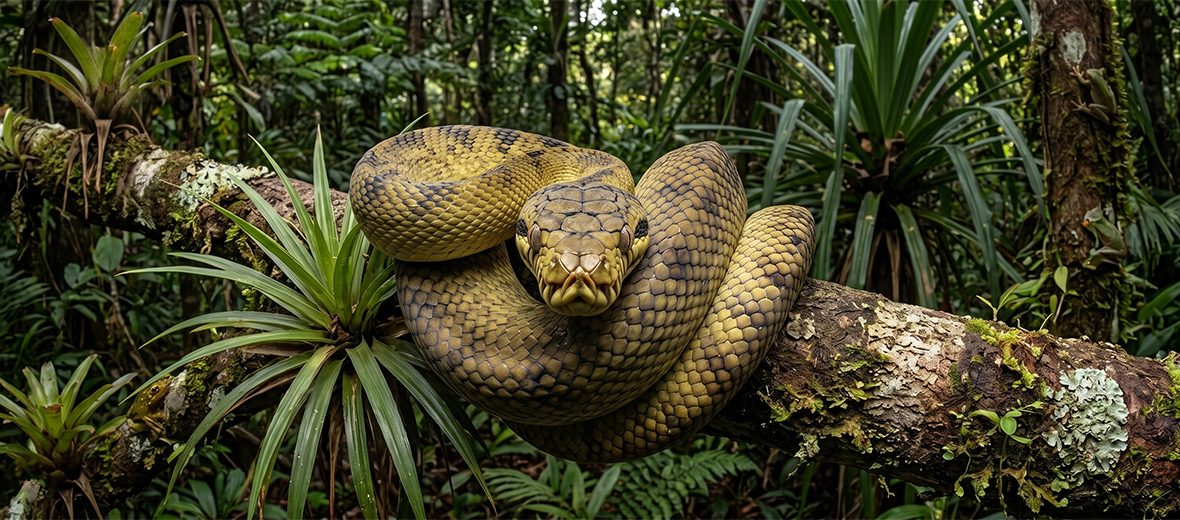
The amethystine python, aka scrub python or sanca permata, is considered to be 1 of the largest snakes in the world after the green anaconda, reticulated python, Burmese python, and African rock python. They are the largest species of python in Australia. These snakes face the threat of being killed by individuals that raise chickens. Other than that, they are occasionally collected for the exotic pet trade. But these 2 adversities have little impact, overall, on their numbers. These snakes are abundant enough to be listed as Least Concern by the IUCN. Their population trend is listed as stable as well.
First the Stats…
Scientific name: Simalia amethistina
Weight: Up to 66 lbs.
Length: Up to 18 feet
Lifespan: Up to 40 years
Now on to the Facts!
1.) These snakes were first described by the German taxonomist Johann Gottlob Schneider in 1801.
2.) They prefer warm, humid habitats close to water sources.
3.) Bats, birds, rats, possums, and mice are all on the menu.
4.) Larger specimens prey on wallabies and cuscus.
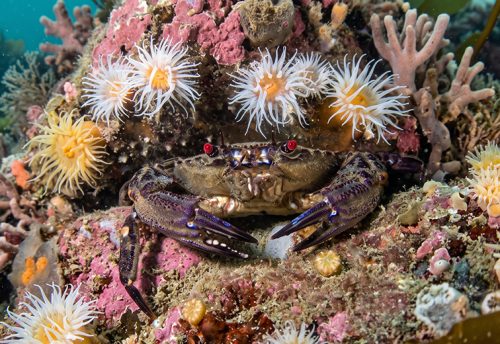
5.) Those individuals located on Milman Island, are thought to prey on crabs, green sea turtle hatchlings, hawksbill sea turtle hatchlings, wading birds, and terns.
But wait, there’s more on the amethystine python!
6.) Females lay up to 21 large eggs that hatch in up to 3 months.
7.) Crocodiles, birds of prey, larger snake specimens, monitor lizards, dogs, cats, and wild pigs all prey on these snakes.
Did you know…?
The maximum recorded exuded pressure these snakes can deliver while squeezing is up to 16 PSI (pounds per square inch). In comparison, it only take 6+ PSI to tap a human out.
8.) Seeing as these snakes are constrictors, they rely on squeezing their prey to death rather than on envenomation.
9.) The circumference of an adult snake can be up to 10 inches.
10.) These snakes have over 100 razor-sharp, backward-curving teeth.
Now a Short Amethystine Python Video!
Be sure to share & comment below! Also, check out the Critter Science YouTube channel. Videos added regularly. Be sure to like and subscribe!

Want to suggest a critter for me to write about? Let me know here.
Some source material acquired from: Wikipedia & IUCN