Critter Science
  • Ecology
    • Animal Conservation
      • Apex Awakening
      • CITES: Protecting Wildlife
      • Dame Jane Goodall
      • Endangered Animals
      • Ex Situ Explained
      • In Situ Explained
      • IUCN Statuses
      • Steve Irwin
      • Zoological Branches
    • Animal Immortality and Regeneration
    • Chromatophores and Survival
    • Ecosystems
      • Animal Habitats
      • The Biomes
      • Coastal Erosion
      • Desert Biomes
      • Deserts and Wildlife
      • Earth’s Living Canopies
      • Ocean Habitats: Layers and Life
      • Rainforest Types
    • Evolution. The Facts.
      • Animal Devolution
      • Animal Mimicry
      • Convergent Evolution
      • Carl Linnaeus
      • Charles Darwin
      • Evolution of Amphibians
      • Evolution of Birds
      • Genetic Drift in the Animal Kingdom
      • Naturalism
      • Natural Selection
    • Genetic Pollution
      • Genetic Bottlenecks in Animal Populations
    • Invertebrate Families Explored
      • Arthropod Diversity and Adaptations
      • Cephalopod Consciousness
      • Insect vs Bug
      • The Wonder and Warfare of Coral Reefs
      • What are Arachnids?
        • Spider Webs
    • Predator vs Prey
    • Producers and Consumers
    • Venom vs Poison
    • Vertebrate Families Explored
      • Amphibians: Unseen Guardians
      • Bone and Cartilage
      • Snakes vs Legless Lizards
      • The Triumph of the Ratites
      • What is a Marsupial?
    • The Wild Apothecary
  • Zoology
    • Sustainability
      • Climate Change
      • Earth Day: Past, Present, Future
      • Global Warming
      • Pollution
        • Air Pollution
        • Chemical Pollution
        • Land Pollution
        • Light Pollution
        • Microplastics Pollution
        • Noise Pollution
        • Water Pollution
      • Recycling
        • Recycling Plastics
      • Renewable Energy
    • Animal Behavioral Patterns
      • Aposematic Coloration
      • Avian Communication
      • Animal Thermoregulation
      • Beyond DNA: The Animal Accent
      • Cetacean Communication
      • Cold-Adapted Hypermetabolism
      • Elephant Communication
      • Herpetofauna Communication
      • Primate Language: The Debate
      • The Framework of Ethology
      • The Hidden Sensory Realm
      • Types of Animal Dormancy
    • What are Species?
      • Animal Reproduction
      • Introduced Species
      • Invasive Species
      • John Edward Gray
      • John Gould
      • Keystone Species
      • Lazarus Species: Rediscovered Life
      • Monotypic Species
      • Speciation
      • Species Complex
      • Understanding Animal Subspecies
    • About the Critterman
  • Daily Critter Facts
    • Amphibian Facts
      • Frog Facts
      • Newt Facts
      • Salamander Facts
      • Toad Facts
    • Arthropod Facts
      • Arachnid Facts
      • Insect Facts
    • Bird Facts
      • Flightless Bird Facts
      • Predatory Bird Facts
      • Scavenger Bird Facts
      • Wading Bird Facts
    • Cryptozoology
    • Fish Facts
      • Cephalopod Facts
      • Crustacean Facts
      • Jellyfish Facts
      • Reefs
      • Shark and Ray Facts
      • Shellfish Facts
    • Flying Mammal Facts
    • Gastropod Facts
    • Land Mammal Facts
      • Canine Facts
      • Feline Facts
      • Lagomorph Facts
      • Marsupial Facts
      • Mustelid Facts
      • Primate Facts
      • Rodent Facts
      • Ungulate Facts
    • Parasite Facts
    • Reptile Facts
      • Crocodilian Facts
      • Lizard Facts
      • Snake Facts
      • Turtle Facts
    • Sea Mammal Facts
      • Dolphin Facts
      • Porpoise Facts
      • Sea Lion Facts
      • Seal Facts
      • Whale Facts
    • Worm Facts
  • For Teachers
    • Animal Quizzes
      • Amphibian Quiz
      • Bird Quiz
      • Cat Quiz
      • Dog Quiz
      • Dolphin Quiz
      • Insect Quiz
      • Reptile Quiz
    • Amphibians vs Reptiles
    • Animal Skin and Scales
      • Claws, Nails, and Talons
      • Feather Anatomy, Function, & Types
      • Fur and Hair
      • Gecko Feet
    • The Enigmatic Purr
    • Animal Word Search
    • Butterfly Metamorphosis
      • World’s Largest Butterfly
      • World’s Largest Moth
    • The Cellular Structure of an Animal
    • Coloring Pages
    • Fish and Sharks
    • Frogs vs Toads
      • Metamorphosis – A Frog’s Life Cycle
    • Tunnels and Burrows
    • The Science of Naming Animals
    • Study Guides
      • African Animals
      • Antarctica Animals
      • Asian Animals
      • Australian Animals
      • Central American Animals
      • European Animals
      • North American Animals
      • South American Animals
  • Diseases & Parasites
    • Understanding Bird Flu
    • Bsal
    • Canine Distemper Virus (CDV)
    • Chronic Wasting Disease (CWD)
    • The Deadly Chytrid Fungus
    • Plagues of the Wild: Epizootic Diseases
    • All About Parasites
      • Toxoplasmosis
    • The Rabies Virus
    • White-Nose Syndrome
  • Contact
    • Critter Identification
    • General Contact
    • Guest Article Submission
      • Guest Articles
        • Guest Articles – 2024
    • Animal Welfare Organizations
    • Privacy Policy
BUY MY BOOK
corydoras

The Corydoras

  • 12 August, 2026
  • Critterman
  • No Comments
  • 39 Views
  • 1 Likes
Daily Critter Facts, Fish Facts

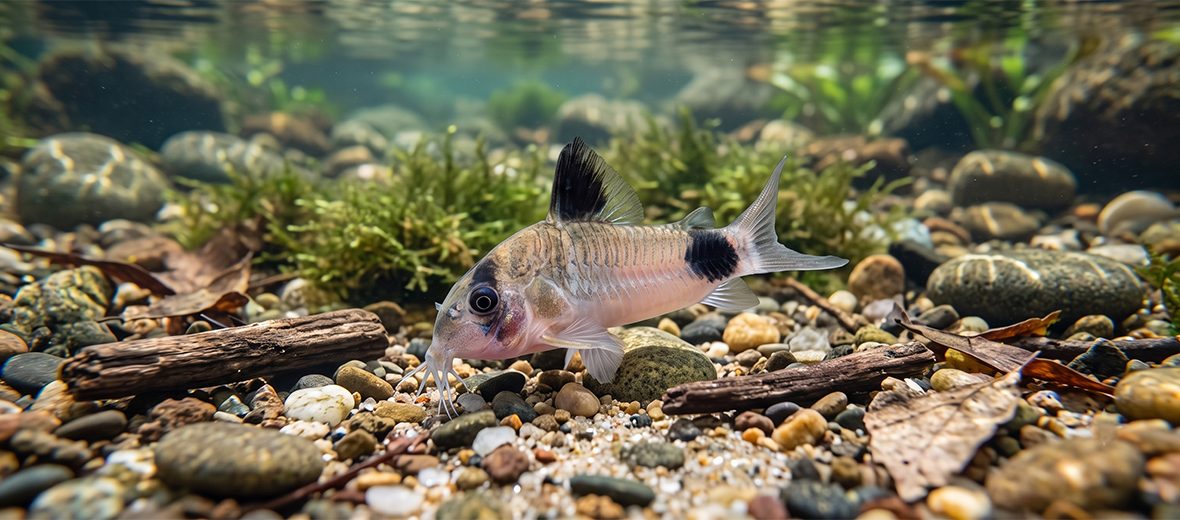
The corydoras, aka coridora, cory, or cory cat, a member of the armored catfish family, hails from South America. They can be found from east of the Andes mountains to the Atlantic coast. These freshwater fish come in a variety of shapes and color morphs. With a general lack of natural threats, sans water pollution and chemical pollution, these fish are listed as Least Concern by the IUCN. Their population trend is currently listed as stable.

First the Stats…

Scientific name: Corydoras
Weight: Up to .06 ounce
Length: Up to 4.7 inches
Lifespan: Up to 10 years

Now on to the Facts!

1.) Their name Corydoras hails from the Greek kory, meaning (“helmet”) and doras, meaning (“skin”).

2.) There are 160 species identified with hundreds more yet to be identified.

3.) They are typically given ‘C-numbers’, originally devised by Hans-Georg Evers for the German fishkeeping magazine DATZ in circa 1993. As of February 2014, 158 C-numbers have been issued, out of which 32 have been assigned official scientific names.

4.) Like other species of catfish, most species of corydoras are bottom-dwellers that forage in sand, gravel, or detritus for food.

5.) Corys are able to breathe both dissolved oxygen as well as atmospheric oxygen. This helps them when their aquatic environment only offers a hypoxic trait (lacking in oxygen).

But wait, there’s more on the corydoras!

6.) Bottom-dwelling insects, insect larvae, various worms, and some vegetable matter are all consumed. While not piscivores, they will feast on dead fish bodies.

7.) Their method of feeding is via searching the gravel bed with their sensory barbels and sucking up food items with their mouth. Many times burying their snout up to their eyes.

Did you know…?
Seeing as they are catfish, they do possess mildly venomous pectoral fin spines. Their defensive sting is comparable to a bee sting, causing localized pain and minor swelling, but they are not dangerous or life-threatening to humans.

8.) During reproduction the female will attach her mouth to the male’s genital opening, creating the well-known “T-position” many Corydoras show during courtship. The female will then drink the sperm. The sperm rapidly moves through her intestines and is discharged together with her eggs into a pouch formed by her pelvic fins.

9.) Up to 300 eggs are laid by the female each breeding season.

10.) Being a peaceful fish and well suited to tropical freshwater community aquariums, they get along well with most other species of fish and are not aggressive.

11.) These fish are diurnal (active during the day).

Now a Short Corydoras Video!

Be sure to share & comment below! Also, check out the Critter Science YouTube channel. Videos added regularly. Be sure to like and subscribe!

Subscribe


Want to suggest a critter for me to write about? Let me know here.

Some source material acquired from: Wikipedia & IUCN

Trending
The Eurasian Tree Sparrow

aquariumbarbelscorycory catcorydorasfishfishesfreshwateromnivoreSouth Americaspinesvenomvenomous
Critterman

With over 51 years of critter experience to my credit and hundreds of zoology teaching hours to people around the world, I have amassed not only a continuing thirst for critter knowledge but a desire to teach others all I can about the majesty and wonder of our natural world. Critter Science is a culmination of such knowledge. I have hands on as well as book acquired intel on all kinds of critters. Whether they're on land, sea, or in the air. I will never say that I know everything about all animals. That's impossible, even for a savant. But, that being said, ask me any animal question and I'll answer it. If I don't know the answer, I'll get an answer for you!

The Eastern Rosella
The European Water Vole
Related Posts
  • sea scallop
    The Sea Scallop 28 August, 2026
  • squirrel tree frog
    The Squirrel Tree Frog 27 August, 2026
  • European green crab
    The European Green Crab 26 August, 2026

Leave a Reply Cancel Reply

Your email address will not be published. Required fields are marked *

  • Daily Critter Facts
  • Guest Articles
  • BYET
  • Teachers
  • Study Guides
  • Contact

Copyright © 2026, Critter Science. All Rights Reserved.