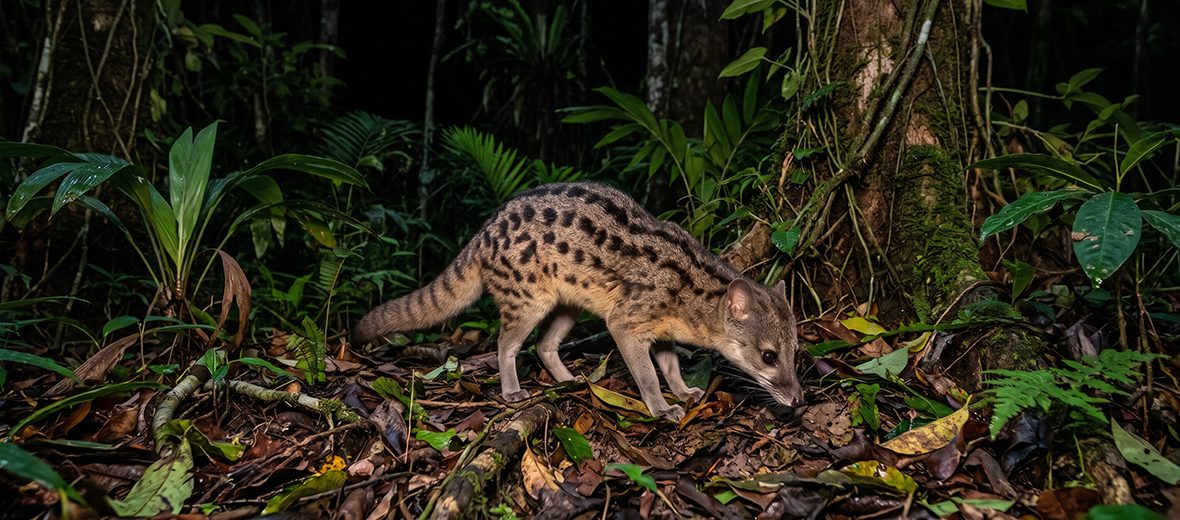
The Malagasy civet, aka striped civet, spotted fanaloka, fanaloka, or jabady, is the only species in genus Fossa. They hail from Madagascar. Being constrained to primary forest and absent from fragmented forests, they are threatened by deforestation for cultivated land, and by forest degradation via selective logging and charcoal production. Deforestation and forest disturbance across the range of these critters has increased dramatically since 2009. They’re also threatened by hunting; their taste is the most preferred among the native carnivores. Introduced species such as dogs, cats, and the small Indian civet are competitors, and dogs are also likely to be predators. Due to these threats these critters are listed as Vulnerable by the IUCN. Their population trend is also listed as decreasing.
First the Stats…
Scientific name: Fossa fossana
Weight: Up to 4.4 lbs.
Length: Up to 19 inches, plus up to a 10.4 inch tail
Height: Up to 10+ inches
Lifespan: Up to 21 years
Now on to the Facts!
1.) These civets were first formally described by German zoologist Philipp Ludwig Statius Müller in 1776.
2.) The Malagasy name fanaloka is related to the Malay word pelanduk “mousedeer” and is likely due to their similar size and silhouette.
3.) Originally, these civets were to be placed in the subfamily Hemigalinae with the banded palm civets and then in their own subfamily, Fossinae, because of similarities with others in the group. However, they’re now classified as a member of the subfamily Euplerinae.
4.) Like other civets, they are nocturnal (active at night).
5.) Insects, fish, eggs stolen from bird nests, mice, rats, various reptiles, and amphibians are all hunted and feasted upon.
But wait, there’s more on the Malagasy civet!
6.) The sounds they produce are similar to crying and groaning, and they also make a sound similar to “coq-coq”.
7.) Their territory extends up to a 120 square acre area.
Did you know…?
During the winter, they store fat in their tail, which can make up 25% of their total weight.
8.) Females undergo up to a 3 month gestation (pregnancy) that yields a single kitten.
9.) Their preferred habitats are tropical, humid, and dry forests.
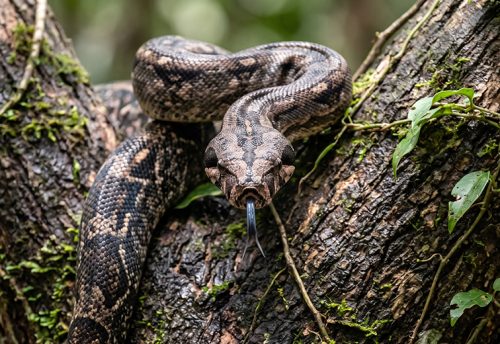
10.) While kittens have to contend with birds of prey and Malagasy ground boas, adults only have humans to fear.
Now a Short Malagasy Civet Video!
Be sure to share & comment below! Also, check out the Critter Science YouTube channel. Videos added regularly. Be sure to like and subscribe!
Buy My Book
Select the image below to see everywhere my book is sold.


Want to suggest a critter for me to write about? Let me know here.
Some source material acquired from: Wikipedia & IUCN