
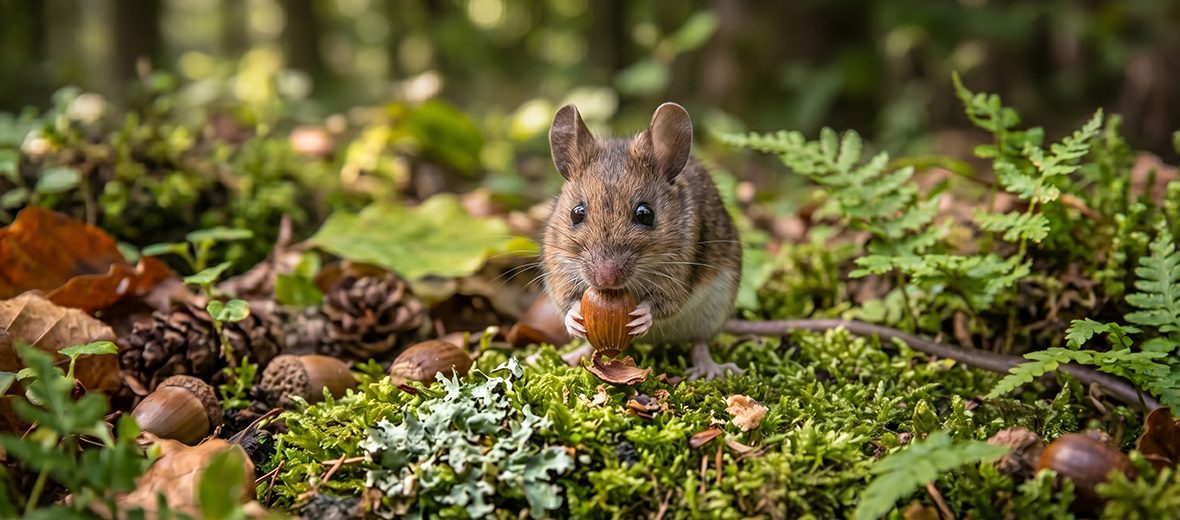
The wood mouse, aka long-tailed field mouse, field mouse, common field mouse, and European wood mouse, hails from Europe, Asia, and Africa. These little critters are often considered a pest species due to their taking up residence in homes and commercial buildings. They face the threat of chemical pollution by lead and agrochemicals. They are also persecuted for being pests and because they can carry and transmit the hantavirus. However, these mice are abundant enough to be listed as Least Concern by the IUCN. Their population trend is listed as stable.
First the Stats…
Scientific name: Apodemus sylvaticus
Weight: Up to 1.1 ounces
Length: Up to 4.3 inches, plus up to a 3.74 inch tail
Lifespan: Up to 4 years
Now on to the Facts!
1.) In the wild, these mice prefer to dwell in forests, grasslands, and cultivated fields, and search out more wooded areas during the winter.
2.) This mouse is nocturnal (active at night).
3.) They are terrestrial (spend most or all of their lives on the ground) and fossorial (spend most of their time in burrows or under leaf litter).
4.) These mice are the most intensively studied species in their genus.
5.) Being a granivore (eats seeds) these rodents feast almost entirely on ash, beech, hawthorn, lime, oak, and sycamore seeds. In lean times they will also eat insects and snails.
But wait, there’s more on the wood mouse!
6.) Berries, fruits, fungi, and roots are also consumed.
7.) During exploration, they will relocate leaves and twigs that they use as landmarks.
Did you know…?
These mice are known carriers of the Dobrava sequence of hantavirus which affects humans and may pose serious risks to human health. This version of the hantavirus causes a sudden onset of flu-like symptoms, acute kidney injury, severe vascular leakage, and internal hemorrhaging. Death occurs in up to 12% of people.
8.) If picked up by their tail, they have the ability to shed the skin on their tail, which never fully regrows.
9.) Cats, dogs, foxes, snakes, weasels, and owls all prey on these mice.
10.) Females undergo up to a 27 day gestation (pregnancy) that yields up to 4 pups that are weaned in up to 3 weeks.
Now a Short Wood Mouse Video!
Be sure to share & comment below! Also, check out the Critter Science YouTube channel. Videos added regularly. Be sure to like and subscribe!

Want to suggest a critter for me to write about? Let me know here.
Some source material acquired from: Wikipedia & IUCN


Leave a Reply