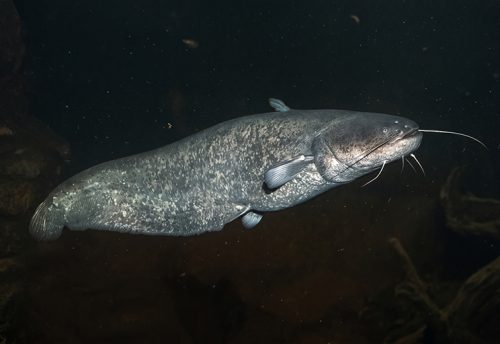
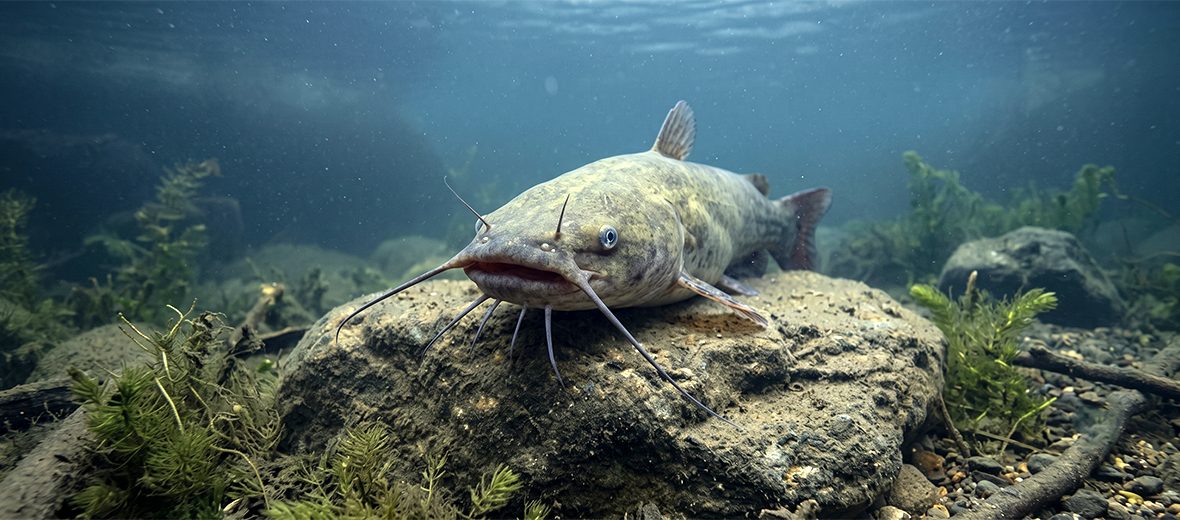
The flathead catfish, aka mudcat or shovelhead cat, an invasive species in some locales, is the 2nd largest catfish in North America after the blue catfish. Seeing as they are highly targeted by recreational anglers and commercial harvesters, they face the threat of overfishing. They also face the threats of habitat loss and destruction at the hands of the channelization of rivers, the removal of submerged logs/snags, and the construction of dams (which also divide their territory and make it impossible for them to move from one locale to another. These fish are known to absorb high levels of heavy metals (such as mercury) and persistent organic pollutants such as PFAS (polyfluoroalkyl substances) from their prey, which can impair their reproductive success, immune systems, and overall health. Climate change causes extreme, sudden changes in water temperature, severe droughts, or unseasonable flooding and can negatively impact their spawning success. Like any native species, these catfish deal with a range of naturally occurring parasites (like trematodes and nematodes) as well as viruses. While these usually keep populations in balance in their native ranges, extreme environmental stress or degraded water quality can trigger outbreaks that cause mass die-offs in certain watersheds. However, these fish are abundant and have an extended range and thus are listed as Least Concern by the IUCN. Their population trend is listed as stable.
First the Stats…
Scientific name: Pylodictis olivaris
Weight: Up to 120 lbs.
Length: Up to 4 feet
Lifespan: Up to 28 years
Now on to the Facts!
1.) These catfish have existed for approximately 20 million years, from the Middle Miocene epoch.
2.) Other names for these fish are yellow cat, mud cat, Johnnie cat, goujon, appaluchion, opelousas, pied cat, Mississippi cat, and granny cat.
3.) Their preferred habitats are large, slow-moving rivers, streams, lakes, and reservoirs.
4.) While they cannot survive in full salinity saltwater, they can handle brackish conditions of up to 5 ppt (parts per thousand).
5.) Being benthic fish, they prefer to dwell on the bottom of the bodies of water in which they live.
But wait, there’s more on the flathead catfish!
6.) Insects, tadpoles, annelid worms, crustaceans, other fish (like bluegill, carp, and more), and even each other are all on the menu for these opportunistic feeders.
7.) Females lay up to 100,000 eggs each spawning season that hatch in up to 10 days.
Did you know…?
In 1982, a specimen caught by “alternative methods”, showed that these catfish can possibly be North America’s longest species of catfish, after the specimen pulled from the Arkansas River measured 5.75 feet and weighed in at 139 lbs., 14 ounces!
8.) These fish are mostly nocturnal (active at night).
9.) Like other catfish, they possess venom glands in their dorsal and pectoral fins.
10.) The effects of their venom are immediate, intense throbbing or burning pain, rapid localized swelling, erythema, and muscle spasms. Severe systemic reactions are rare, but can include temporary nerve and red blood cell damage.
Now a Short Flathead Catfish Video!
This video talks about catfish in general.
Be sure to share & comment below! Also, check out the Critter Science YouTube channel. Videos added regularly. Be sure to like and subscribe!

Want to suggest a critter for me to write about? Let me know here.
Some source material acquired from: Wikipedia & IUCN