Critter Science
  • Ecology
    • Animal Conservation
      • Apex Awakening
      • CITES: Protecting Wildlife
      • Dame Jane Goodall
      • Endangered Animals
      • Ex Situ Explained
      • In Situ Explained
      • IUCN Statuses
      • Steve Irwin
      • Zoological Branches
    • Animal Immortality and Regeneration
    • Animal Mimicry
    • Chromatophores and Survival
    • Ecosystems
      • Animal Habitats
      • The Biomes
      • Coastal Erosion
      • Desert Biomes
      • Deserts and Wildlife
      • Earth’s Living Canopies
      • Ocean Habitats
      • Rainforest Types
    • Evolution. The Facts.
      • Animal Devolution
      • Convergent Evolution
      • Carl Linnaeus
      • Charles Darwin
      • Evolution of Amphibians
      • Evolution of Birds
      • Genetic Drift in the Animal Kingdom
      • Insular Dwarfism
      • Naturalism
      • Natural Selection
    • Genetic Pollution
      • Genetic Bottlenecks in Animal Populations
    • Invertebrate Families Explored
      • Arthropod Diversity and Adaptations
      • Cephalopod Consciousness
      • Insect vs Bug
      • The Wonder and Warfare of Coral Reefs
      • What are Arachnids?
        • Spider Webs
    • Predator vs Prey
    • Producers and Consumers
    • Venom vs Poison
    • Vertebrate Families Explored
      • Amphibians: Unseen Guardians
      • Bone and Cartilage
      • Snakes vs Legless Lizards
      • The Triumph of the Ratites
      • What is a Marsupial?
    • The Wild Apothecary
  • Zoology
    • Sustainability
      • Climate Change
      • Earth Day: Past, Present, Future
      • Global Warming
      • Pollution
        • Air Pollution
        • Chemical Pollution
        • Land Pollution
        • Light Pollution
        • Microplastics Pollution
        • Noise Pollution
        • Water Pollution
      • Recycling
        • Recycling Plastics
      • Renewable Energy
    • Animal Behavioral Patterns
      • Aposematic Coloration
      • Avian Communication
      • Animal Thermoregulation
      • Beyond DNA: The Animal Accent
      • Cetacean Communication
      • Cold-Adapted Hypermetabolism
      • Elephant Communication
      • Herpetofauna Communication
      • Primate Language: The Debate
      • The Framework of Ethology
      • The Hidden Sensory Realm
      • Types of Animal Dormancy
    • What are Species?
      • Animal Reproduction
      • Introduced Species
      • Invasive Species
      • John Edward Gray
      • John Gould
      • Keystone Species
      • Lazarus Species: Rediscovered Life
      • Monotypic Species
      • Speciation
      • Species Complex
      • Understanding Animal Subspecies
    • About the Critterman
      • Amphibians Book
  • Daily Critter Facts
    • Amphibian Facts
      • Frog Facts
      • Newt Facts
      • Salamander Facts
      • Toad Facts
    • Arthropod Facts
      • Arachnid Facts
      • Insect Facts
    • Bird Facts
      • Flightless Bird Facts
      • Predatory Bird Facts
      • Scavenger Bird Facts
      • Wading Bird Facts
    • Cryptozoology
    • Fish Facts
      • Cephalopod Facts
      • Crustacean Facts
      • Jellyfish Facts
      • Reefs
      • Shark and Ray Facts
      • Shellfish Facts
    • Flying Mammal Facts
    • Gastropod Facts
    • Land Mammal Facts
      • Canine Facts
      • Feline Facts
      • Lagomorph Facts
      • Marsupial Facts
      • Mustelid Facts
      • Primate Facts
      • Rodent Facts
      • Ungulate Facts
    • Parasite Facts
    • Reptile Facts
      • Crocodilian Facts
      • Lizard Facts
      • Snake Facts
      • Turtle Facts
    • Sea Mammal Facts
      • Dolphin Facts
      • Porpoise Facts
      • Sea Lion Facts
      • Seal Facts
      • Whale Facts
    • Worm Facts
  • For Teachers
    • Animal Quizzes
      • Amphibian Quiz
      • Bird Quiz
      • Cat Quiz
      • Dog Quiz
      • Dolphin Quiz
      • Insect Quiz
      • Reptile Quiz
    • Amphibians vs Reptiles
    • Animal Skin and Scales
      • Claws, Nails, and Talons
      • Feather Anatomy, Function, & Types
      • Fur and Hair
      • Gecko Feet
    • The Enigmatic Purr
    • Animal Word Search
    • Butterfly Metamorphosis
      • World’s Largest Butterfly
      • World’s Largest Moth
    • The Cellular Structure of an Animal
    • Coloring Pages
    • Fish and Sharks
    • Frogs vs Toads
      • Metamorphosis – A Frog’s Life Cycle
    • Tunnels and Burrows
    • The Science of Naming Animals
    • Study Guides
      • African Animals
      • Antarctica Animals
      • Asian Animals
      • Australian Animals
      • Central American Animals
      • European Animals
      • North American Animals
      • South American Animals
  • Diseases & Parasites
    • Understanding Bird Flu
    • Bsal
    • Canine Distemper Virus (CDV)
    • Chronic Wasting Disease (CWD)
    • The Deadly Chytrid Fungus
    • Plagues of the Wild: Epizootic Diseases
    • All About Parasites
      • Toxoplasmosis
    • The Rabies Virus
    • White-Nose Syndrome
  • Contact
    • Critter Identification
    • General Contact
    • Guest Article Submission
      • Guest Articles
        • Guest Articles – 2024
    • Animal Welfare Organizations
    • Privacy Policy
GET MY BOOK
Indiana bat

The Indiana Bat

  • 21 September, 2026
  • Critterman
  • No Comments
  • 0 Views
  • 0 Likes
Daily Critter Facts, Flying Mammal Facts

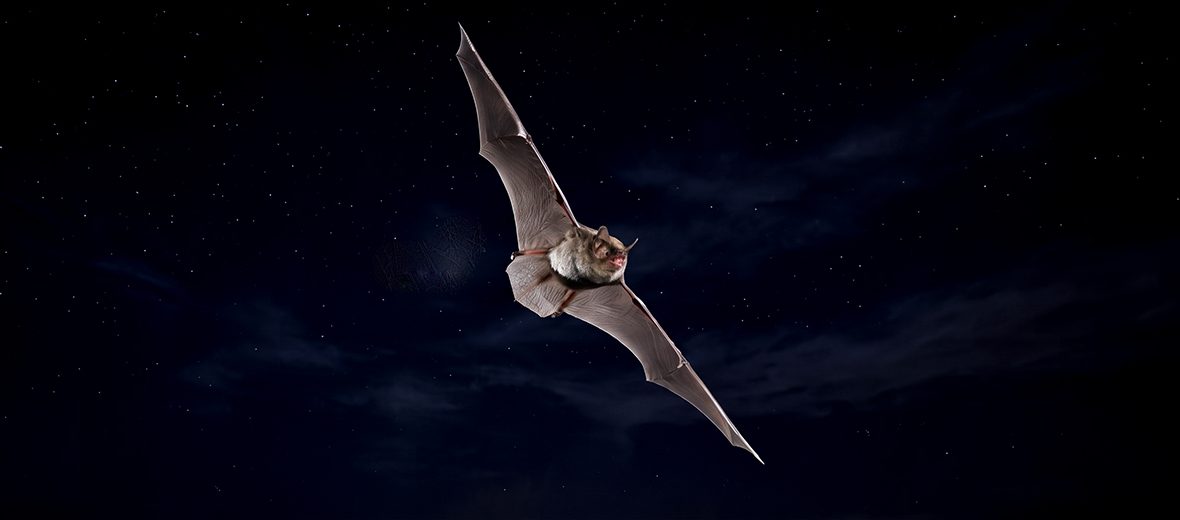
The Indiana bat, while similar in appearance to the more common little brown bat, is told apart by the size of their feet, pink lips, length of hair on their feet, and the keel on the calcar (spur of cartilage rising from inner side of ankle and running along part of outer wing membrane). These bats face the threat of human disturbances at wintering caves, which causes the aroused individuals to deplete energy reserves trying to relocate or escape. The handling of hibernating bats by researchers can result in these creatures moving to the use of less suitable hibernacula (hibernation locations), causing additional loss of fat reserves. Commercialization of caves can result in excessive disturbance or intentional elimination by cave owners. Altered exchange of air with the outside environment due to opening more cave entrances can cause drastic changes in cave temperature and humidity, and may cause the bats to abandon the cave(s). Habitat loss and destruction as a result of residential and commercial developments as well as clearcutting for agricultural use, or incompatible forest management practices that result in a shortage of the microhabitats used for maternity roosts may be the primary factors in recent declines in their populations as well. Finally, white-nose syndrome caused by the fungus Geomyces destructans that affects hibernating individuals in caves through eastern United States is another threat these critters have to contend with. As a result of all these adversities, these bats are listed as Near Threatened by the IUCN. Their population trend is listed as stable though, at this time.

First the Stats…

Scientific name: Myotis sodalis
Weight: Up to .34 ounce
Length: Up to 3.9 inches
Wingspan: Up to 10.5 inches
Lifespan: Up to 20 years

Now on to the Facts!

1.) These bats have suffered a dramatic population decline, estimated to be over 50% in the past 10 years.

2.) Their population is estimated to be approximately 244,000.

3.) They hibernate in huge, tight clusters that can contain thousands of individuals.

4.) A testament to the importance of bats is that Indiana bats alone can consume millions of insects every night.

5.) These bats are protected by the Federal Cave Resources Protection Act of 1988, to protect hibernacula on federal lands.

But wait, there’s more on the Indiana bat!

6.) In October 2007, Lonnie W. Skaggs of Olive Hill, Kentucky, and Kaleb Dee Carpenter, of Grayson, Kentucky, entered Laurel Cave in Carter Caves State Park, Kentucky, and killed 23 Indiana bats. Skaggs re-entered the cave 3 days later and killed another 82 individuals.

7.) The 2 men admitted to knowingly slaughtering an endangered species, using flashlights and rocks to knock hibernating bats off their roosts, and smashing them with rocks. Skaggs got 8 months in Federal prison, while Carpenter only got 3 years probation for these senseless killings.

Did you know…?
Bat mortality due to wind turbines has been confirmed, even resulting in a December 2009 injunction against a West Virginia wind farm.

8.) The case marked the first time in the nation that individuals were sentenced for killing endangered Indiana bats.

9.) As of 2013, only 5 Indiana bat fatalities have been documented as a result of wind farms.

10.) Other anthropogenic effects have contributed to the loss of bat populations, including pesticide use, improper application of cave gates, climate change, and agricultural development. As a result, these bats have faced a nationwide 57% population decline from 1960 – 2001.

But wait, there’s still more on the Indiana bat!

11.) These bats utilize at least 29 tree species during the summer as roosts.

12.) In the winter they hibernate in limestone caves and abandoned mines with stable, cool temperatures ranging from 39°F – 46°F. In the summer they prefer bottomland and riparian forests near streams, rivers, and wetlands, however they also use upland forests depending on the region.

Did you know…?
Contrary to ongoing fear, less than 1% of wild bats in nature are infected with rabies.

13.) Moths, beetles, mosquitoes, midges, lacewings, spiders, mayflies, mites, ticks, and lice are all readily feasted upon.

14.) They can eat up to 3,000 insects per feeding, or roughly half their body weight in total potential pests every night.

15.) Rat snakes, raccoons, skunks, opossums, cats, hawks, and owls all prey on these critters.

But wait, there’s still a little more on the Indiana bat!

16.) In Florida, these bats face predation by invasive species such as Burmese pythons, reticulated pythons, African rock pythons, boa constrictors, yellow anacondas, and green anacondas, to name a few.

17.) Females undergo up to a 68 day gestation (pregnancy) that yields a single pup.

18.) The pup develops quickly and can usually fly in up to 4 weeks.

19.) In 2020, the American field recorder Stuart Hyatt released a music album which combines sounds made by the Indiana bat along with music from ambient and experimental artists. The ultrasonic echolocations were recorded and then modulated in order to make the sounds audible to humans.

Now a Short Indiana Bat Video!

Be sure to share & comment below! Also, check out the Critter Science YouTube channel. Videos added regularly. Be sure to like and subscribe!

Subscribe


Want to suggest a critter for me to write about? Let me know here.

Some source material acquired from: Wikipedia & IUCN

Trending
Africa’s Largest Eagle, the Martial Eagle

batbatscavecaveshibernateIndiana batinsectivoreinsectsnorth americaUnited States
Critterman

With over 51 years of critter experience to my credit and hundreds of zoology teaching hours to people around the world, I have amassed not only a continuing thirst for critter knowledge but a desire to teach others all I can about the majesty and wonder of our natural world. Critter Science is a culmination of such knowledge. I have hands on as well as book acquired intel on all kinds of critters. Whether they're on land, sea, or in the air. I will never say that I know everything about all animals. That's impossible, even for a savant. But, that being said, ask me any animal question and I'll answer it. If I don't know the answer, I'll get an answer for you!

The Parma Wallaby
Related Posts
  • parma wallaby
    The Parma Wallaby 18 September, 2026
  • common drone fly
    The Common Drone Fly 17 September, 2026
  • western screech owl
    The Western Screech Owl 16 September, 2026

Leave a Reply Cancel Reply

Your email address will not be published. Required fields are marked *

  • Daily Critter Facts
  • Guest Articles
  • BYET
  • Teachers
  • Study Guides
  • Contact

Copyright © 2026, Critter Science. All Rights Reserved.