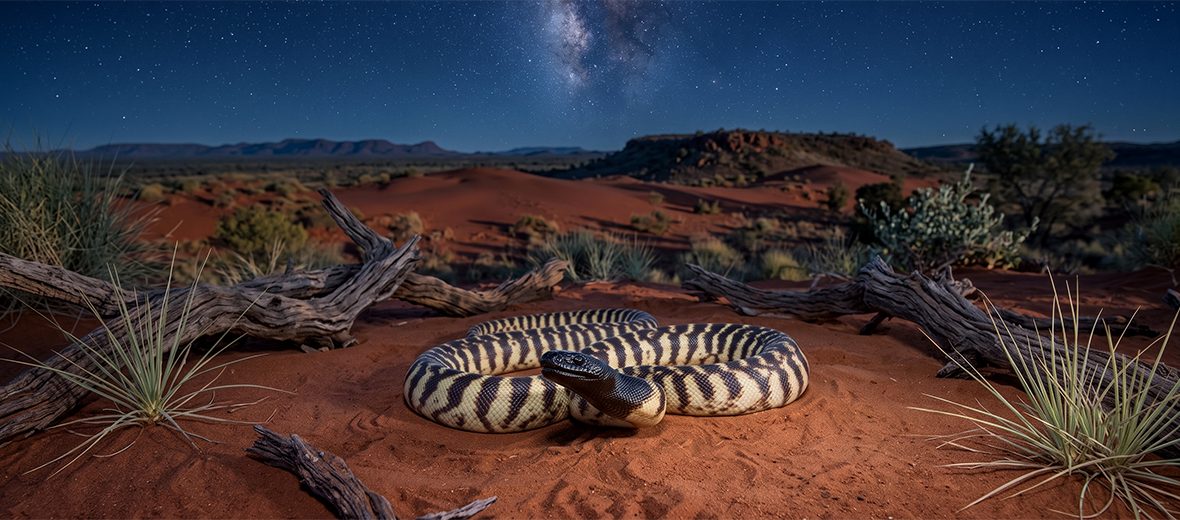
The black-headed python is a species of constrictor that hails from northern half of Australia. Being constrictors, they rely on squeezing their prey to death, rather than envenoming their prey. They face the threats of habitat loss and destruction at the hands of farming, ranching, residential, and commercial developments. Because they often try to obtain heat by laying on asphalt or dirt roads, they are often the victims of vehicle strike (being hit by vehicles). Invasive feral cats and red foxes often compete for food and will kill hatchlings and adults. However, despite these threats, they are abundant enough to be listed as Least Concern by the IUCN. Their population trend is listed as stable.
First the Stats…
Scientific name: Aspidites melanocephalus
Weight: Up to 35 lbs.
Length: Up to 10+ feet
Lifespan: Up to 40 years
Now on to the Facts!
1.) This species is considered monotypic, in that there are no subspecies recognized.
2.) Their preferred habitats are open dry woodlands, tropical savannas, grasslands, and arid scrublands.
3.) These pythons are terrestrial (spend their lives on the ground).
4.) In a case of irony, they are strong swimmers but practically never found near water. That being said, most snakes are good swimmers.
5.) They are primarily nocturnal (active at night) and crepuscular (active at dawn and dusk).
But wait, there’s more on the black-headed python!
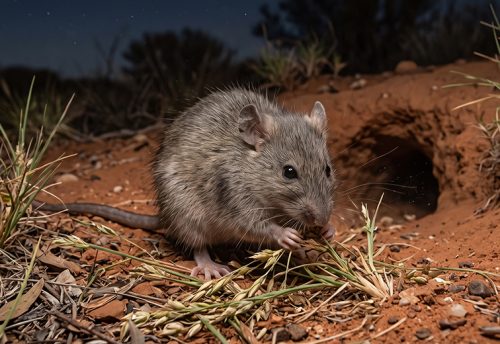
6.) Mice, rats, small marsupials, birds, geckos, bearded dragons, legless lizards, perenties, and even each other are all on the menu.
7.) Females lay seasonal clutches of up to 10 eggs that hatch in up to 3 months.
Did you know…?
If they are disturbed they will often hiss loudly and even strike, but with a closed mouth. However, they are typically docile and easy to handle.
8.) Hatchlings take small prey as soon as 2 days after hatching.
9.) Sans humans, dingoes are the adult’s only primary natural predator. A natural predator is 1 that is not introduced or invasive.
10.) In captivity, these snakes command a high asking price and need a large enclosure to thrive.
Now a Short Black-Headed Python Video!
Be sure to share & comment below! Also, check out the Critter Science YouTube channel. Videos added regularly. Be sure to like and subscribe!

Want to suggest a critter for me to write about? Let me know here.
Some source material acquired from: Wikipedia & IUCN