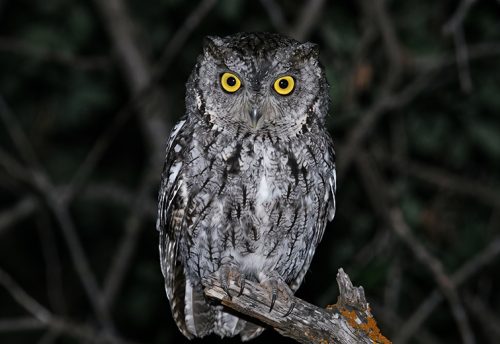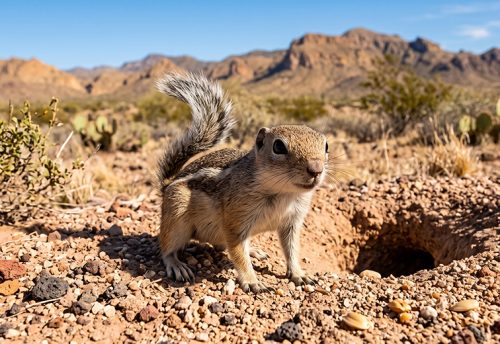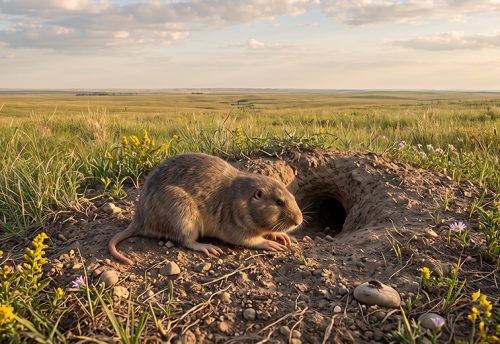
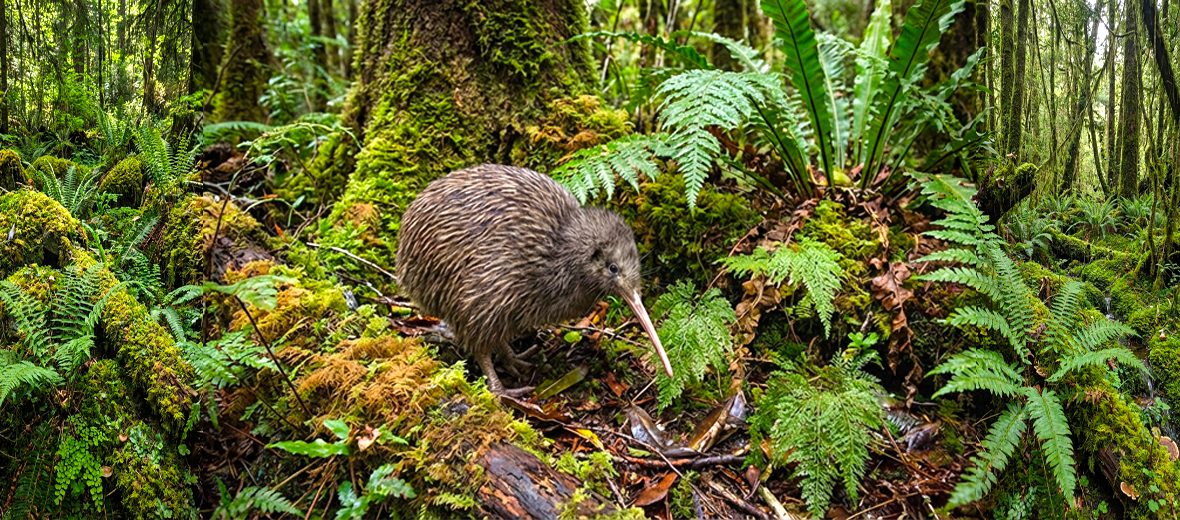
The great spotted kiwi, aka great grey kiwi or roroa, is the largest species of kiwi and hails from the South Island of New Zealand. Kiwis are flightless birds. These birds face the threat of invasive species in the form of cats, dogs, feral pigs, and stoats. As a result, roughly 94% of chicks fail to reach adulthood due to predation. This has driven these kiwis into the high country, as this wet and mountainous region is mostly uninhabitable by their predators. The IUCN lists these birds as Vulnerable. Their numbers are also listed as decreasing.
First the Stats…
Scientific name: Apteryx maxima
Weight: Up to 7.3 lbs.
Length: Up to 22 inches
Wingspan: Up to 2 inch wing buds
Lifespan: Up to 57 years
Now on to the Facts!
1.) There has been a 43% reduction in kiwis over the past 45 years, thanks to invasive predators and habitat loss and destruction.
2.) They tolerate a variety of habitats such as damp, mossy, southern beech forests; scrublands; tussock grasslands; rugged, steep, wet terrain, often nesting in excavated burrows under vegetation, roots, or logs.
3.) Like other kiwi species, they are nocturnal (active at night).
4.) These birds are very aggressive towards other kiwis and will violently defend their territory against any opposing member of their species.
5.) Naturalist, ornithologist, entomologist, and botanist Thomas Potts was the first to describe great spotted kiwis in 1872.
But wait, there’s more on the great spotted kiwi!
6.) Kiwis belong to the ratite family, which also happens to include the emu, ostrich, rhea, cassowary, as well as the long extinct moa of New Zealand, and the extinct elephant birds of Madagascar.
7.) Up to 50 burrows can be established in a single bird’s territory, and they reside in a different 1 each day.
Did you know…?
There were only an estimated 9,300 wild individuals remaining as of 2022.
8.) These birds are presumed to have devolved over millions of years as when they originally arrived in what would later become New Zealand there were no mammalian predators. So, over time, they lost the need for flight.
9.) Their vocal communication consists of growls, hisses, and bill snapping. The male’s call sounds much like a warbling whistle, whereas the female’s call is harsh, raspy, and also warbling.
10.) These critters are monogamous (mate for life) and can maintain a relationship for up to 20 or more years.
But wait, there’s still more on the great spotted kiwi!
11.) Males chase females around until the females either run off or give in and decide to mate.
12.) Females undergo a gestation (pregnancy) period of roughly 1 month, during which time they will not eat. Seeing as the massive egg takes up to 1/4 of her body mass.
Did you know…?
The kiwi egg is among the largest of any bird, per body ratio. 65% of the egg is yolk, compared to just 35% – 40% in other birds.
13.) The female needs to rely on fat stored from the previous 5 months in order to survive.
14.) Due to the size of the egg, hatching is obviously very uncomfortable, so the female will not move much. To relieve the pain of developing the egg, females will soak themselves in water when they emerge from their burrow by dipping their abdomens into puddles.
15.) It takes up to 85 days for the egg to hatch. During this time, the male incubates the egg while the female hunts for food.
But wait, there’s still a bit more on the great spotted kiwi!
16.) Kiwi chicks are superprecocial (completely independent, fully feathered, and capable of hunting), and are abandoned by their parents after hatching. After 10 days, chicks venture out of the burrow to begin hunting.
17.) Sadly, most chicks are killed within the first 6 months of life.
Did you know…?
The single egg produced by the female weighs in at up to 1 pound!
18.) Earthworms, grubs, beetles, cicada, crickets, flies, wētā, butterflies, moths, spiders, caterpillars, slugs, snails, berries, and seeds are all on the menu.
19.) They are the only host of a species of feather mite, Kiwialges haastii.
20.) Thanks to intensive trapping and poisoning efforts of mammalian pest species, the chick survival rate has been raised to about 60%.
Now a Short Great Spotted Kiwi Video!
Be sure to share & comment below! Also, check out the Critter Science YouTube channel. Videos added regularly. Be sure to like and subscribe!

Want to suggest a critter for me to write about? Let me know here.
Some source material acquired from: Wikipedia & IUCN