Critter Science
  • Zoology
    • Ecology
      • Animal Conservation
        • CITES: Protecting Wildlife
        • Dame Jane Goodall
        • Endangered Animals
        • Ex Situ Explained
        • In Situ Explained
        • IUCN Statuses
        • Zoological Branches
      • Chromatophores and Survival
      • Ecosystems
        • Animal Habitats
        • The Biomes
        • Coastal Erosion
        • Rainforest Types
      • Evolution. The Facts.
        • Animal Devolution
        • Animal Mimicry
        • Convergent Evolution
        • Carl Linnaeus
        • Charles Darwin
        • Evolution of Amphibians
        • Evolution of Birds
        • Genetic Drift in the Animal Kingdom
        • Naturalism
        • Natural Selection
        • Venom vs Poison
      • Genetic Pollution
      • Invertebrate Families Explored
        • What are Arachnids?
          • Spider Webs
      • Predator vs Prey
      • Producers and Consumers
      • Vertebrate Animal Families
        • Amphibians: Unseen Guardians
        • Snakes vs Legless Lizards
        • What is a Marsupial?
      • The Wild Apothecary
    • Sustainability
      • Climate Change
      • Global Warming
      • Pollution
        • Air Pollution
        • Chemical Pollution
        • Land Pollution
        • Light Pollution
        • Microplastics Pollution
        • Noise Pollution
        • Water Pollution
      • Recycling
        • Recycling Plastics
      • Renewable Energy
    • Animal Behavioral Patterns
      • Avian Communication
      • Animal Thermoregulation
      • Cetacean Communication
      • Elephant Communication
      • Herpetofauna Communication
      • Primate Language: The Debate
      • Types of Animal Dormancy
    • What are Species?
      • Amphibians vs Reptiles
      • Animal Reproduction
      • Animal Skin and Scales
      • Claws, Nails, and Talons
      • Fur and Hair
      • Gecko Feet
      • Invasive Species
      • Lazarus Species: Rediscovered Life
      • Speciation
      • Species Complex
      • The Enigmatic Purr
    • About the Critterman
  • Daily Critter Facts
    • Amphibian Facts
      • Frog Facts
      • Newt Facts
      • Salamander Facts
      • Toad Facts
    • Arthropod Facts
      • Arachnid Facts
      • Insect Facts
    • Bird Facts
      • Flightless Bird Facts
      • Predatory Bird Facts
      • Scavenger Bird Facts
      • Wading Bird Facts
    • Cryptozoology
    • Fish Facts
      • Cephalopod Facts
      • Crustacean Facts
      • Jellyfish Facts
      • Reefs
      • Shark and Ray Facts
      • Shellfish Facts
    • Flying Mammal Facts
    • Gastropod Facts
    • Land Mammal Facts
      • Canine Facts
      • Feline Facts
      • Lagomorph Facts
      • Marsupial Facts
      • Mustelid Facts
      • Primate Facts
      • Rodent Facts
      • Ungulate Facts
    • Parasite Facts
    • Reptile Facts
      • Crocodilian Facts
      • Lizard Facts
      • Snake Facts
      • Turtle Facts
    • Sea Mammal Facts
      • Dolphin Facts
      • Porpoise Facts
      • Sea Lion Facts
      • Seal Facts
      • Whale Facts
    • Worm Facts
  • For Teachers
    • Animal Quizzes
      • Amphibian Quiz
      • Bird Quiz
      • Cat Quiz
      • Dog Quiz
      • Dolphin Quiz
      • Insect Quiz
      • Reptile Quiz
    • Animal Word Search
    • Butterfly Life Cycle
      • Butterfly Metamorphosis
      • World’s Largest Butterfly
      • World’s Largest Moth
    • The Cellular Structure of an Animal
    • Coloring Pages
    • Fish and Sharks
    • Frogs vs Toads
    • Insect vs Bug
    • Metamorphosis – A Frog’s Life Cycle
  • Study Guides
    • African Animals
    • Antarctica Animals
    • Asian Animals
    • Australian Animals
    • Central American Animals
    • European Animals
    • North American Animals
    • South American Animals
  • Diseases & Parasites
    • Bsal
    • Canine Distemper Virus (CDV)
    • Chronic Wasting Disease (CWD)
    • The Deadly Chytrid Fungus
    • All About Parasites
    • The Rabies Virus
    • Toxoplasmosis
    • White-Nose Syndrome
  • Contact
    • General Contact
    • Guest Article Submission
      • Guest Articles
        • Guest Articles – 2024
    • What Critter is This?
    • Animal Welfare Organizations
    • Privacy Policy
Subscribe
great spotted kiwi

The Great Spotted Kiwi

  • 16 March, 2026
  • Critterman
  • No Comments
  • 0 Views
  • 0 Likes
Bird Facts, Daily Critter Facts, Flightless Bird Facts

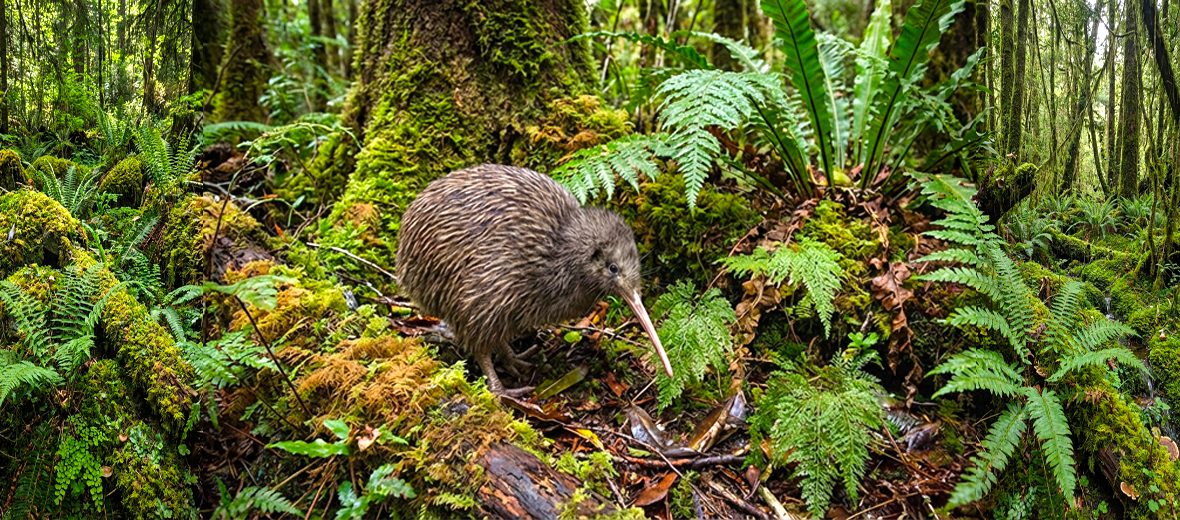
The great spotted kiwi, aka great grey kiwi or roroa, is the largest species of kiwi and hails from the South Island of New Zealand. Kiwis are flightless birds. These birds face the threat of invasive species in the form of cats, dogs, feral pigs, and stoats. As a result, roughly 94% of chicks fail to reach adulthood due to predation. This has driven these kiwis into the high country, as this wet and mountainous region is mostly uninhabitable by their predators. The IUCN lists these birds as Vulnerable. Their numbers are also listed as decreasing.

First the Stats…

Scientific name: Apteryx maxima
Weight: Up to 7.3 lbs.
Length: Up to 22 inches
Wingspan: Up to 2 inch wing buds
Lifespan: Up to 57 years

Now on to the Facts!

1.) There has been a 43% reduction in kiwis over the past 45 years, thanks to invasive predators and habitat loss and destruction.

2.) They tolerate a variety of habitats such as damp, mossy, southern beech forests; scrublands; tussock grasslands; rugged, steep, wet terrain, often nesting in excavated burrows under vegetation, roots, or logs.

3.) Like other kiwi species, they are nocturnal (active at night).

4.) These birds are very aggressive towards other kiwis and will violently defend their territory against any opposing member of their species.

5.) Naturalist, ornithologist, entomologist, and botanist Thomas Potts was the first to describe great spotted kiwis in 1872.

But wait, there’s more on the great spotted kiwi!

6.) Kiwis belong to the ratite family, which also happens to include the emu, ostrich, rhea, cassowary, as well as the long extinct moa of New Zealand, and the extinct elephant birds of Madagascar.

7.) Up to 50 burrows can be established in a single bird’s territory, and they reside in a different 1 each day.

Did you know…?
There were only an estimated 9,300 wild individuals remaining as of 2022.

8.) These birds are presumed to have devolved over millions of years as when they originally arrived in what would later become New Zealand there were no mammalian predators. So, over time, they lost the need for flight.

9.) Their vocal communication consists of growls, hisses, and bill snapping. The male’s call sounds much like a warbling whistle, whereas the female’s call is harsh, raspy, and also warbling.

10.) These critters are monogamous (mate for life) and can maintain a relationship for up to 20 or more years.

But wait, there’s still more on the great spotted kiwi!

11.) Males chase females around until the females either run off or give in and decide to mate.

12.) Females undergo a gestation (pregnancy) period of roughly 1 month, during which time they will not eat. Seeing as the massive egg takes up to 1/4 of her body mass.

Did you know…?
The kiwi egg is among the largest of any bird, per body ratio. 65% of the egg is yolk, compared to just 35% – 40% in other birds.

13.) The female needs to rely on fat stored from the previous 5 months in order to survive.

14.) Due to the size of the egg, hatching is obviously very uncomfortable, so the female will not move much. To relieve the pain of developing the egg, females will soak themselves in water when they emerge from their burrow by dipping their abdomens into puddles.

15.) It takes up to 85 days for the egg to hatch. During this time, the male incubates the egg while the female hunts for food.

But wait, there’s still a bit more on the great spotted kiwi!

16.) Kiwi chicks are superprecocial (completely independent, fully feathered, and capable of hunting), and are abandoned by their parents after hatching. After 10 days, chicks venture out of the burrow to begin hunting.

17.) Sadly, most chicks are killed within the first 6 months of life.

Did you know…?
The single egg produced by the female weighs in at up to 1 pound!

18.) Earthworms, grubs, beetles, cicada, crickets, flies, wētā, butterflies, moths, spiders, caterpillars, slugs, snails, berries, and seeds are all on the menu.

19.) They are the only host of a species of feather mite, Kiwialges haastii.

20.) Thanks to intensive trapping and poisoning efforts of mammalian pest species, the chick survival rate has been raised to about 60%.

Now a Short Great Spotted Kiwi Video!

Be sure to share & comment below! Also, check out the Critter Science YouTube channel. Videos added regularly!

Subscribe


Want to suggest a critter for me to write about? Let me know here.

Some source material acquired from: Wikipedia & IUCN

Trending
The Philippine Sailfin Lizard

birdbirdsflightlessflightless birdgreat grey kiwigreat spotted kiwikiwikiwisNew Zealandpredatorpreyroroaspotted kiwi
Critterman

With over 50 years of critter experience to my credit and hundreds of zoology teaching hours to people around the world, I have amassed not only a continuing thirst for critter knowledge but a desire to teach others all I can about the majesty and wonder of our natural world. Critter Science is a culmination of such knowledge. I have hands on as well as book acquired intel on all kinds of critters. Whether they're on land, sea, or in the air. I will never say that I know everything about all animals. That's impossible, even for a savant. But, that being said, ask me any animal question and I'll answer it. If I don't know the answer, I'll get an answer for you!

The Mexican Beaded Lizard
Related Posts
  • Mexican beaded lizard
    The Mexican Beaded Lizard 13 March, 2026
  • European hedgehog
    The European Hedgehog 12 March, 2026
  • tiger rattlesnake
    The Tiger Rattlesnake 11 March, 2026

Leave a Reply Cancel Reply

Your email address will not be published. Required fields are marked *

  • Daily Critter Facts
  • Guest Articles
  • BYET
  • Teachers
  • Study Guides
  • Contact

Copyright © 2025, Critter Science. All Rights Reserved.