
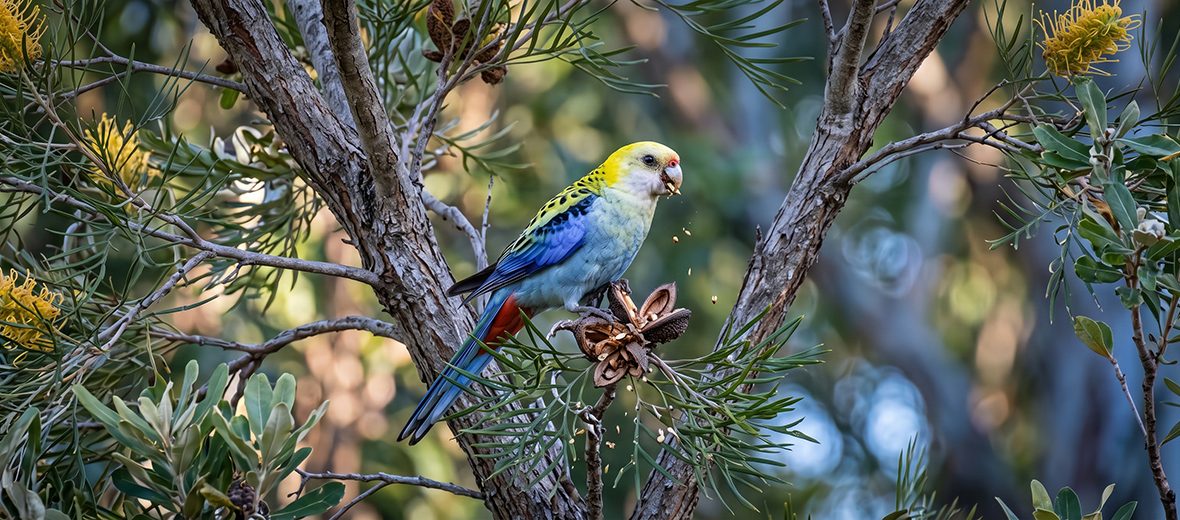
The pale-headed rosella is a moderate-size parrot that hails from northeastern and eastern Australia. They are conspecific with the eastern rosella. These parrots are considered an agricultural pest because they feed heavily on seeds, fruits, and grains. The installation of cattle watering troughs has allowed this species to thrive and expand into the drier, western limits of its normal range where naturally occurring water would otherwise be scarce. Due to their increasing population trend and wide range these birds are listed as Least Concern by the IUCN.
First the Stats…
Scientific name: Platycercus adscitus
Weight: Up to 6.2 ounce
Length: Up to 13 inches
Wingspan: Up to 19 inches
Lifespan: Up to 25+ years
Now on to the Facts!
1.) They were formally described in 1790 by the English ornithologist John Latham.
2.) Hybridization occurs where their ranges overlap with either the northern or eastern rosellas.
3.) Other common names exist for these parrots, such as mealy rosella, Moreton Bay rosella, blue rosella, and blue-cheeked rosella.
4.) Their preferred habitats are open forests, however they have adapted quite well to human modifications of the rural landscapes and may even have become a pest species to orchards and cereal crops.
5.) These birds feast on grass and tree seeds, fruits, river red-gum, river she-oak, snow-in-summer, other melaleucas, rough cockleburr, and are partial to the introduced Scotch thistle.
But wait, there’s more on the pale-headed rosella!
6.) Breeding season varies from September – December for the southern populations to February – June for the northern ones.
7.) Females lay up to 9 eggs each season that hatch in up to 19 days.
Did you know…?
They were introduced to Hawaii in circa 1877, but had died out by the late 1920s.
8.) This species is generally very hardy and easy to keep in captivity. However, they can be aggressive and so it is recommended that they be segregated from other birds in captivity.
9.) These parrots are diurnal (active during the day).
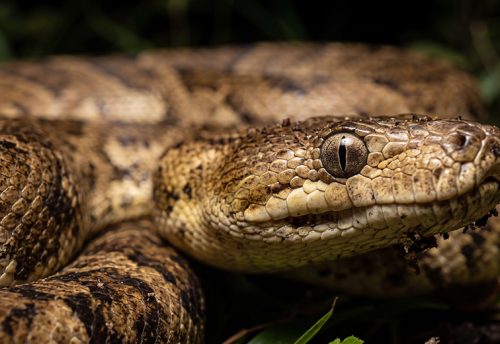
10.) Peregrine falcons, goshawks, powerful owls, goannas, and carpet pythons all prey on these birds.
Now a Short Pale-Headed Rosella Video!
Be sure to share & comment below! Also, check out the Critter Science YouTube channel. Videos added regularly. Be sure to like and subscribe!

Want to suggest a critter for me to write about? Let me know here.
Some source material acquired from: Wikipedia & IUCN

Leave a Reply