
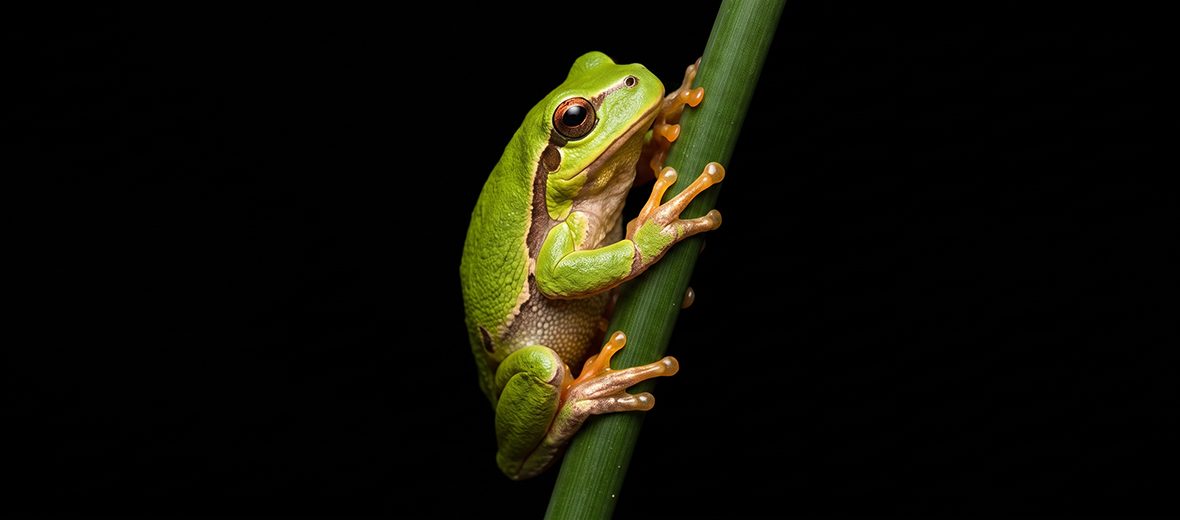
The European tree frog is widespread throughout most of Europe. They are a small sized, green in color, tree frog. In the UK, this species’ status is legally classed as non-native. They have been introduced, yet are now thought to be extinct there. The drainage and drying up of ponds, marshes, and floodplains directly destroys their essential breeding grounds. The conversion of diverse landscapes into intensive crop production or livestock farming removes the hedges, meadows, and bushes these frogs use for foraging and summer cover. Habitat loss and destruction at the hands or housing, commercial development, and industrialization pave over natural green corridors, driving regional declines. Roads and railways divide migration routes between the frogs’ overwintering land habitats and spring breeding pools, and can result in vehicle strike (being hit by vehicles). Fragmented landscapes trap small populations in isolated pockets, preventing genetic exchange and making local colonies highly susceptible to extinction. Also, the heavy use of local pesticides, chemical fertilizers, and toxins contaminates water bodies, killing larvae or altering their development. Municipal sewage and industrial waste degrade overall water quality, which these amphibians absorb directly through their highly permeable skin. Climate change causes shifting weather patterns that alter the hydrology of temporary pools, causing them to dry up before tadpoles can complete their metamorphosis. However, throughout all these threats these frogs are still abundant enough to be listed as Least Concern by the IUCN. Their population trend is listed as decreasing though.
First the Stats…
Scientific name: Hyla arborea
Weight: Up to .3 ounce
Length: Up to 2 inches
Lifespan: Up to 22 years
Now on to the Facts!
1.) Like other species of tree frogs, they are nocturnal (active at night).
2.) They prefer marshlands, damp meadows, reed beds, gardens, vineyards, parks, orchards, stream banks, lake shores, and/or humid or dry forests.
3.) Spiders, flies, beetles, butterflies, and smooth caterpillars are all on the menu.
4.) These tree frogs brumate (hibernation for amphibians and reptiles) within walls, cellars, under rocks, under clumps of vegetation, or buried in leaf piles or manure piles for the winter.
5.) While these tree frogs are sensitive to habitat fragmentation, habitat restoration (starting in circa 1980s) has been successful in increasing populations.
But wait, there’s more on the European tree frog!
6.) Owls, herons, grass snakes, red foxes, cats, dogs, raccoons, and more prey on these little tree frogs.
7.) Females produce up to 1,000 eggs each season that hatch in up to 14 days.
Did you know…?
In the past, tree frogs were used as barometers, due to the fact that they respond to approaching rain by croaking.
8.) Tadpoles metamorphose into adult frogs in up to 3 months.
9.) These tree frogs can jump upwards of 2 feet, which is approximately 20 times their body length.
10.) The call of these tree frogs is a loud, repetitive, and rhythmic croak that sounds like “track-track-track” or a metallic “err-err-err.”
Now a Short European tree frog Video!
Be sure to share & comment below! Also, check out the Critter Science YouTube channel. Videos added regularly. Be sure to like and subscribe!

Want to suggest a critter for me to write about? Let me know here.
Some source material acquired from: Wikipedia & IUCN


Leave a Reply