
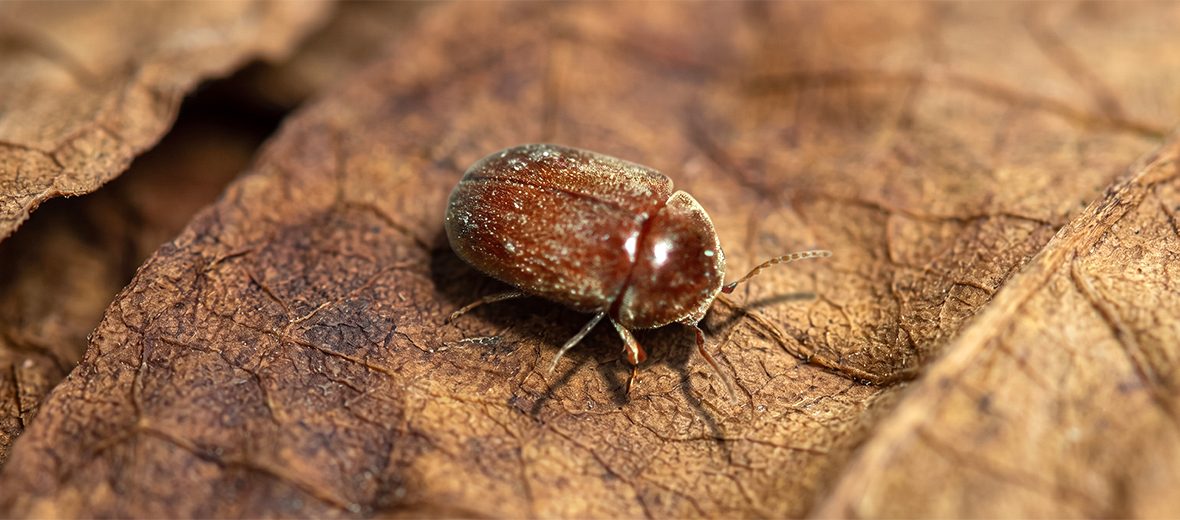
The tobacco beetle, aka cigarette beetle, cigar beetle, or paprika beetle, is similar in appearance to the drugstore beetle. They can be found worldwide, sans Antarctica. They have a preference for tropical habitats. That being said, they do not thrive in colder environments. With a global distribution and reputation of being a pest or invasive type of insect these beetles are listed as Not Evaluated by the IUCN. Since they don’t have an official, trackable conservation or census population trend like wildlife. Their populations are tracked based on infestation risk. Because of increased global shipping and international trade, these beetles are widely distributed.
First the Stats…
Scientific name: Lasioderma serricorne
Length: Up to .16 inch
Lifespan: Up to 90 days
Now on to the Facts!
1.) Other names for these beetles are “tobacco bug”, “tobacco borer”, “tobacco weevil”, “cheroot beetle”, and “tow bug”.
2.) Not only tobacco is consumed. They also go after cereals, dried fruits, herbs, flour, various animal products, spices, and more.
3.) They are skilled fliers that migrate to new locales easily.
4.) Adults feast primarily on cured tobacco leaves.
5.) When the substrate they are hatched on doesn’t provide for the beetle’s diet, the larvae may eat the eggshell they hatched from, as well as other unhatched eggs.
But wait, there’s more on the tobacco beetle!
6.) However, egg shells and/or other eggs are not a sufficient diet for them and cannot sustain the larvae into adulthood, thus the larvae will die if no other suitable food source is located.
7.) Females lay up to 100 eggs that hatch in up to 22 days.
Did you know…?
When a non-food sources were coated in the smell of tobacco and/or wheat, female beetles not only choose to lay her eggs there, but laid dramatically more eggs than they did on the non-food odor sources.
8.) They face several predators and parasites throughout their various life stages, such as parasitoid wasp species, and more.
9.) During their infestation, adults will chew holes in food packaging to escape. Adults seldom feed on the infested material. Larvae causes the most amount of damage to dried packaged goods.
10.) These beetles have been known in some cases to be associated with an infection called canthariasis, which is a human insectal disease derived from either the adults or their larvae. Canthariasis infections transmitted to humans by the cigarette beetle have been reported in both China and Malaysia.
11.) Canthariasis causes nausea, vomiting, abdominal cramps, diarrhea, stomach bloating, loss of appetite, and the presence of larvae in the stool.
Now a Short Tobacco Beetle Video!
Be sure to share & comment below! Also, check out the Critter Science YouTube channel. Videos added regularly. Be sure to like and subscribe!

Want to suggest a critter for me to write about? Let me know here.
Some source material acquired from: Wikipedia & IUCN



Leave a Reply