
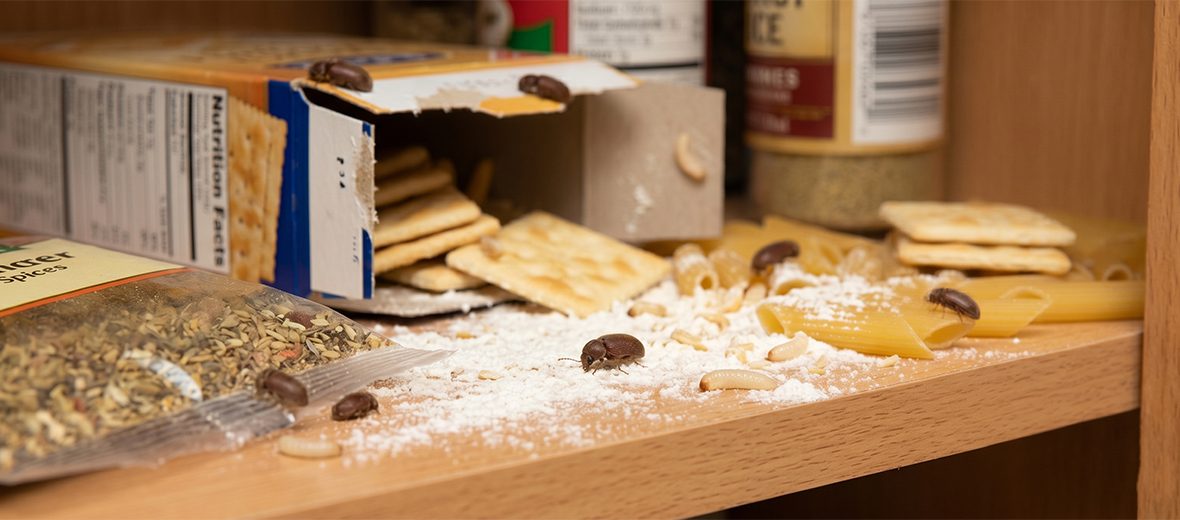
The drugstore beetle, aka bread beetle, biscuit beetle, and often misnamed the biscuit weevil (seeing as they aren’t weevils), can be found worldwide. These beetles have a symbiotic relationship with a yeast-like fungus which is transmitted from female to larvae through the oviduct. They face the threats of predatory beetles, mites, and parasitoid wasps. Poisoning and trapping are other threats they face. However, these beetles have a global distribution, sans in Antarctica, and they are, as a result, not listed with the IUCN. While not considered an invasive species, they are considered a cosmopolitan, synanthropic pest–meaning they are a domestic nuisance that thrives globally in human-modified environments like pantries, warehouses, and pharmacies.
First the Stats…
Scientific name: Stegobium paniceum
Length: Up to .125 inch
Lifespan: Up to 5 months, for larvae, and up to 75 days for adults
Now on to the Facts!
1.) Bread, coffee beans, dried fruit, grain, herbs, powdered milk, treats such as cookies and chocolates, spices, seeds, and medicinal plants are all feasted upon.
2.) Museum specimens, wool, hair, leather, books, upholstery, and manuscripts are also on the menu. Which is similar to the carpet beetle.
3.) Adults gain access to boxed and packaged goods by gnawing through the packaging creating large holes in the material, leading to their contamination, deterioration, and loss of structural integrity.
4.) They were originally described by Carl Linnaeus as part of his Systema Naturae in 1758.
5.) These beetles originated from an ancient lineage hailing back to the Late Cretaceous period (94 million years ago).
But wait, there’s more on the drugstore beetle!
6.) They often enter a home, museum, or office in bulk items like bird seed, grass seed, or dry pet food, where numerous generations of beetles can develop unnoticed until some of the adults eventually leave to infest new locations.
7.) Females lay up to 75 eggs, with up to 75% being fertile.
Did you know…?
The oldest records of this beetle as a pest are recorded from the Bronze Age of Akrotiri, Santorini, Greece around 1500 BC where they were found associated with stored legumes.
8.) Eggs hatch in up to 20 days.
9.) In optimal conditions it takes the larvae up to 40 days to develop into adults.
10.) Once the source of their infestation is discovered, any disposable items populated with beetles should be wrapped in plastic and thrown out. Because the beetles lay their eggs on or near food items, it is important to inspect food containers thoroughly for them.
Now a Short Drugstore Beetle Video!
Be sure to share & comment below! Also, check out the Critter Science YouTube channel. Videos added regularly. Be sure to like and subscribe!

Want to suggest a critter for me to write about? Let me know here.
Some source material acquired from: Wikipedia & IUCN