
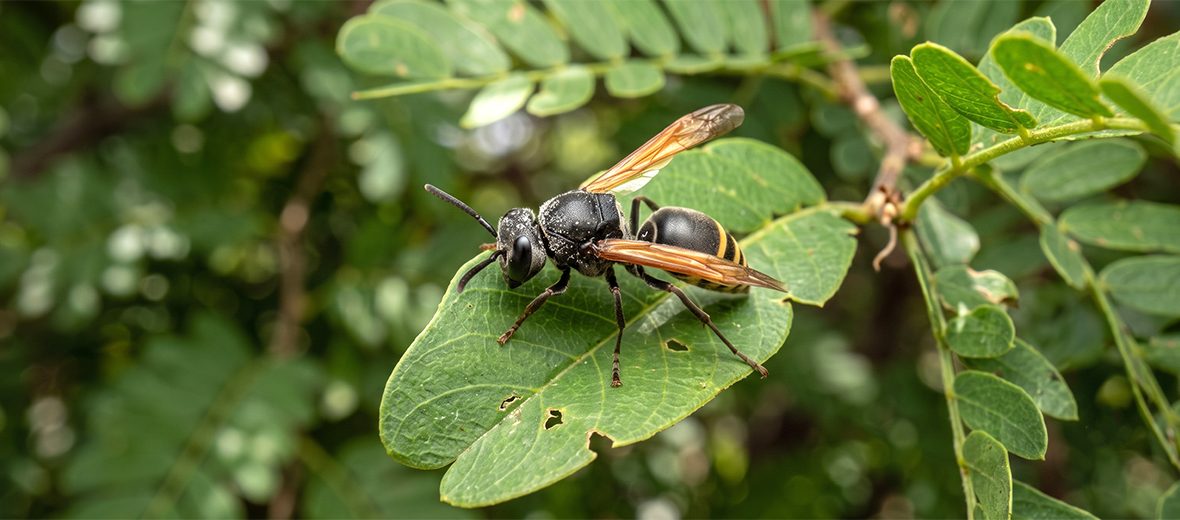
The Mexican honey wasp is beneficial in that it’s used by humans to control aphids, Asian citrus psyllids, and weevils, as well as to pollinate avocados. Due to their production of sweet, floral honey, their nests are historically harvested and destroyed by indigenous and rural communities in Mexico and Central/South America. Just like other pollinating insects, they are vulnerable to the use of broad-spectrum pesticides and ongoing habitat fragmentation and destruction at the hands of residential and commercial developments, farming, and ranching. However, these insects are abundant and Not Evaluated by the IUCN. Their population trend is listed as stable and even increasing.
First the Stats…
Scientific name: Brachygastra mellifica
Weight: Up to .005 ounce
Length: Up to .35 inch
Lifespan: Up to 3 years
Now on to the Facts!
1.) These wasps sometimes gather nectar from plants that produce neurotoxins (like Datura or Jimsonweed), which can render the honey poisonous to their predators (and humans).
2.) Their genus name Brachygastra hails from Ancient Greek βραχύς (brakhús), and translates to “short”, and γαστήρ (gastḗr), translates to “belly”. The specific epithet mellifica is Latin and means “to make honey”.
3.) Besides living in South America, Central America, and Mexico, they have begun moving northward into North America into southern states such as Arizona and Texas.
4.) Only the workers and females have stingers.
5.) The sting is intensely sharp and blistering. The venom can cause immediate, severe local pain, significant swelling, and redness. In most cases though, symptoms are localized, however multiple stings can trigger systemic reactions and may require immediate medical attention.
But wait, there’s more on the Mexican honey wasp!
6.) Their nest can measure up to 19.69 inches in diameter.
7.) A single nest can house upwards of 18,700 wasps! They are constructed in tree canopies up to 29.53 feet above the ground.
Did you know…?
They are 1 of the few wasp species that produces honey. These critters are also considered a delicacy in some cultures in Mexico.
8.) The Mexican honey wasp not only feeds on the fluids from their prey, but sometimes also eat the entire exoskeleton. Grubs from moths are also consumed as well.
9.) Like other wasp species, these critters are diurnal (active during the day).
10.) Robber flies, orb-weaving spiders, opossums, and woodpeckers all prey on these critters.
Now a Short Mexican Honey Wasp Video!
Be sure to share & comment below! Also, check out the Critter Science YouTube channel. Videos added regularly. Be sure to like and subscribe!

Want to suggest a critter for me to write about? Let me know here.
Some source material acquired from: Wikipedia & IUCN


Leave a Reply