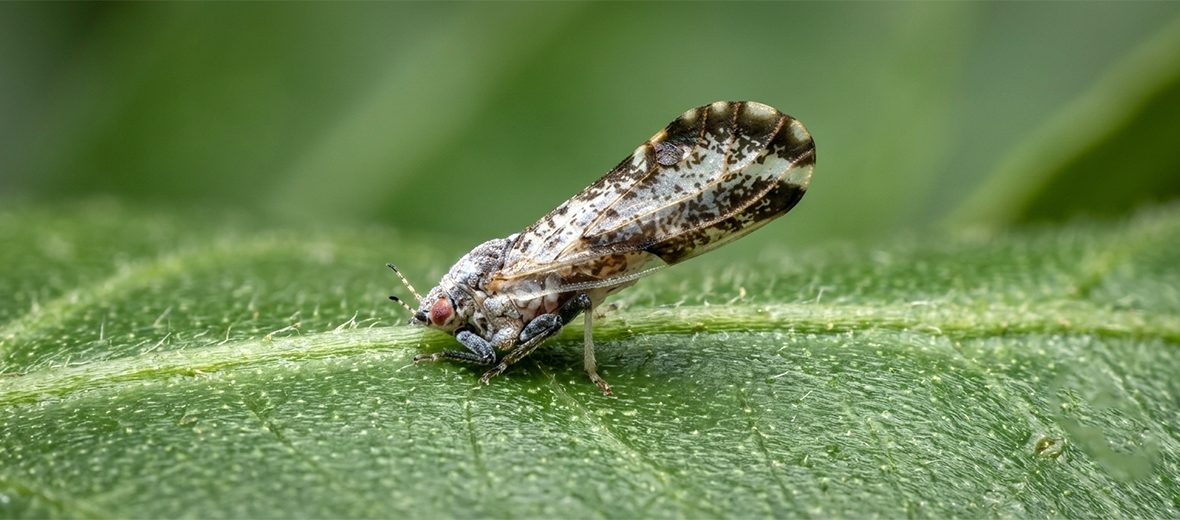
The Asian citrus psyllid is a sap-sucking, hemipteran bug and 1 of 2 confirmed vectors of citrus greening disease. They hail originally from Asia. However, they have been introduced to North America, South America, Central America, the Caribbean, Oceania, and Africa. These pests are both an insect and a “true bug.” Anywhere where this psyllid is found is under quarantine restrictions to attempt to completely eradicate or stop them from gaining a foothold. They are listed as Not Evaluated by the IUCN. Their population trend is listed as increasing.
First the Stats…
Scientific name: Diaphorina citri
Length: Up to .16 inch
Lifespan: Up to 88 days
Now on to the Facts!
1.) In 2008 the USDA-ARS, U.S. Horticultural Research Laboratory (USHRL), located in Fort Pierce, FL, established the international Genome Consortium to complete the Asian Citrus Psyllid Genome.
2.) In 2005 the USDA, ARS researchers produced the very first gene sequences and produced the first draft transcriptomes in 2009 – 2011, draft genomes 2013 – 2017, the improved Official Gene Set, OGSv2.0 and diaci_2.0 genome by 2019 – 2022.
3.) The genome, transcriptome and Official Gene Set, have since enabled the identification of thousands of genes and proteins from other critters.
4.) All of these resources have led to the development of broad strategic approaches in managing psyllid populations, like RNAi biopesticides.
5.) The predatory Brachygastra mellifica and parasitoid Tamarixia radiata wasps are both helpful in controlling these pests. Ladybugs are also very important predators, as are mantis nymphs, hoverflies, and lacewings.
But wait, there’s more on the Asian citrus psyllid!
6.) Psyllid nymphs are located on new shoots of citrus trees. When they feed, they create a toxin that causes the plant tips to die back and/or become contorted, preventing the leaves from expanding as normal.
7.) Females lay up to 800 eggs on the tips of growing shoots, between and near the unfolding leaves. The eggs hatch in up to 9 days.
Did you know…?
They are the only known nonhuman vector of citrus greening disease.
8.) The bacteria they vector results in small, asymmetrical fruit that are partially green and are unsellable due to their poor size and quality. They can also transmit another serious citrus disease caused by the Tristeza virus.
9.) Both adults and nymphs can be controlled by the use of a wide range of insecticides. Unfortunately, these same insecticides kill desired invertebrates, too.
10.) Localized impacts show that annual damages and control costs run into the billions of dollars globally, and are largely tied to their transmission of the catastrophic plant disease Huanglongbing (HLB).
Now a Short Asian Citrus Psyllid Video!
Be sure to share & comment below! Also, check out the Critter Science YouTube channel. Videos added regularly. Be sure to like and subscribe!

Want to suggest a critter for me to write about? Let me know here.
Some source material acquired from: Wikipedia & IUCN