
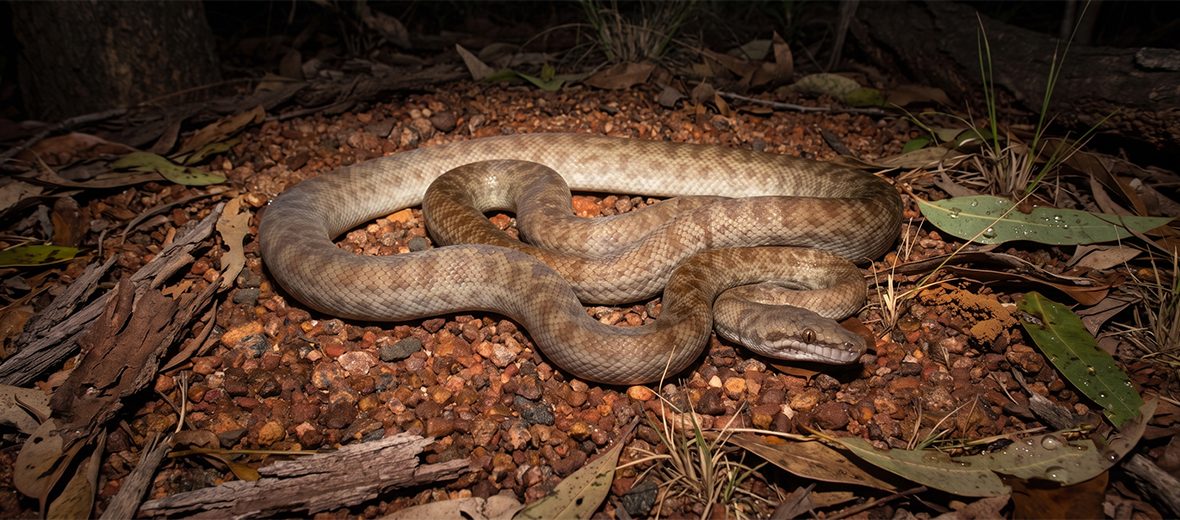
The Children’s python, aka banded rock python, small-blotched python, and eastern small-blotched python, hails from northern Australia. These snakes face the threat of death from ingesting the deadly poisonous cane toad. The threat of habitat loss and destruction at the hands of clearing of native woodlands and rocky outcrops for human use is ongoing. Vehicle strike (being hit by vehicles) often occurs due to their propensity to bask on dirt roads. These snakes also have to contend with seasonal water deprivation due to river regulation and water removal practices. Unregulated international and domestic pet trade demand reduces their numbers. Plus, there is often intentional killing out of fear or misunderstanding, thinking they are venomous or dangerous to have around. Finally, climate change causes shifts in rainfall and prolonged extreme dry period stresses in regional populations. However, these serpents are still listed as Least Concern by the IUCN. Their population trend is listed as stable.
First the Stats…
Scientific name: Antaresia childreni
Weight: Up to 1.1 lbs.
Length: Up to 3.3 feet
Lifespan: Up to 30 years
Now on to the Facts!
1.) They were first described by the British zoologist John Edward Gray in 1842.
2.) Their preferred habitats are forests, savannas, shrublands, deserts, grasslands, and freshwater wetlands.
3.) Lizards, smaller snakes, birds, mice, rats, smaller opossums, and microbats are all on the menu.
4.) These pythons are often kept as pets worldwide due to their diminutive size, docile temperament, strong feeding response, hardiness, and ease of captive care.
5.) This species is also particularly easy to breed, although some individuals (primarily males) might refuse to eat when they are interested in mating.
But wait, there’s more on the Children’s python!
6.) When males fight for breeding rights, they use their cloacal spurs to scratch their opponents, and also strike and bite one another until the other submits. Cloacal spurs are remnants or vestigial limbs that all pythons have.
7.) Females lay up to 25 eggs that hatch in up to 54 days.
Did you know…?
They catch flying bats by dangling from stalactites in caves, which they frequently inhabit, and snag them out of mid air as they fly by.
8.) Snakelets measure up to 12 inches at hatching.
9.) Birds of prey, carnivorous marsupials, and venomous snakes all prey on these pythons.
10.) Like many other pythons, they are nocturnal (active at night).
Now a Short Children’s Python Video!
Be sure to share & comment below! Also, check out the Critter Science YouTube channel. Videos added regularly. Be sure to like and subscribe!

Want to suggest a critter for me to write about? Let me know here.
Some source material acquired from: Wikipedia & IUCN

Leave a Reply