
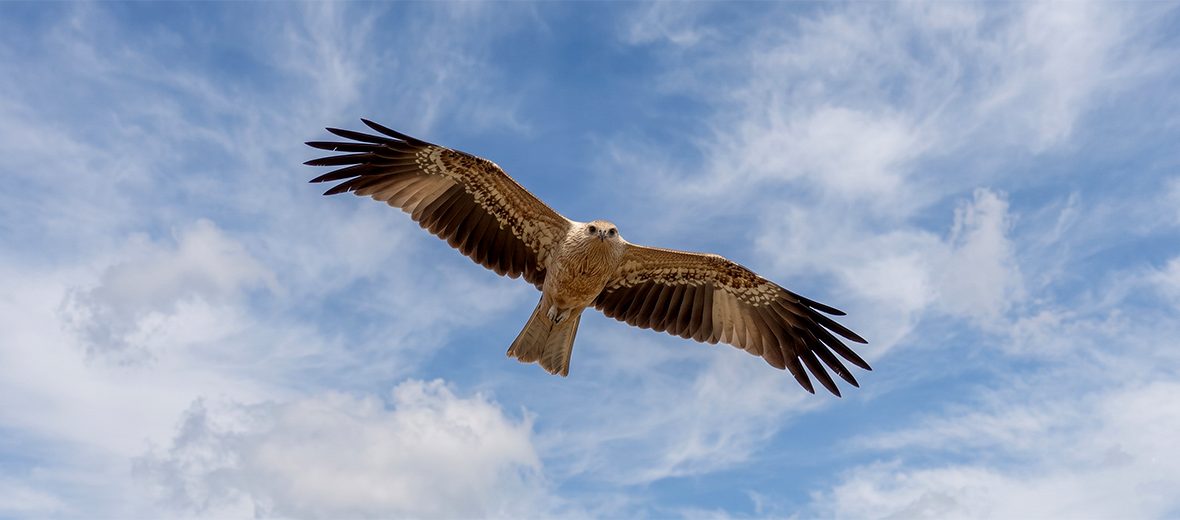
The whistling kite, aka whistling eagle or whistling hawk, is a mid-sized raptor found throughout Australia, New Caledonia, and much of New Guinea. They face the threat of habitat loss and destruction at the hands of wetland drainage and tree removal for agriculture. Secondary poisoning is another risk factor in that these birds often feast on carrion (dead animals) that has been killed due to the use of poison. Vehicle strike (being hit by vehicles) is another threat faced. Like many other raptors, they are vulnerable to electrocution from power lines and collisions with wind turbine blades. However, these birds of prey are abundant enough to be listed as Least Concern by the IUCN. Their population trend is listed as stable. This article is on special request by my friend Stefan.
First the Stats…
Scientific name: Haliastur sphenurus
Weight: Up to 2.31 lbs.
Length: Up to 24 inches
Wingspan: Up to 4.9 feet
Lifespan: Up to 20 years
Now on to the Facts!
1.) These raptors are diurnal (active during the day).
2.) They are named for their loud whistling calls made in flight.
3.) Whistling kites prefer open and wooded habitats.
4.) These raptors can be found from sea level to 4,593 foot elevations.
5.) While normally found individually or in pairs, larger groupings can be seen during nomadic movements.
But wait, there’s more on the whistling kite!
6.) Mice, rats, birds, fish, reptiles, amphibians, crustaceans, insects, and carrion are all on the menu.
7.) Ibises and herons are often the victims of kleptoparasitism (stealing food from another animal) from these kites.
Did you know…?
In a truly odd feat, these kites will carry burning sticks to unburnt areas and stoke new fires in order to flush out new prey. This use of fire as a tool to obtain food is only found in 2 other species: black kites and brown falcons.
8.) Females lay up to 3 eggs that hatch in up to 40 days.
9.) After up to 54 days the chicks will fledge, but will remain with their parents for up to an additional 8 weeks before leaving.
10.) Snakes, feral cats, and black-breasted buzzards all prey on the chicks and sometimes adults.
Now a Short Whistling Kite Video!
Be sure to share & comment below! Also, check out the Critter Science YouTube channel. Videos added regularly. Be sure to like and subscribe!

Want to suggest a critter for me to write about? Let me know here.
Some source material acquired from: Wikipedia & IUCN

Leave a Reply