Critter Science
  • Zoology
    • Ecology
      • Animal Conservation
        • CITES: Protecting Wildlife
        • Dame Jane Goodall
        • Endangered Animals
        • Ex Situ Explained
        • In Situ Explained
        • IUCN Statuses
        • Zoological Branches
      • Chromatophores and Survival
      • Ecosystems
        • Animal Habitats
        • The Biomes
        • Coastal Erosion
        • Rainforest Types
      • Evolution. The Facts.
        • Animal Devolution
        • Animal Mimicry
        • Convergent Evolution
        • Carl Linnaeus
        • Charles Darwin
        • Evolution of Amphibians
        • Evolution of Birds
        • Genetic Drift in the Animal Kingdom
        • Naturalism
        • Natural Selection
        • Venom vs Poison
      • Invertebrate Families Explored
        • What are Arachnids?
          • Spider Webs
      • Predator vs Prey
      • Producers and Consumers
      • Vertebrate Animal Families
        • Snakes vs Legless Lizards
        • What is a Marsupial?
      • The Wild Apothecary
    • Sustainability
      • Climate Change
      • Global Warming
      • Pollution
        • Air Pollution
        • Land Pollution
        • Light Pollution
        • Microplastics Pollution
        • Noise Pollution
        • Water Pollution
      • Recycling
        • Recycling Plastics
      • Renewable Energy
    • Animal Behavioral Patterns
      • Avian Communication
      • Cetacean Communication
      • Elephant Communication
      • Herpetofauna Communication
      • Primate Language: The Debate
      • Types of Animal Dormancy
    • What are Species?
      • Amphibians vs Reptiles
      • Animal Reproduction
      • Animal Skin and Scales
      • Claws, Nails, and Talons
      • Fur and Hair
      • Gecko Feet
      • Invasive Species
      • Lazarus Species: Rediscovered Life
      • Speciation
      • Species Complex
      • The Enigmatic Purr
    • About the Critterman
  • Daily Critter Facts
    • Amphibian Facts
      • Frog Facts
      • Newt Facts
      • Salamander Facts
      • Toad Facts
    • Arthropod Facts
      • Arachnid Facts
      • Insect Facts
    • Bird Facts
      • Flightless Bird Facts
      • Predatory Bird Facts
      • Scavenger Bird Facts
      • Wading Bird Facts
    • Cryptozoology
    • Fish Facts
      • Cephalopod Facts
      • Crustacean Facts
      • Jellyfish Facts
      • Reefs
      • Shark and Ray Facts
      • Shellfish Facts
    • Flying Mammal Facts
    • Gastropod Facts
    • Land Mammal Facts
      • Canine Facts
      • Feline Facts
      • Lagomorph Facts
      • Marsupial Facts
      • Mustelid Facts
      • Primate Facts
      • Rodent Facts
      • Ungulate Facts
    • Parasite Facts
    • Reptile Facts
      • Crocodilian Facts
      • Lizard Facts
      • Snake Facts
      • Turtle Facts
    • Sea Mammal Facts
      • Dolphin Facts
      • Porpoise Facts
      • Sea Lion Facts
      • Seal Facts
      • Whale Facts
    • Worm Facts
  • For Teachers
    • Animal Quizzes
      • Amphibian Quiz
      • Bird Quiz
      • Cat Quiz
      • Dog Quiz
      • Dolphin Quiz
      • Insect Quiz
      • Reptile Quiz
    • Animal Word Search
    • Butterfly Life Cycle
      • Butterfly Metamorphosis
      • World’s Largest Butterfly
      • World’s Largest Moth
    • The Cellular Structure of an Animal
    • Coloring Pages
    • Fish and Sharks
    • Frogs vs Toads
    • Insect vs Bug
    • Metamorphosis – A Frog’s Life Cycle
  • Study Guides
    • African Animals
    • Antarctica Animals
    • Asian Animals
    • Australian Animals
    • Central American Animals
    • European Animals
    • North American Animals
    • South American Animals
  • Diseases & Parasites
    • Bsal
    • Canine Distemper Virus (CDV)
    • Chronic Wasting Disease (CWD)
    • The Deadly Chytrid Fungus
    • All About Parasites
    • The Rabies Virus
    • Toxoplasmosis
    • White-Nose Syndrome
  • Contact
    • General Contact
    • Guest Article Submission
      • Guest Articles
        • Guest Articles – 2024
    • What Critter is This?
    • Animal Welfare Organizations
    • Privacy Policy
Subscribe
long-toed salamander

The Long-Toed Salamander

  • 6 February, 2026
  • Critterman
  • No Comments
  • 26 Views
  • 1 Likes
Amphibian Facts, Daily Critter Facts, Salamander Facts

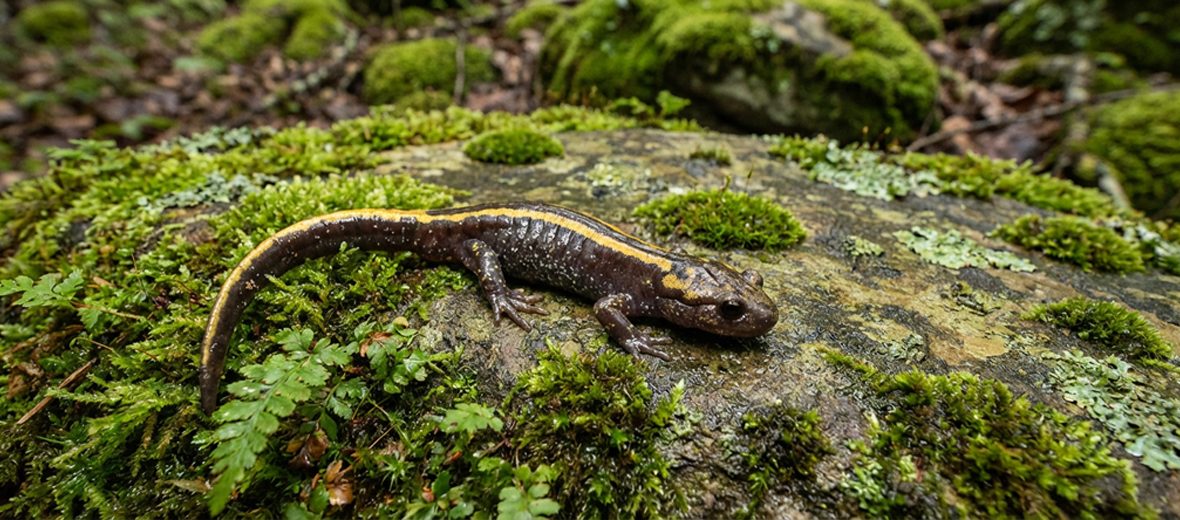
The long-toed salamander gets their name due to their long outer 4th toe on the hind limbs. These critters are found at up to 9,200 feet elevations. They face the threats of invasive species in the form of trout that consume the larval stage of these salamanders; and likely habitat loss and destruction, as well as fragmentation. However, they are abundant enough to be listed as Least Concern by the IUCN. Their population trend is listed as stable, for now.

First the Stats…

Scientific name: Ambystoma macrodactylum
Weight: Up to .26 ounce
Length: Up to 5.5 inches, including their tail
Lifespan: Up to 10 years

Now on to the Facts!

1.) Their preferred habitats are alpine meadows along the rocky shores of mountain lakes, cheatgrass plains, coniferous forests, montane riparian zones, red fir forests, sagebrush plains, semiarid sagebrush, and temperate rainforests.

2.) They dwell in slow-moving streams, ponds, and lakes during their aquatic breeding phase.

3.) These salamanders brumate (hibernation for amphibians) during the cold winter months, and survive on energy reserves stored within their skin and tail.

4.) They were first described by American naturalist Spencer Fullerton Baird in 1849 (circa 1850s).

5.) There are 5 recognized subspecies: A. m. croceum, A. m. columbianum, A. m. krausei, A. m. sigillatum, and A. m. macrodactylum.

But wait, there’s more on the long-toed salamander!

6.) Females lay upwards of 264 eggs per cluster.

7.) The larvae hatch in up to 6 weeks.

Did you know…?
This species is 1 of the most widely distributed salamanders in North America, 2nd only to the tiger salamander.

8.) To improve their chances for survival, some individuals grow larger heads and become cannibals, then they feed upon their own brood mates.

9.) The larvae metamorphose into adults in up to 4 months.

10.) Adults prey on beetles, various invertebrates, tadpoles, worms, and small fish.

But wait, there’s still more on the long-toed salamander!

11.) Garter snakes, moles, shrews, mice, rats, birds, and fish all prey on these salamanders.

12.) When threatened, these salamanders will wave their tail and secrete an adhesive white milky substance that is noxious and very likely poisonous.

Did you know…?
Places like Waterton Lakes National Park have installed a road tunnel underpass to allow safe passage and to sustain the migration ecology of these salamanders.

13.) They also have the ability of caudal autotomy (dropping the end of their tail). This shed tail will wriggle and squirm, attracting the attention of the assailant, and hopefully giving the salamander a chance to escape.

14.) Just like all amphibians, the long-toed salamander has both an aquatic and terrestrial life transition and semipermeable skin.

15.) These salamanders are primarily nocturnal (active at night).

16.) These, like all salamanders, are coined as indicator species because they are effected by changes in the surrounding environment.

Now a Short Long-Toed Salamander Video!

Be sure to share & comment below! Also, check out the Critter Science YouTube channel. Videos added regularly!

Subscribe


Want to suggest a critter for me to write about? Let me know here.

Some source material acquired from: Wikipedia & IUCN

Trending
The Indian Gray Mongoose

amphibianamphibiansCanadadropping taileggslong-toed salamanderPacific NorthwestpoisonpoisonoussalamandersalamanderstailUnited States
Critterman

With over 50 years of critter experience to my credit and hundreds of zoology teaching hours to people around the world, I have amassed not only a continuing thirst for critter knowledge but a desire to teach others all I can about the majesty and wonder of our natural world. Critter Science is a culmination of such knowledge. I have hands on as well as book acquired intel on all kinds of critters. Whether they're on land, sea, or in the air. I will never say that I know everything about all animals. That's impossible, even for a savant. But, that being said, ask me any animal question and I'll answer it. If I don't know the answer, I'll get an answer for you!

The Ghost Bat
Related Posts
  • ghost bat
    The Ghost Bat 5 February, 2026
  • great desert skink
    The Great Desert Skink 4 February, 2026
  • reticulated leaf frog
    The Reticulated Leaf Frog 3 February, 2026
  • Daily Critter Facts
  • Guest Articles
  • BYET
  • Teachers
  • Study Guides
  • Contact

Copyright © 2025, Critter Science. All Rights Reserved.