
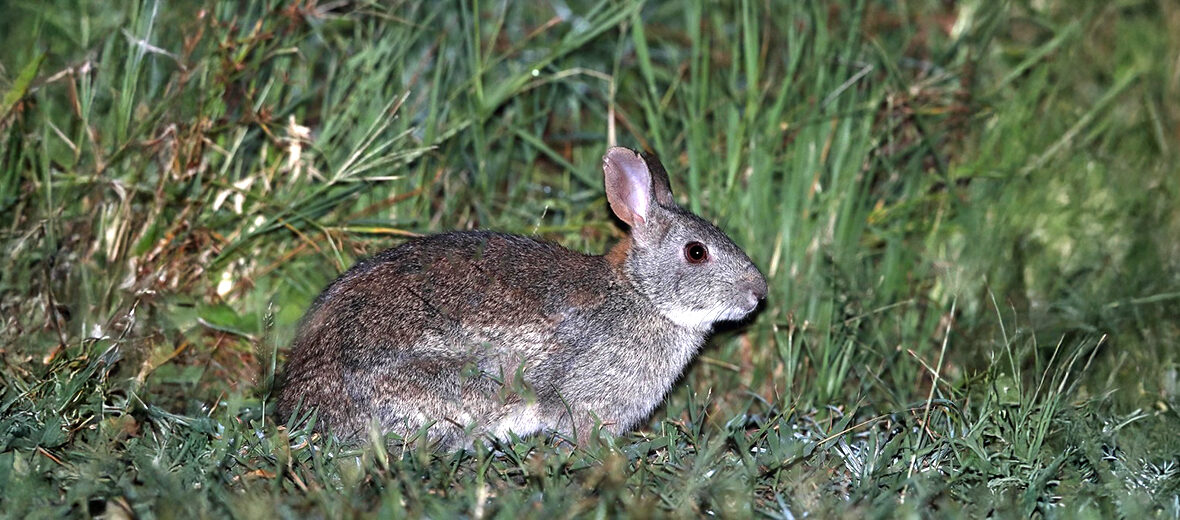
The Bunyoro rabbit, aka Uganda grass hare, is located in only a couple locations in central Africa. They prefer damp savannahs, many times with rocky outcrops, but they also appear in forests and rocky areas alongside rock hyraxes. They face the threats of hunting, with dogs and nets; trapping, for their meat and fur; and habitat loss and destruction, due to fires and ill-managed fire suppression practices. These rabbits are abundant enough, for now, to be listed as Least Concern by the IUCN. Their population trend is listed as decreasing though.
First the Stats…
Scientific name: Poelagus marjorita
Weight: Up to 7 lbs.
Length: Up to 23.8 inches, plus up to a 2.8 inch tail
Lifespan: Up to 12 years
Now on to the Facts!
1.) They were first described by British mammalogist Jane St. Leger in 1929.
2.) These rabbits are named after their type locality, part of the Bunyoro kingdom.
3.) Bunyoro rabbits spread to various parts of Africa during the middle Miocene epoch, 1.53 million years ago.
4.) A 2022 study of the phylogenetic relationships between mammals utilizing ultraconserved elements in museum specimens placed the riverine rabbit as the Bunyoro rabbit’s sister clade.
5.) These rabbits have morphological features that resemble both rabbits and hares.
But wait, there’s more on the Bunyoro rabbit!
6.) They only dwell in 4 isolated populations that occur in Uganda, South Sudan, northeastern Democratic Republic of the Congo, and eastern Central African Republic.
7.) These rabbits are nocturnal (active at night).
Did you know…?
Like other rabbits, they can run upwards of 45 mph and jump up to 3 feet.
8.) Various grasses and flowering plants make up their diet.
9.) Hawks, owls, servals, genets and others all prey on these rabbits.
10.) Females undergo up to a 5 week gestation (pregnancy) that yields up to 2 kits.
Now a Short Bunyoro Rabbit Video!
This video talks about rabbits in general.
Be sure to share & comment below! Also, check out the Critter Science YouTube channel. Videos added regularly!

Want to suggest a critter for me to write about? Let me know here.
Some source material acquired from: Wikipedia & IUCN
Photo credit: iNaturalist

Leave a Reply