
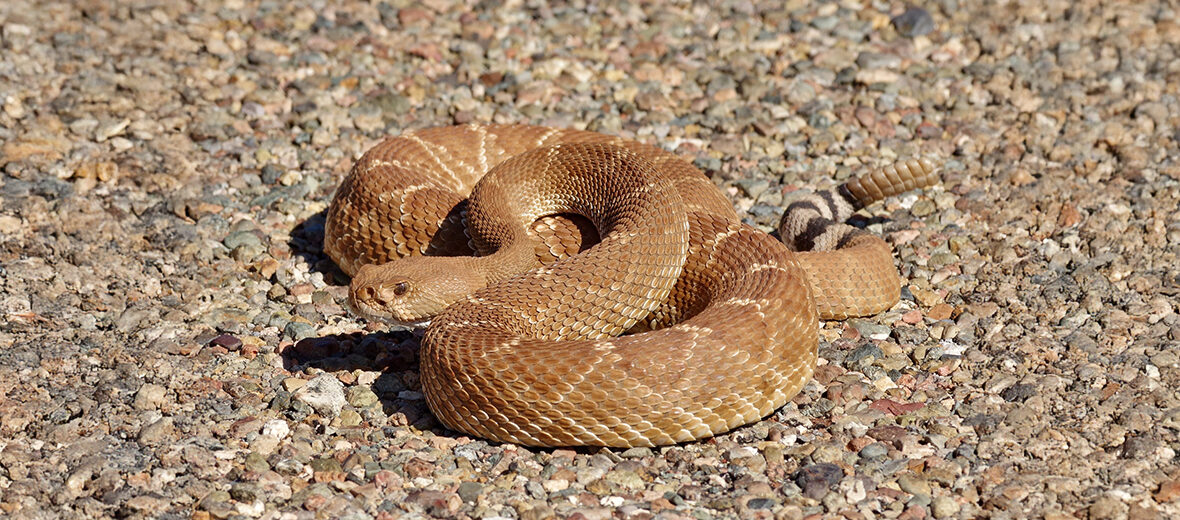
The red diamond rattlesnake, aka red rattlesnake or red diamond snake, can be found in southwestern California and Baja California. These pit vipers face the threats of habitat loss and destruction at the hands of farming, ranching, residential, and commercial developments; hunting; and trapping. Even through these adversities they are still abundant enough to be listed as Least Concern by the IUCN. Their population trend is listed as decreasing though.
First the Stats…
Scientific name: Crotalus ruber
Weight: Up to 6+ lbs.
Length: Up to 64 inches
Lifespan: Up to 20 years
Now on to the Facts!
1.) Other common names for these rattlesnakes are red diamond-backed rattlesnake, red rattler, western diamond rattlesnake, Cedros Island diamond rattlesnake, and/or Cedros Island rattlesnake.
2.) Coastal specimens are usually longer than the inland desert specimens.
3.) Their preferred habitats are brush covered hillsides with small caves and clefts of reddish sandstone mesas as well as the dense chaparral country of the foothills, cactus patches, and boulders covered with brush.
4.) They dwell from sea level to 4,921 feet elevations.
5.) Rabbits, ground squirrels, birds, lizards, and other snakes are all on the menu.
But wait, there’s more on the red diamond rattlesnake!
6.) Mating season takes place from February – April.
7.) Females are ovovivparous (bear live young) and produce up to 20 young each season.
Did you know…?
Bite symptoms can include massive tissue swelling, intense pain, ecchymosis (discoloration of the skin), hemorrhagic blebs (blood-filled, raised blisters on the skin), and necrosis (tissue death). Systemic symptoms can include nausea, vomiting, coagulopathy (inability for blood to clot), clinical bleeding, and hemolysis (rupture or destruction of red blood cells).
8.) Not only do these rattlesnakes have a gentle disposition, but they also have among the least toxic of venom.
9.) They can still have the potential to cause death if antivenin isn’t quickly dosed.
10.) These rattlesnakes were first described by the American naturalist Edward Drinker Cope in 1892.
But wait, there’s still more on the red diamond rattlesnake!
11.) These snakes, unlike many other rattlesnakes, are diurnal (active during the day).
12.) These rattlesnakes are preyed upon by hawks, eagles, owls, coyotes, badgers, bobcats, kingsnakes, and roadrunners.
Now a Short Red Diamond Rattlesnake Video!
Be sure to share & comment below! Also, check out the Critter Science YouTube channel. Videos added regularly. Be sure to like and subscribe!

Want to suggest a critter for me to write about? Let me know here.
Some source material acquired from: Wikipedia & IUCN
Photo credit: thibaudaronson

Leave a Reply