Critter Science
  • Ecology
    • Animal Conservation
      • Apex Awakening
      • CITES: Protecting Wildlife
      • Dame Jane Goodall
      • Endangered Animals
      • Ex Situ Explained
      • In Situ Explained
      • IUCN Statuses
      • Steve Irwin
      • Zoological Branches
    • Animal Immortality and Regeneration
    • Animal Mimicry
    • Chromatophores and Survival
    • Ecosystems
      • Animal Habitats
      • The Biomes
      • Coastal Erosion
      • Desert Biomes
      • Deserts and Wildlife
      • Earth’s Living Canopies
      • Ocean Habitats
      • Rainforest Types
    • Evolution. The Facts.
      • Animal Devolution
      • Convergent Evolution
      • Carl Linnaeus
      • Charles Darwin
      • Evolution of Amphibians
      • Evolution of Birds
      • Genetic Drift in the Animal Kingdom
      • Insular Dwarfism
      • Naturalism
      • Natural Selection
    • Genetic Pollution
      • Genetic Bottlenecks in Animal Populations
    • Invertebrate Families Explored
      • Arthropod Diversity and Adaptations
      • Cephalopod Consciousness
      • Insect vs Bug
      • The Wonder and Warfare of Coral Reefs
      • What are Arachnids?
        • Spider Webs
    • Predator vs Prey
    • Producers and Consumers
    • Venom vs Poison
    • Vertebrate Families Explored
      • Amphibians: Unseen Guardians
      • Bone and Cartilage
      • Snakes vs Legless Lizards
      • The Triumph of the Ratites
      • What is a Marsupial?
    • The Wild Apothecary
  • Zoology
    • Sustainability
      • Climate Change
      • Earth Day: Past, Present, Future
      • Global Warming
      • Pollution
        • Air Pollution
        • Chemical Pollution
        • Land Pollution
        • Light Pollution
        • Microplastics Pollution
        • Noise Pollution
        • Water Pollution
      • Recycling
        • Recycling Plastics
      • Renewable Energy
    • Animal Behavioral Patterns
      • Aposematic Coloration
      • Avian Communication
      • Animal Thermoregulation
      • Beyond DNA: The Animal Accent
      • Cetacean Communication
      • Cold-Adapted Hypermetabolism
      • Elephant Communication
      • Herpetofauna Communication
      • Primate Language: The Debate
      • The Framework of Ethology
      • The Hidden Sensory Realm
      • Types of Animal Dormancy
    • What are Species?
      • Animal Reproduction
      • Introduced Species
      • Invasive Species
      • John Edward Gray
      • John Gould
      • Keystone Species
      • Lazarus Species: Rediscovered Life
      • Monotypic Species
      • Speciation
      • Species Complex
      • Understanding Animal Subspecies
    • About the Critterman
      • Amphibians Book
  • Daily Critter Facts
    • Amphibian Facts
      • Frog Facts
      • Newt Facts
      • Salamander Facts
      • Toad Facts
    • Arthropod Facts
      • Arachnid Facts
      • Insect Facts
    • Bird Facts
      • Flightless Bird Facts
      • Predatory Bird Facts
      • Scavenger Bird Facts
      • Wading Bird Facts
    • Cryptozoology
    • Fish Facts
      • Cephalopod Facts
      • Crustacean Facts
      • Jellyfish Facts
      • Reefs
      • Shark and Ray Facts
      • Shellfish Facts
    • Flying Mammal Facts
    • Gastropod Facts
    • Land Mammal Facts
      • Canine Facts
      • Feline Facts
      • Lagomorph Facts
      • Marsupial Facts
      • Mustelid Facts
      • Primate Facts
      • Rodent Facts
      • Ungulate Facts
    • Parasite Facts
    • Reptile Facts
      • Crocodilian Facts
      • Lizard Facts
      • Snake Facts
      • Turtle Facts
    • Sea Mammal Facts
      • Dolphin Facts
      • Porpoise Facts
      • Sea Lion Facts
      • Seal Facts
      • Whale Facts
    • Worm Facts
  • For Teachers
    • Animal Quizzes
      • Amphibian Quiz
      • Bird Quiz
      • Cat Quiz
      • Dog Quiz
      • Dolphin Quiz
      • Insect Quiz
      • Reptile Quiz
    • Amphibians vs Reptiles
    • Animal Skin and Scales
      • Claws, Nails, and Talons
      • Feather Anatomy, Function, & Types
      • Fur and Hair
      • Gecko Feet
    • The Enigmatic Purr
    • Animal Word Search
    • Butterfly Metamorphosis
      • World’s Largest Butterfly
      • World’s Largest Moth
    • The Cellular Structure of an Animal
    • Coloring Pages
    • Fish and Sharks
    • Frogs vs Toads
      • Metamorphosis – A Frog’s Life Cycle
    • Tunnels and Burrows
    • The Science of Naming Animals
    • Study Guides
      • African Animals
      • Antarctica Animals
      • Asian Animals
      • Australian Animals
      • Central American Animals
      • European Animals
      • North American Animals
      • South American Animals
  • Diseases & Parasites
    • Understanding Bird Flu
    • Bsal
    • Canine Distemper Virus (CDV)
    • Chronic Wasting Disease (CWD)
    • The Deadly Chytrid Fungus
    • Plagues of the Wild: Epizootic Diseases
    • All About Parasites
      • Toxoplasmosis
    • The Rabies Virus
    • White-Nose Syndrome
  • Contact
    • Critter Identification
    • General Contact
    • Guest Article Submission
      • Guest Articles
        • Guest Articles – 2024
    • Animal Welfare Organizations
    • Privacy Policy
GET MY BOOK
small garden bumblebee

The Small Garden Bumblebee

  • 25 September, 2026
  • Critterman
  • No Comments
  • 2 Views
  • 0 Likes
Arthropod Facts, Daily Critter Facts, Insect Facts

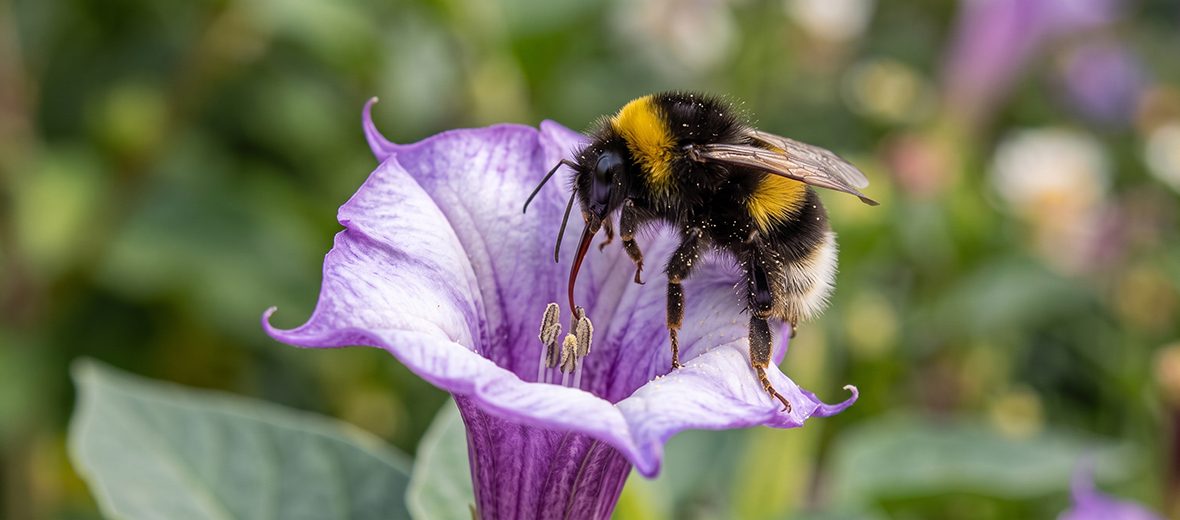
The small garden bumblebee, aka garden bumblebee, is found throughout Europe, Iceland, western Asia, and New Zealand. They are told apart from other bees by their long tongue that is used for feeding on pollen in deep-flowered plants. Based on climate and land use changes, these bumblebees are expected to lose a significant part of climatically suitable territories by the end of the century, totaling up to 71%. Climate change, which causes droughts, heat waves, and storms will also modify the future range of this species. Elevated temperatures have been documented causing impaired cognition of these bees. They are also threatened by habitat loss and destruction at the hands of farming and ranching. However, for now, these insects are abundant enough and also widespread enough to be listed as Least Concern by the IUCN. Their population trend is listed as stable, for the time being.

First the Stats…

Scientific name: Bombus hortorum
Weight: Up to .02 ounce
Length: Up to 1 inch
Wingspan: Up to 1.5 inches
Lifespan: Up to 1 year for queens, up to 4 weeks for workers

Now on to the Facts!

1.) Their close relative, the large garden bumblebee, also has a long tongue, but is much less common to find.

2.) They have 3 types of spectrally sensitive cells: UV with peak sensitivity to light of 353 nm wavelength, blue receptors, and green sensitive receptors with peak sensitivities to wavelengths of 430 nm and 548 nm, respectively.

3.) Their preferred habitats are flower-rich grasslands, woodland edges, scrublands, and urban gardens with an array of deep, tubular flowers.

4.) Cattle play a very important role in the habitat of this species due to their feeding actions in grasslands which cause a more diverse floral environment, which is preferred by these bees for their foraging behavior.

5.) It’s important that expanses of foraging plant diversities and nesting sites either receive no intervention so as to foster a natural habitat, or are intensively grazed by cattle during the summer in order to create enriched plant diversity and develop an environment rich in favored flowers.

But wait, there’s more on the small garden bumblebee!

6.) Unlike most other bee species, nests are built underground.

7.) Nests are often constructed in the most unusual places, such as coat pockets, rolled-up carpets, old cushions and furniture, inside lawnmowers, upturned flower pots and sinks, buckets and tins, compost bins and coal heaps, bird nest boxes, and more.

Did you know…?
Their tongue measures up to 0.59 inch. That’s over half the length of their body!

8.) The queen produces a small hive of up to 100 individuals by the end of the season.

9.) At the end of the season in the winter, mated queens look for hibernation sites underground while the rest of the colony dies off.

10.) At the end of the season during late summer, queens mate and then store the sperm in spermatheca during their hibernation period.

But wait, there’s still more on the small garden bumblebee!

11.) As with many bumblebees, the males of this species patrol a specific circuit, marking objects along their route, about 3 feet above ground, with a pheromone that attracts queens. This behavior was noted by Darwin in 1886 within his own garden.

12.) Rather than communicate with one another while foraging, they collect food independently utilizing a method called ‘trap-lining’, in which individuals follow a regular route and visit the same flowers each time they forage, like a trapper would.

Did you know…?
Pesticides can impact the colonies by reducing brood development and impairing their memory, causing them to forget the locations of their foraging sites and even their nests.

13.) Workers have been known to travel up to .80 mile in up to 4 days time in search of flowers.

14.) They utilize louder and more intense defensive buzzes as warning signs and to show aggression.

15.) Being frequent pollinators of many crops, including sunflowers, strawberries, apples, and tomatoes, they are important pollinators.

Now a Short Small Garden Bumblebee Video!

This video talks about bumblebees in general.

Be sure to share & comment below! Also, check out the Critter Science YouTube channel. Videos added regularly. Be sure to like and subscribe!

Subscribe


Want to suggest a critter for me to write about? Let me know here.

Some source material acquired from: Wikipedia & IUCN

Trending
The Sudan Plated Lizard

AsiabeebeesbumblebeebumblebeesEuropeEuropeanIcelandinsectinsectsNew Zealandsmall garden bumblebee
Critterman

With over 51 years of critter experience to my credit and hundreds of zoology teaching hours to people around the world, I have amassed not only a continuing thirst for critter knowledge but a desire to teach others all I can about the majesty and wonder of our natural world. Critter Science is a culmination of such knowledge. I have hands on as well as book acquired intel on all kinds of critters. Whether they're on land, sea, or in the air. I will never say that I know everything about all animals. That's impossible, even for a savant. But, that being said, ask me any animal question and I'll answer it. If I don't know the answer, I'll get an answer for you!

The House Crow
Related Posts
  • house crow
    The House Crow 24 September, 2026
  • African wild ass
    The African Wild Ass 23 September, 2026
  • tilcayo
    The Newly Discovered Tilcayo 22 September, 2026

Leave a Reply Cancel Reply

Your email address will not be published. Required fields are marked *

  • Daily Critter Facts
  • Guest Articles
  • BYET
  • Teachers
  • Study Guides
  • Contact

Copyright © 2026, Critter Science. All Rights Reserved.