
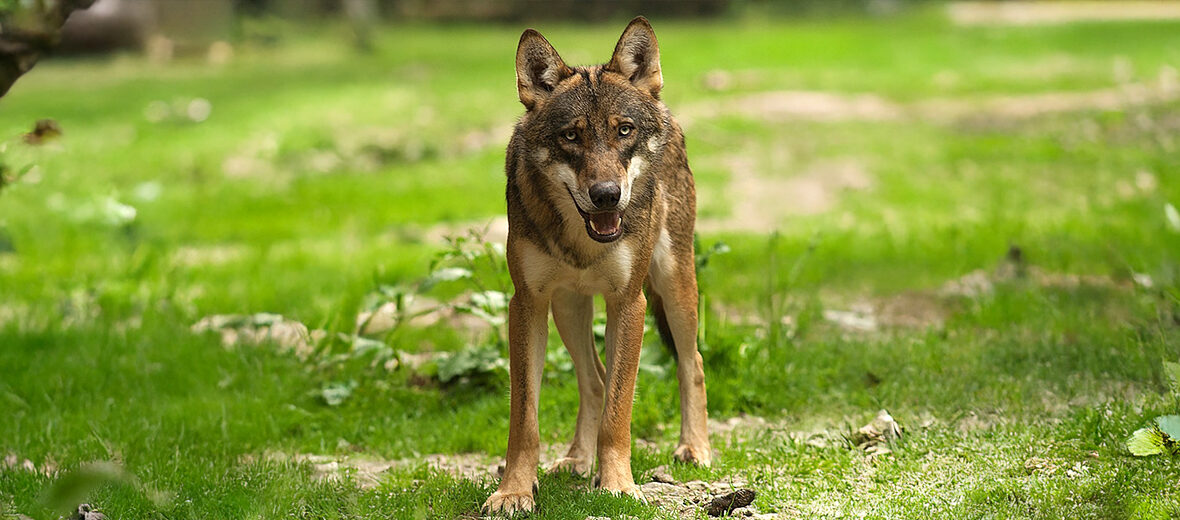
The Italian wolf, aka Apennine wolf, while not universally recognized as a distinct subspecies of the famous grey wolf, still possesses a unique mtDNA haplotype as well as a distinct skull morphology. They are native to the Italian Peninsula. These wolves face the threats of hunting; trapping; poisoning; vehicle strike (being hit by vehicles); habitat loss, at the hands of residential and commercial developments, farming, and ranching; and hybridization with domestic dogs. The IUCN lists these canines as Vulnerable. Their population trend is, however, listed as increasing.
First the Stats…
Scientific name: Canis lupus italicus
Weight: Up to 99 lbs.
Length: Up to 58 inches, plus up to a 21 inch tail
Height: Up to 28 inches, at the shoulders
Lifespan: Up to 15+ years
Now on to the Facts!
1.) These wolves are featured prominently in Latin and Italian cultures, like the She-Wolf in the legendary founding of Rome. For this reason they are unofficially considered the national animal of Italy.
2.) They were first recognized as a distinct subspecies in 1921 by zoologist Giuseppe Altobello.
3.) The last specimen of the Mosbach wolf (Canis mosbachensis) in Europe dates back to 456 – 416 thousand years ago, during the Pleistocene Epoch, where it gave rise to the wolf Canis lupus.
4.) Wolf populations drastically decreased across Europe during the 18th & 19th centuries largely due to human persecution. By the end of the 2nd World War they had been eradicated from all of Central Europe and almost all of Northern Europe.
5.) Their population reduction continued until the circa 1960s, with remote populations surviving in Finland, Greece, Italy, Portugal, and Spain. Wolf populations have rebounded naturally since then.
But wait, there’s more on the Italian wolf!
6.) The use of wolves in Roman folk medicine, while authenticated by Pliny the Elder, was minimal compared to other animals like snakes or bears.
7.) The belief in werewolves was still quite widespread in Italy during the early 1920s, and covering one’s face when resting outside at night was once traditional among rural people, since sleeping while facing the full moon was thought to transform the sleeper into a wolf.
Did you know…?
According to Terry Jones, “The Romans did not see the tale of Romulus, Remus, and the she-wolf as a happy story; they meant to show that they had taken on wolfish appetites and a ferocity for their mother’s milk”.
8.) Although Italy has no records of wolf attacks on humans after World War II and the eradication of rabies in the 1960s, historians found 440 cases of wolves attacking people between the 15th – 19th centuries.
9.) Females undergo up to a 63 day gestation (pregnancy) that yields up to 8 pups.
10.) Wild boars, roe deer, red deer, chamois, ibexes, mice, rats, voles, moles, rabbits, hares, sheep, goats, fruits, berries, and human garbage are all on the menu.
Now a Short Italian Wolf Video!
Be sure to share & comment below! Also, check out the Critter Science YouTube channel. Videos added regularly!

Want to suggest a critter for me to write about? Let me know here.
Some source material acquired from: Wikipedia & IUCN
Photo credit: Eye Am Didier