
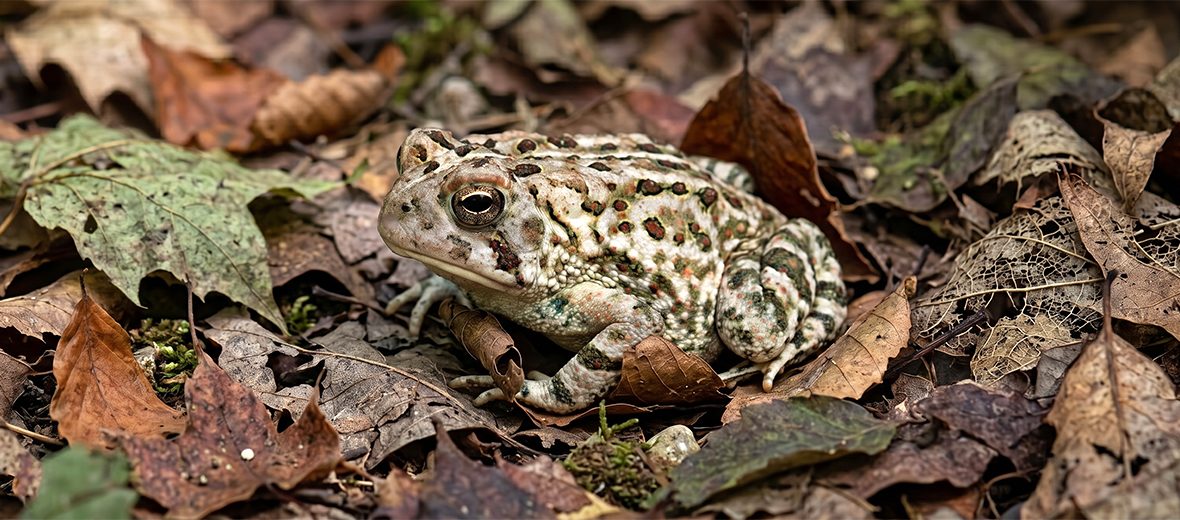
The Fowler’s toad can be found throughout most of the eastern United States and parts of southeastern Canada. They were once thought to be a subspecies of Woodhouse’s toad. They face the threats of habitat loss and destruction at the hands of residential and commercial developments, as well as beach maintenance and grooming. These toads also face the threat of invasive species such as the zebra mussel, which forms thick piles along beaches, as well as the common reed, that smothers out breeding ponds. Agricultural fertilizers, pesticides (especially mosquito control agents), and herbicides are highly toxic to larvae and can cause severe reductions in their populations. Off-road vehicles and ATVs along beaches and dunes kill adults and juveniles and destroys the substrate. They also suffer from vehicle strike (being hit by vehicles) on roads. However, these toads are abundant enough to be listed as Least Concern by the IUCN. Their population trend is listed as stable.
First the Stats…
Scientific name: Anaxyrus fowleri
Weight: Up to 2.8 ounces
Length: Up to 3.75 inches
Lifespan: Up to 10 years
Now on to the Facts!
1.) Their specific name, fowleri, is in honor of naturalist Samuel Page Fowler (1800 – 1888) from Massachusetts, who was 1 of the founders of the Essex County Natural History Society, which later changed its name to the Essex Institute.
2.) Hognosed snakes, raccoons, skunks, grackles, jays, crows, and others all prey on these toads.
3.) Like all toads, they can secrete a noxious poison from their parotoid glands, located behind their eyes. The poison from these toads contains toxic bufadienolides that are not only nasty tasting, but can potentially kill smaller mammals.
4.) They prefer to dwell among meadows, open woodlands, sand prairies, and beaches.
5.) A variety of insects and other invertebrates are feasted upon. These toads also have the ability to eat velvet ants, which are a species of wasp that can deliver a highly painful sting. However, the wasp’s sting has no effect on these toads.
But wait, there’s more on the Fowler’s toad!
6.) On April 15th, 2024, Canada Post released a stamp that featured a depiction of a Fowler’s toad to raise public awareness of these amphibians.
7.) They are considered a species at risk in Ontario, Canada, a species of special concern in the state of New Jersey, and a regionally threatened or endangered species in the states of New Hampshire and Vermont.
Did you know…?
Via thermoregulation, males are capable of altering their calls to make them seem more attractive to females.
8.) Females lay up to 10,000 eggs that hatch in up to 7 days.
9.) As many as 10 different age classes, separated by a few days each, have been documented over the course of a single breeding season in 1 small pond.
10.) Tadpoles can metamorphose into adults in as little as 1 season, or can take up to 3 years!
Now a Short Fowler’s Toad Video!
Be sure to share & comment below! Also, check out the Critter Science YouTube channel. Videos added regularly. Be sure to like and subscribe!

Want to suggest a critter for me to write about? Let me know here.
Some source material acquired from: Wikipedia & IUCN

Leave a Reply