Critter Science
  • Zoology
    • Ecology
      • Animal Conservation
        • CITES: Protecting Wildlife
        • Dame Jane Goodall
        • Endangered Animals
        • Ex Situ Explained
        • In Situ Explained
        • IUCN Statuses
        • Zoological Branches
      • Chromatophores and Survival
      • Ecosystems
        • Animal Habitats
        • The Biomes
        • Coastal Erosion
        • Rainforest Types
      • Evolution. The Facts.
        • Animal Devolution
        • Animal Mimicry
        • Convergent Evolution
        • Carl Linnaeus
        • Charles Darwin
        • Evolution of Amphibians
        • Evolution of Birds
        • Genetic Drift in the Animal Kingdom
        • Naturalism
        • Natural Selection
        • Venom vs Poison
      • Genetic Pollution
      • Invertebrate Families Explored
        • What are Arachnids?
          • Spider Webs
      • Predator vs Prey
      • Producers and Consumers
      • Vertebrate Animal Families
        • Amphibians: Unseen Guardians
        • Snakes vs Legless Lizards
        • What is a Marsupial?
      • The Wild Apothecary
    • Sustainability
      • Climate Change
      • Global Warming
      • Pollution
        • Air Pollution
        • Land Pollution
        • Light Pollution
        • Microplastics Pollution
        • Noise Pollution
        • Water Pollution
      • Recycling
        • Recycling Plastics
      • Renewable Energy
    • Animal Behavioral Patterns
      • Avian Communication
      • Animal Thermoregulation
      • Cetacean Communication
      • Elephant Communication
      • Herpetofauna Communication
      • Primate Language: The Debate
      • Types of Animal Dormancy
    • What are Species?
      • Amphibians vs Reptiles
      • Animal Reproduction
      • Animal Skin and Scales
      • Claws, Nails, and Talons
      • Fur and Hair
      • Gecko Feet
      • Invasive Species
      • Lazarus Species: Rediscovered Life
      • Speciation
      • Species Complex
      • The Enigmatic Purr
    • About the Critterman
  • Daily Critter Facts
    • Amphibian Facts
      • Frog Facts
      • Newt Facts
      • Salamander Facts
      • Toad Facts
    • Arthropod Facts
      • Arachnid Facts
      • Insect Facts
    • Bird Facts
      • Flightless Bird Facts
      • Predatory Bird Facts
      • Scavenger Bird Facts
      • Wading Bird Facts
    • Cryptozoology
    • Fish Facts
      • Cephalopod Facts
      • Crustacean Facts
      • Jellyfish Facts
      • Reefs
      • Shark and Ray Facts
      • Shellfish Facts
    • Flying Mammal Facts
    • Gastropod Facts
    • Land Mammal Facts
      • Canine Facts
      • Feline Facts
      • Lagomorph Facts
      • Marsupial Facts
      • Mustelid Facts
      • Primate Facts
      • Rodent Facts
      • Ungulate Facts
    • Parasite Facts
    • Reptile Facts
      • Crocodilian Facts
      • Lizard Facts
      • Snake Facts
      • Turtle Facts
    • Sea Mammal Facts
      • Dolphin Facts
      • Porpoise Facts
      • Sea Lion Facts
      • Seal Facts
      • Whale Facts
    • Worm Facts
  • For Teachers
    • Animal Quizzes
      • Amphibian Quiz
      • Bird Quiz
      • Cat Quiz
      • Dog Quiz
      • Dolphin Quiz
      • Insect Quiz
      • Reptile Quiz
    • Animal Word Search
    • Butterfly Life Cycle
      • Butterfly Metamorphosis
      • World’s Largest Butterfly
      • World’s Largest Moth
    • The Cellular Structure of an Animal
    • Coloring Pages
    • Fish and Sharks
    • Frogs vs Toads
    • Insect vs Bug
    • Metamorphosis – A Frog’s Life Cycle
  • Study Guides
    • African Animals
    • Antarctica Animals
    • Asian Animals
    • Australian Animals
    • Central American Animals
    • European Animals
    • North American Animals
    • South American Animals
  • Diseases & Parasites
    • Bsal
    • Canine Distemper Virus (CDV)
    • Chronic Wasting Disease (CWD)
    • The Deadly Chytrid Fungus
    • All About Parasites
    • The Rabies Virus
    • Toxoplasmosis
    • White-Nose Syndrome
  • Contact
    • General Contact
    • Guest Article Submission
      • Guest Articles
        • Guest Articles – 2024
    • What Critter is This?
    • Animal Welfare Organizations
    • Privacy Policy
Subscribe
Bermuda petrel

The Bermuda Petrel

  • 2 March, 2026
  • Critterman
  • No Comments
  • 12 Views
  • 1 Likes
Bird Facts, Daily Critter Facts

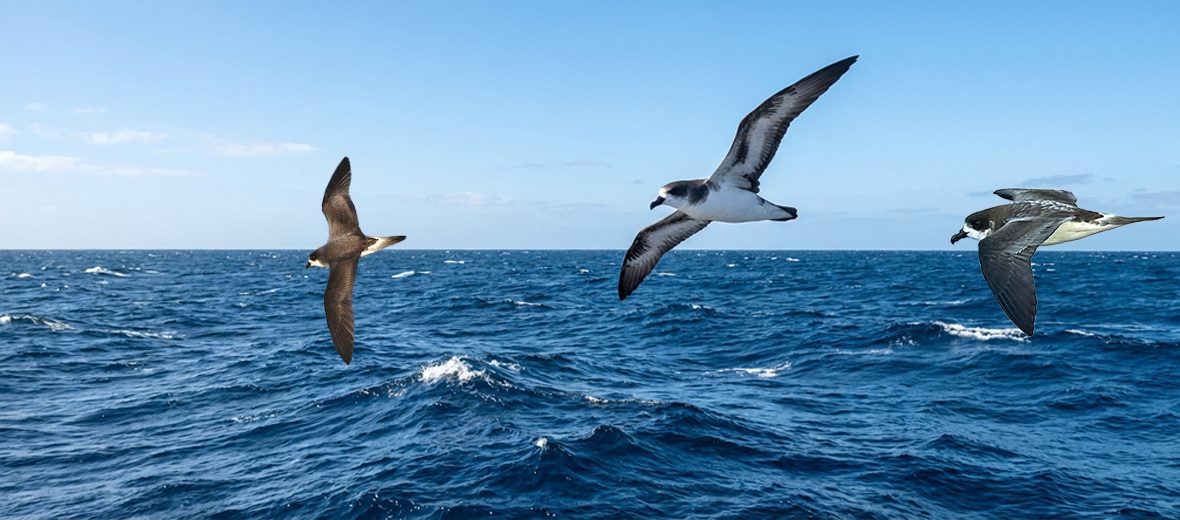
The Bermuda petrel, aka cahow, is a gadfly petrel and is the 2nd rarest seabird on the planet, after the magenta petrel. These seabirds face the threats of habitat loss and destruction at the hands of residential and commercial developments; hunting; trapping; invasive species, such as cats, dogs, pigs, and rats that prey on their eggs and chicks; light pollution, which interrupts their way of life, yet is currently being addressed; and climate change, which causes exponential polar ice cap melting and subsequently higher sea levels, which can effect their breeding grounds. The IUCN lists these birds as Endangered. Their population trend is fortunately listed as increasing though.

First the Stats…

Scientific name: Pterodroma cahow
Weight: Up to 17 ounces
Length: Up to 15 inches
Wingspan: Up to 36.22 inches
Lifespan: Up to 40 years

Now on to the Facts!

1.) These birds were thought to be extinct for 300 years. That is until the incredible rediscovery in 1951 of 18 nesting pairs which made them a “Lazarus species” (a species found to be alive after having been considered extinct).

2.) Their rediscovery inspired a book and 2 documentary films. A national program to preserve these birds and restore the species has helped increase their numbers, but scientists are still feverishly working to enlarge their nesting habitat on the restored Nonsuch Island, located in St. George’s Parish in northeastern Bermuda.

3.) Small fish, squids, and shrimp-like crustaceans are all on the menu.

4.) Due to special glands in their tube-like nostrils they are able to ingest seawater. These glands later filter out the salt and expel it via sneezing.

5.) Due to habitat loss and destruction and invasive mammals, their suitable nesting areas have dwindled to just 4 islets in Castle Harbor, Bermuda, in the warm waters of the Gulf Stream, approximately 650 miles east of North Carolina.

But wait, there’s more on the Bermuda petrel!

6.) They only visit land to nest. Otherwise, they spend most of their adult life out on the open seas ranging from the North Atlantic coastal United States and Canada to waters off western Europe.

7.) Nesting takes place in burrows, yet only the burrows that present total darkness are chosen.

Did you know…?
There are only an estimated 196 individuals remaining, to date.

8.) Females lay a single egg, between January – June, that hatches in up to 55 days.

9.) Both parents partake in incubation, protection, and nest maintenance duties.

10.) David B. Wingate devoted his working life towards saving these birds. After university studies and other work, in 1966 Wingate became Bermuda’s first conservation officer.

But wait, there’s still more on the Bermuda petrel!

11.) Madeiros, assisted by the Australian petrel specialist Nicholas Carlile, devised and carried out a translocation project to re-establish a nesting population of Bermuda petrels on Nonsuch Island.

12.) The first petrel egg on Nonsuch Island in over 300 years was laid in January 2009, and the eventual fledgling departed in June of that same year.

Did you know…?
The predicted future increase of category 4 and 5 tropical storms poses an imminent threat to these birds’ long-term survivability.

13.) A total of 49 of the original 102 translocated birds had been confirmed as returning to the nesting islands by 2015, out of which 29 had returned to Nonsuch Island.

14.) Started in 2011, the “CahowCam” project was launched by the Bermuda-based LookBermuda / Nonsuch Expeditions Team in conjunction with the Department of the Environment and Natural Resources.

15.) Cahows, being a recovering Lazarus species, have been afforded special attention in order to support their recovery and population growth. All nesting and nearby islands are strictly protected as part of the Castle Islands Nature Reserve, and landing is prohibited without a permit.

Now a Short Bermuda Petrel Video!

Be sure to share & comment below! Also, check out the Critter Science YouTube channel. Videos added regularly!

Subscribe


Want to suggest a critter for me to write about? Let me know here.

Some source material acquired from: Wikipedia & IUCN

Trending
The Bohor Reedbuck

Bermuda petrelbirdbirdsburrowcahoweggendangeredEuropenestnorth americapetrelpetrelsseabirdseabirds
Critterman

With over 50 years of critter experience to my credit and hundreds of zoology teaching hours to people around the world, I have amassed not only a continuing thirst for critter knowledge but a desire to teach others all I can about the majesty and wonder of our natural world. Critter Science is a culmination of such knowledge. I have hands on as well as book acquired intel on all kinds of critters. Whether they're on land, sea, or in the air. I will never say that I know everything about all animals. That's impossible, even for a savant. But, that being said, ask me any animal question and I'll answer it. If I don't know the answer, I'll get an answer for you!

The Silvery Lutung
Related Posts
  • silvery lutung
    The Silvery Lutung 27 February, 2026
  • tiger muskellunge
    The Tiger Muskellunge 26 February, 2026
  • spotted salamander
    The Spotted Salamander 25 February, 2026
  • Daily Critter Facts
  • Guest Articles
  • BYET
  • Teachers
  • Study Guides
  • Contact

Copyright © 2025, Critter Science. All Rights Reserved.