Critter Science
  • Zoology
    • Ecology
      • Animal Conservation
        • Apex Awakening
        • CITES: Protecting Wildlife
        • Dame Jane Goodall
        • Endangered Animals
        • Ex Situ Explained
        • In Situ Explained
        • IUCN Statuses
        • Steve Irwin
        • Zoological Branches
      • Animal Immortality and Regeneration
      • Chromatophores and Survival
      • Ecosystems
        • Animal Habitats
        • The Biomes
        • Coastal Erosion
        • Desert Biomes
        • Deserts and Wildlife
        • Earth’s Living Canopies
        • Ocean Habitats: Layers and Life
        • Rainforest Types
      • Evolution. The Facts.
        • Animal Devolution
        • Animal Mimicry
        • Convergent Evolution
        • Carl Linnaeus
        • Charles Darwin
        • Evolution of Amphibians
        • Evolution of Birds
        • Genetic Drift in the Animal Kingdom
        • Naturalism
        • Natural Selection
      • Genetic Pollution
        • Genetic Bottlenecks in Animal Populations
      • Invertebrate Families Explored
        • Arthropod Diversity and Adaptations
        • Insect vs Bug
        • The Wonder and Warfare of Coral Reefs
        • What are Arachnids?
          • Spider Webs
      • Predator vs Prey
      • Producers and Consumers
      • Venom vs Poison
      • Vertebrate Families Explored
        • Amphibians: Unseen Guardians
        • Bone and Cartilage
        • Snakes vs Legless Lizards
        • The Triumph of the Ratites
        • What is a Marsupial?
      • The Wild Apothecary
    • Sustainability
      • Climate Change
      • Earth Day: Past, Present, Future
      • Global Warming
      • Pollution
        • Air Pollution
        • Chemical Pollution
        • Land Pollution
        • Light Pollution
        • Microplastics Pollution
        • Noise Pollution
        • Water Pollution
      • Recycling
        • Recycling Plastics
      • Renewable Energy
    • Animal Behavioral Patterns
      • Aposematic Coloration
      • Avian Communication
      • Animal Thermoregulation
      • Cetacean Communication
      • Cold-Adapted Hypermetabolism
      • Elephant Communication
      • Herpetofauna Communication
      • Primate Language: The Debate
      • The Framework of Ethology
      • The Hidden Sensory Realm
      • Types of Animal Dormancy
    • What are Species?
      • Animal Reproduction
      • Introduced Species
      • Invasive Species
      • Keystone Species
      • Lazarus Species: Rediscovered Life
      • Monotypic Species
      • Speciation
      • Species Complex
      • Understanding Animal Subspecies
    • About the Critterman
  • Daily Critter Facts
    • Amphibian Facts
      • Frog Facts
      • Newt Facts
      • Salamander Facts
      • Toad Facts
    • Arthropod Facts
      • Arachnid Facts
      • Insect Facts
    • Bird Facts
      • Flightless Bird Facts
      • Predatory Bird Facts
      • Scavenger Bird Facts
      • Wading Bird Facts
    • Cryptozoology
    • Fish Facts
      • Cephalopod Facts
      • Crustacean Facts
      • Jellyfish Facts
      • Reefs
      • Shark and Ray Facts
      • Shellfish Facts
    • Flying Mammal Facts
    • Gastropod Facts
    • Land Mammal Facts
      • Canine Facts
      • Feline Facts
      • Lagomorph Facts
      • Marsupial Facts
      • Mustelid Facts
      • Primate Facts
      • Rodent Facts
      • Ungulate Facts
    • Parasite Facts
    • Reptile Facts
      • Crocodilian Facts
      • Lizard Facts
      • Snake Facts
      • Turtle Facts
    • Sea Mammal Facts
      • Dolphin Facts
      • Porpoise Facts
      • Sea Lion Facts
      • Seal Facts
      • Whale Facts
    • Worm Facts
  • For Teachers
    • Animal Quizzes
      • Amphibian Quiz
      • Bird Quiz
      • Cat Quiz
      • Dog Quiz
      • Dolphin Quiz
      • Insect Quiz
      • Reptile Quiz
    • Amphibians vs Reptiles
    • Animal Skin and Scales
      • Claws, Nails, and Talons
      • Feather Anatomy, Function, & Types
      • Fur and Hair
    • Gecko Feet
    • The Enigmatic Purr
    • Animal Word Search
    • Butterfly Metamorphosis
      • World’s Largest Butterfly
      • World’s Largest Moth
    • The Cellular Structure of an Animal
    • Coloring Pages
    • Fish and Sharks
    • Frogs vs Toads
    • Metamorphosis – A Frog’s Life Cycle
  • Study Guides
    • African Animals
    • Antarctica Animals
    • Asian Animals
    • Australian Animals
    • Central American Animals
    • European Animals
    • North American Animals
    • South American Animals
  • Diseases & Parasites
    • Understanding Bird Flu
    • Bsal
    • Canine Distemper Virus (CDV)
    • Chronic Wasting Disease (CWD)
    • The Deadly Chytrid Fungus
    • Plagues of the Wild: Epizootic Diseases
    • All About Parasites
      • Toxoplasmosis
    • The Rabies Virus
    • White-Nose Syndrome
  • Contact
    • Critter Identification
    • General Contact
    • Guest Article Submission
      • Guest Articles
        • Guest Articles – 2024
    • Animal Welfare Organizations
    • Privacy Policy
BUY MY BOOK
porbeagle shark

The Porbeagle Shark

  • 3 January, 2024
  • Critterman
  • No Comments
  • 279 Views
  • 2 Likes
Daily Critter Facts, Fish Facts, Shark and Ray Facts

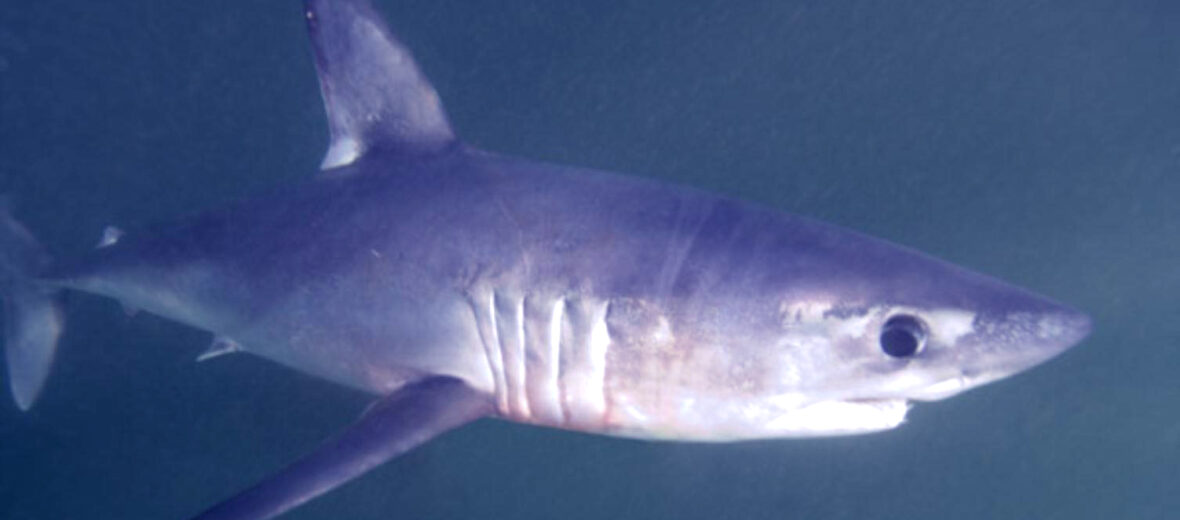
The porbeagle shark is a species of mackerel shark (in the same family as great whites and others) that can be found in the frigid and temperate ocean waters of the North Atlantic and in the Southern Hemisphere. With facing the threat of overfishing and with an ever-decreasing population, these sharks are listed as Vulnerable by the IUCN. The most recent IUCN evaluation of these critters was conducted in 2018.

First the Stats…

Scientific name: Lamna nasus
Weight: Up to 280 lbs.
Length: Up to 8.2 feet
Lifespan: Up to 30 years

Now on to the Facts!

1.) These sharks are most closely related to the salmon shark.

2.) North Atlantic species grow larger than Southern Hemisphere species, and they are of different colors.

3.) They prey on bony fishes and cephalopods.

4.) These sharks are fast and agile swimmers capable of bursts of speed of up to 20 mph.

5.) These sharks have the ability to maintain a warmer body temperature than that of the surrounding water. That’s right, they are warm-blooded and can thermoregulate (control their core temperature).

But wait, there’s more on the porbeagle shark!

6.) Porbeagles can be both solitary and gregarious, and have been documented engaging in almost playful behaviors.

7.) The meat and fins of these sharks are highly prized, which has unfortunately led to a long history of immense human exploitation.

Did you know…?
Porbeagles can dive to depths of up to 4,460 feet.

8.) The females are not only aplacental viviparous (eggs develop inside the female’s body and are born live) but the pups also engage in oophagy (the developing pups will eat any nonviable eggs before being born).

9.) Females undergo up to a 9 month gestation (pregnancy) that yields up to 4 pups.

10.) Porbeagle sharks are considered a game fish by recreational anglers.

But wait, there’s still more on the porbeagle shark!

11.) Unfortunately, due to their low reproductive capacity, these sharks are unable to sustain the continued overfishing they currently endure.

12.) There have only been a handful of reports of shark attacks attributed to the porbeagle, and it is believed that those were provoked attacks.

Did you know…?
These sharks have been documented rolling and repeatedly wrapping themselves in long kelp fronds near the water’s surface. It is uncertain if this is a playful engagement or 1 of necessity where they are actually just feeding off of organism attached to the kelp and/of removing parasites with the help of the sea plants.

13.) The name porbeagle is thought to have derived from “porpoise” and “beagle” attributing to its determined hunting habits.

14.) The first description of these sharks was conducted by French naturalist Pierre Joseph Bonnaterre in 1788. The description was based off of an earlier account by the Welsh naturalist Thomas Pennant, in 1769.

15.) These sharks have been around for an estimated 7.2 million years.

But wait, there’s still a little more on the porbeagle shark!

16.) Orca and great white sharks are known predators of porbeagles.

17.) Known parasites of these sharks are tapeworms and copepods.

18.) Adult porbeagles have been filmed charging at divers working around oil platforms, sometimes they have even brushed lightly against them but without doing any harm. These encounters don’t seem to have any predatory intent and may rather be motivated by curiosity or even defense.

19.) Massive fishing efforts for the porbeagle shark dates back to the 1930s, back when Norway and also Denmark started operating longline vessels in the Northeast Atlantic.

20.) Since 2011, all fishing for these sharks has been made illegal in waters of the European Union, and EU-registered vessels are also subsequently prohibited from fishing for the species even in international waters.

Now a Short Porbeagle Shark Video!

Be sure to share & comment below! Also, check out the Critter Science YouTube channel. Videos added regularly. Be sure to like and subscribe!

Want to suggest a critter for me to write about? Let me know here.

Some source material acquired from: Wikipedia & IUCN

Photo credit: Dive Advisor

Atlantic Oceanfastfast swimmerfinningfishnorthern hemisphereoverfishingPacific Oceanporbeagleporbeagle sharksharksharkssouthern hemispherevulnerable
Critterman

With over 51 years of critter experience to my credit and hundreds of zoology teaching hours to people around the world, I have amassed not only a continuing thirst for critter knowledge but a desire to teach others all I can about the majesty and wonder of our natural world. Critter Science is a culmination of such knowledge. I have hands on as well as book acquired intel on all kinds of critters. Whether they're on land, sea, or in the air. I will never say that I know everything about all animals. That's impossible, even for a savant. But, that being said, ask me any animal question and I'll answer it. If I don't know the answer, I'll get an answer for you!

The Western Gorilla
The Itatiaia Highland Frog
Related Posts
  • side-striped jackal
    The Side-Striped Jackal 30 July, 2026
  • Indian vulture
    The Indian Vulture 29 July, 2026
  • bat sea star
    The Bat Sea Star 28 July, 2026

Leave a Reply Cancel Reply

Your email address will not be published. Required fields are marked *

  • Daily Critter Facts
  • Guest Articles
  • BYET
  • Teachers
  • Study Guides
  • Contact

Copyright © 2025, Critter Science. All Rights Reserved.