
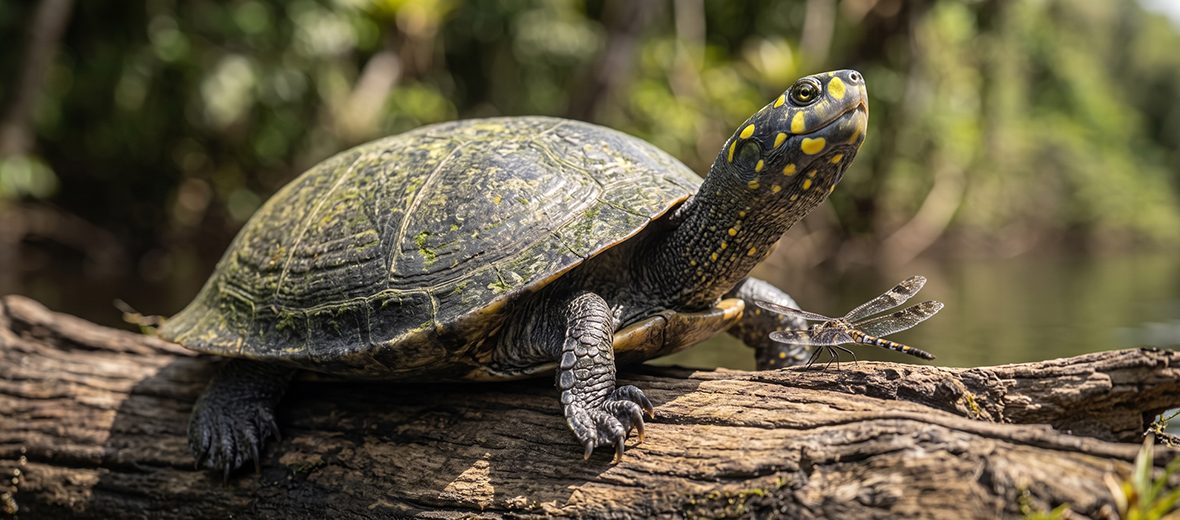
The Arrau turtle, aka South American river turtle, giant South American turtle, giant Amazon River turtle, Arrau sideneck turtle, Amazon River turtle, or the Arrau, hails from South America. They face the threats of poaching and trafficking for the illegal pet trade. Mega, hydroelectric dams flood critical nesting beaches, alter natural flood cycles, and isolate migratory groups. Projects aimed at widening Amazonian rivers for cargo barges create underwater noise that drowns out the vocalizations females use to guide their young during collective migrations. Illegal gold mining operations introduce chemical pollution in the form of toxic mercury levels into river systems where these turtles feed. Even though a 1996 study placed these turtles at an IUCN status of Conservation Dependent, it has been contested that they should be listed as Critically Endangered. Their population trend is listed as fragmented and mixed.
First the Stats…
Scientific name: Podocnemis expansa
Weight: Up to 200 lbs.
Length: Up to 28 inches
Lifespan: Up to 100 years
Now on to the Facts!
1.) They are not only the largest sideneck turtle species, but the largest freshwater turtle in Latin America.
2.) These turtles can be found in the Amazon, Orinoco and Essequibo basins in Bolivia, Brazil, Colombia, Ecuador, Guyana, Peru, and Venezuela.
3.) They have a preference for deep rivers, ponds, freshwater lagoons, and flooded forests in white-water, black-water, and clear-water habitats.
4.) Fruits, seeds, leaves, legumes, algae, freshwater sponges, eggs, and carcasses of dead animals (like dead fish) are all on the menu.
5.) These turtles are diurnal (active during the day).
But wait, there’s more on the Arrau turtle!
6.) Jabiru storks, tegus, coatis, crab-eating foxes, and humans all prey on these turtles.
7.) In some locales, nesting takes place in large groups along beaches, which reduces the risk imposed by predators. Some beaches can have upwards of 500 individuals.
Did you know…?
Like other species of turtles, ambient temperature dictates gender. Females are born from higher temperatures and males from lower temperatures.
8.) Females can produce clutches of up to 123 eggs each season that hatch in up to 65 days!
9.) Assuming the eggs are not exhumed by predators, the hatching success rate is upwards of 83%.
10.) Their slow growth generally limits the potential for major commercial turtle farming.
Now a Short Arrau Turtle Video!
Be sure to share & comment below! Also, check out the Critter Science YouTube channel. Videos added regularly. Be sure to like and subscribe!

Want to suggest a critter for me to write about? Let me know here.
Some source material acquired from: Wikipedia & IUCN

Leave a Reply