Critter Science
  • Zoology
    • Ecology
      • Animal Conservation
        • CITES: Protecting Wildlife
        • Dame Jane Goodall
        • Endangered Animals
        • Ex Situ Explained
        • In Situ Explained
        • IUCN Statuses
        • Steve Irwin
        • Zoological Branches
      • Animal Immortality and Regeneration
      • Chromatophores and Survival
      • Ecosystems
        • Animal Habitats
        • The Biomes
        • Coastal Erosion
        • Desert Biomes and Wildlife
        • Rainforest Types
      • Evolution. The Facts.
        • Animal Devolution
        • Animal Mimicry
        • Convergent Evolution
        • Carl Linnaeus
        • Charles Darwin
        • Evolution of Amphibians
        • Evolution of Birds
        • Genetic Drift in the Animal Kingdom
        • Naturalism
        • Natural Selection
        • Venom vs Poison
      • Genetic Pollution
      • Invertebrate Families Explored
        • What are Arachnids?
          • Spider Webs
      • Predator vs Prey
      • Producers and Consumers
      • Vertebrate Animal Families
        • Amphibians: Unseen Guardians
        • Snakes vs Legless Lizards
        • What is a Marsupial?
      • The Wild Apothecary
    • Sustainability
      • Climate Change
      • Global Warming
      • Pollution
        • Air Pollution
        • Chemical Pollution
        • Land Pollution
        • Light Pollution
        • Microplastics Pollution
        • Noise Pollution
        • Water Pollution
      • Recycling
        • Recycling Plastics
      • Renewable Energy
    • Animal Behavioral Patterns
      • Avian Communication
      • Animal Thermoregulation
      • Cetacean Communication
      • Elephant Communication
      • Herpetofauna Communication
      • Primate Language: The Debate
      • Types of Animal Dormancy
    • What are Species?
      • Amphibians vs Reptiles
      • Animal Reproduction
      • Animal Skin and Scales
      • Claws, Nails, and Talons
      • Fur and Hair
      • Gecko Feet
      • Invasive Species
      • Keystone Species
      • Lazarus Species: Rediscovered Life
      • Speciation
      • Species Complex
      • The Enigmatic Purr
    • About the Critterman
  • Daily Critter Facts
    • Amphibian Facts
      • Frog Facts
      • Newt Facts
      • Salamander Facts
      • Toad Facts
    • Arthropod Facts
      • Arachnid Facts
      • Insect Facts
    • Bird Facts
      • Flightless Bird Facts
      • Predatory Bird Facts
      • Scavenger Bird Facts
      • Wading Bird Facts
    • Cryptozoology
    • Fish Facts
      • Cephalopod Facts
      • Crustacean Facts
      • Jellyfish Facts
      • Reefs
      • Shark and Ray Facts
      • Shellfish Facts
    • Flying Mammal Facts
    • Gastropod Facts
    • Land Mammal Facts
      • Canine Facts
      • Feline Facts
      • Lagomorph Facts
      • Marsupial Facts
      • Mustelid Facts
      • Primate Facts
      • Rodent Facts
      • Ungulate Facts
    • Parasite Facts
    • Reptile Facts
      • Crocodilian Facts
      • Lizard Facts
      • Snake Facts
      • Turtle Facts
    • Sea Mammal Facts
      • Dolphin Facts
      • Porpoise Facts
      • Sea Lion Facts
      • Seal Facts
      • Whale Facts
    • Worm Facts
  • For Teachers
    • Animal Quizzes
      • Amphibian Quiz
      • Bird Quiz
      • Cat Quiz
      • Dog Quiz
      • Dolphin Quiz
      • Insect Quiz
      • Reptile Quiz
    • Animal Word Search
    • Butterfly Life Cycle
      • Butterfly Metamorphosis
      • World’s Largest Butterfly
      • World’s Largest Moth
    • The Cellular Structure of an Animal
    • Coloring Pages
    • Fish and Sharks
    • Frogs vs Toads
    • Insect vs Bug
    • Metamorphosis – A Frog’s Life Cycle
  • Study Guides
    • African Animals
    • Antarctica Animals
    • Asian Animals
    • Australian Animals
    • Central American Animals
    • European Animals
    • North American Animals
    • South American Animals
  • Diseases & Parasites
    • Bsal
    • Canine Distemper Virus (CDV)
    • Chronic Wasting Disease (CWD)
    • The Deadly Chytrid Fungus
    • All About Parasites
    • The Rabies Virus
    • Toxoplasmosis
    • White-Nose Syndrome
  • Contact
    • General Contact
    • Guest Article Submission
      • Guest Articles
        • Guest Articles – 2024
    • What Critter is This?
    • Animal Welfare Organizations
    • Privacy Policy
Subscribe
Chinese softshell turtle

The Chinese Softshell Turtle

  • 15 April, 2026
  • Critterman
  • No Comments
  • 1 Views
  • 0 Likes
Daily Critter Facts, Reptile Facts, Turtle Facts

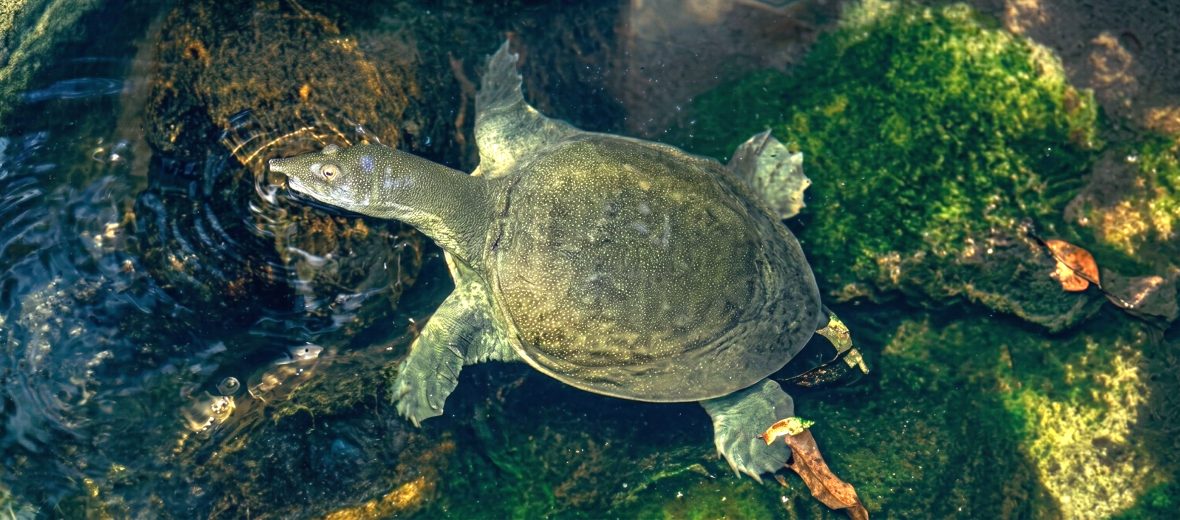
The Chinese softshell turtle hails from mainland China (Inner Mongolia to Guangxi, including Hong Kong) and Taiwan, with reports of escaped individuals who have established introduced populations in a variety of other Asian countries, as well as in Spain, Brazil, Hawaii, mainland United States, and more. In their native China they face the threats of over-collection and over-harvesting for the food trade, disease, as well as habitat loss and destruction. These turtles are listed as Vulnerable by the IUCN, again, in their native China. Elsewhere they are considered invasive species. Their population trend is listed as decreasing.

First the Stats…

Scientific name: Pelodiscus sinensis
Weight: Up to 13.2 lbs.
Length: Up to 13 inches
Lifespan: Up to 40 years

Now on to the Facts!

1.) Being 1 of the world’s most economically important turtle, millions are now farmed, especially in China, to support the food industry.

2.) They’re called “softshells” because their carapace (shell) lacks horny scutes (scales). The carapace is leathery and pliable, especially along the sides.

3.) It’s challenging to determine the precise native range of these turtles due to the long tradition of their use as a food and traditional medicinal, as well as subsequent spread by migrating people.

4.) In the locations where these turtles aren’t native, they have become a pest and invasive species, endangering various indigenous turtle species in areas where they have been introduced and destabilizing numerous ecosystems.

5.) They can dwell in both fresh and brackish (partially salty) canals, creeks, lakes, ponds, and rivers with slow currents.

But wait, there’s more on the Chinese softshell turtle!

6.) Crustaceans, fish, mollusks, insects, and marsh plant seeds are all readily consumed.

7.) They often submerge their head in water. This is because they carry a gene which produces a protein that allows them to secrete urea from their mouths. This adaptation helps them to survive in brackish water by making it possible for them to excrete urea without drinking too much salty water.

Did you know…?
In 2024, this turtle species was even found in the Merrimack River in Massachusetts.

8.) While eliminating urea by urinating through its cloaca as most turtles do, which involves significant water loss, these turtles simply rinse their mouth in the water.

9.) Females produce up to 5 clutches of up to 30 eggs per clutch each season.

10.) Unlike other turtles, gender of the hatchlings is not determined by incubation temperature. Gender is randomly generated.

But wait, there’s still more on the Chinese softshell turtle!

11.) These turtles have become increasingly vulnerable to multiple bacterial diseases, such as bacterial softshell disease, resulting in slower growth and increased fatality.

12.) The mass farming and release of these turtles has been known to lead to hybridization producing numerous other unique Pelodiscus lineages, some of which might be distinct species, which in turn threatens their gene pool. This is known as genetic pollution.

13.) In a 2018 interview with Le Monde, Nintendo character designer Yōichi Kotabe confirmed that this species of turtle inspired the design for Bowser, the main antagonist of the Mario Brothers franchise. Kotabe picked this species because of their aggressive nature.

Now a Short Chinese Softshell Turtle Video!

Be sure to share & comment below! Also, check out the Critter Science YouTube channel. Videos added regularly!

Subscribe


Want to suggest a critter for me to write about? Let me know here.

Some source material acquired from: Wikipedia & IUCN

Trending
The Malayan Tapir

AsiaAsianChinachineseChinese softshell turtlefoodinvasiveinvasive speciessoftshellsoftshell turtleturtle farmswater
Critterman

With over 50 years of critter experience to my credit and hundreds of zoology teaching hours to people around the world, I have amassed not only a continuing thirst for critter knowledge but a desire to teach others all I can about the majesty and wonder of our natural world. Critter Science is a culmination of such knowledge. I have hands on as well as book acquired intel on all kinds of critters. Whether they're on land, sea, or in the air. I will never say that I know everything about all animals. That's impossible, even for a savant. But, that being said, ask me any animal question and I'll answer it. If I don't know the answer, I'll get an answer for you!

The Iridescent Shark
Related Posts
  • iridescent shark
    The Iridescent Shark 14 April, 2026
  • Fiordland penguin
    The Fiordland Penguin 13 April, 2026
  • Colorado potato beetle
    The Colorado Potato Beetle 10 April, 2026

Leave a Reply Cancel Reply

Your email address will not be published. Required fields are marked *

  • Daily Critter Facts
  • Guest Articles
  • BYET
  • Teachers
  • Study Guides
  • Contact

Copyright © 2025, Critter Science. All Rights Reserved.