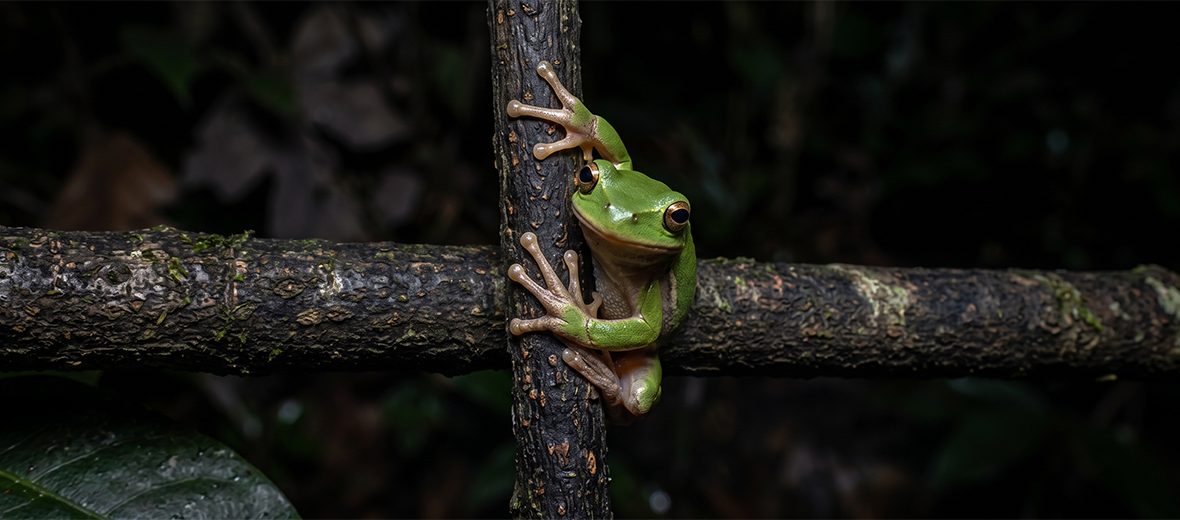
The squirrel tree frog is a smaller species of tree frog found in the southeastern United States, from Texas to Virginia. They are an introduced species to the Bahamas. They come in several color morphs, such as bright green, yellowish, gray, and deep brown. They resemble the American green tree frog, but lacks the dorsal spots. These amphibians face the threats of habitat loss and destruction at the hands of residential and commercial developments. Habitat division occurs due to the development of new roads. Preventing natural fires helps stop the maintenance of open longleaf pine ecosystems that support their prey. Climate change causes longer droughts that dry up the temporary, ephemeral wetlands these frogs need for breeding. However, these frogs are abundant throughout their range and thus listed as Least Concern by the IUCN. Their population trend is listed as stable.
First the Stats…
Scientific name: Dryophytes squirellus
Weight: Up to .10 ounce
Length: Up to 1.5 inches
Lifespan: Up to 8 years
Now on to the Facts!
1.) Tadpoles are preyed on by dragonfly nymphs, giant water bugs, predatory fish, and newts. Adults are preyed on by raccoons, skunks, larger frogs, snakes, and birds.
2.) Tadpoles are suspension feeders that scrape organic as well as inorganic matter from rocks, plants, and logs. Adults are very aggressive predators that prey on ants, beetles, smaller crayfish, crickets, and spiders.
3.) Their preferred habitats are damp woods, pine savannas, swamps, and agricultural fields.
4.) The breeding call is a rapid, nasal, duck-like quacking sound—often described as a repetitive “waaaak, waaaak”—and that is typically produced at a rate of 1 – 2 times per second.
5.) They, like most frogs, are nocturnal (active at night).
But wait, there’s more on the squirrel tree frog!
6.) Breeding season lasts from March – October.
7.) Females lay up to 1,200 eggs per breeding season. The eggs hatch in up to 43 hours.
Did you know…?
They can jump up to 3 feet from a sitting position.
8.) Due to their rapid growth and development, the tadpoles are far more likely to survive insect predators than fish.
9.) Cuban tree frogs are known to eat these frogs. Anywhere the Cuban tree frogs are present, there is a lack of squirrel frogs.
10.) These frogs are often victims of vehicle strike (being hit by vehicles) as they sometimes cross roads in search of food and new breeding grounds.
Now a Short Squirrel Tree Frog Video!
Be sure to share & comment below! Also, check out the Critter Science YouTube channel. Videos added regularly. Be sure to like and subscribe!

Want to suggest a critter for me to write about? Let me know here.
Some source material acquired from: Wikipedia & IUCN