Critter Science
  • Zoology
    • Ecology
      • Animal Conservation
        • CITES: Protecting Wildlife
        • Endangered Animals
        • Ex Situ Explained
        • In Situ Explained
        • Zoological Branches
      • Chromatophores and Survival
      • Ecosystems
        • Animal Habitats
        • The Biomes
        • Coastal Erosion
        • Rainforest Types
      • Evolution. The Facts.
        • Animal Devolution
        • What are Arachnids?
          • Spider Webs
        • Carl Linnaeus
        • Charles Darwin
        • Dame Jane Goodall
        • Evolution of Amphibians
        • Evolution of Birds
        • Genetic Drift in the Animal Kingdom
        • Naturalism
        • Natural Selection
        • What is a Marsupial?
      • Invertebrate Families Explored
      • Predator vs Prey
      • Producers and Consumers
      • Vertebrate Animal Families
    • Sustainability
      • Climate Change
      • Global Warming
      • Pollution
        • Air Pollution
        • Land Pollution
        • Light Pollution
        • Microplastics Pollution
        • Noise Pollution
        • Water Pollution
      • Recycling
        • Recycling Plastics
      • Renewable Energy
    • Animal Behavioral Patterns
      • Avian Communication
      • Elephant Communication
      • Herpetofauna Communication
      • Primate Language: The Debate
      • Types of Animal Dormancy
    • What are Species?
      • Amphibians vs Reptiles
      • Animal Reproduction
      • Claws, Nails, and Talons
      • Fur and Hair
      • Gecko Feet
      • Invasive Species
      • IUCN Statuses
      • Speciation
      • Species Complex
      • The Enigmatic Purr
      • Venom vs Poison
      • What is a Marsupial?
    • About the Critterman
  • Daily Critter Facts
    • Amphibian Facts
      • Frog Facts
      • Newt Facts
      • Salamander Facts
      • Toad Facts
    • Arthropod Facts
      • Arachnid Facts
      • Insect Facts
    • Bird Facts
      • Flightless Bird Facts
      • Predatory Bird Facts
      • Scavenger Bird Facts
      • Wading Bird Facts
    • Cryptozoology
    • Fish Facts
      • Cephalopod Facts
      • Crustacean Facts
      • Jellyfish Facts
      • Reefs
      • Shark and Ray Facts
      • Shellfish Facts
    • Flying Mammal Facts
    • Gastropod Facts
    • Land Mammal Facts
      • Canine Facts
      • Feline Facts
      • Lagomorph Facts
      • Marsupial Facts
      • Mustelid Facts
      • Primate Facts
      • Rodent Facts
      • Ungulate Facts
    • Parasite Facts
    • Reptile Facts
      • Crocodilian Facts
      • Lizard Facts
      • Snake Facts
      • Turtle Facts
    • Sea Mammal Facts
      • Dolphin Facts
      • Porpoise Facts
      • Sea Lion Facts
      • Seal Facts
      • Whale Facts
    • Worm Facts
  • For Teachers
    • Animal Quizzes
      • Amphibian Quiz
      • Bird Quiz
      • Cat Quiz
      • Dog Quiz
      • Dolphin Quiz
      • Insect Quiz
      • Reptile Quiz
    • Animal Word Search
    • Butterfly Life Cycle
      • Butterfly Metamorphosis
      • World’s Largest Butterfly
      • World’s Largest Moth
    • The Cellular Structure of an Animal
    • Coloring Pages
    • Fish and Sharks
    • Frogs vs Toads
    • Insect vs Bug
    • Metamorphosis – A Frog’s Life Cycle
  • Study Guides
    • African Animals
    • Antarctica Animals
    • Asian Animals
    • Australian Animals
    • Central American Animals
    • European Animals
    • North American Animals
    • South American Animals
  • Diseases & Parasites
    • Bsal
    • Canine Distemper Virus (CDV)
    • Chronic Wasting Disease (CWD)
    • The Deadly Chytrid Fungus
    • All About Parasites
    • The Rabies Virus
    • Toxoplasmosis
    • White-Nose Syndrome
  • Contact
    • General Contact
    • Guest Article Submission
      • Guest Articles
        • Guest Articles – 2024
    • What Critter is This?
    • Animal Welfare Organizations
    • Privacy Policy
Subscribe
southern wood ant

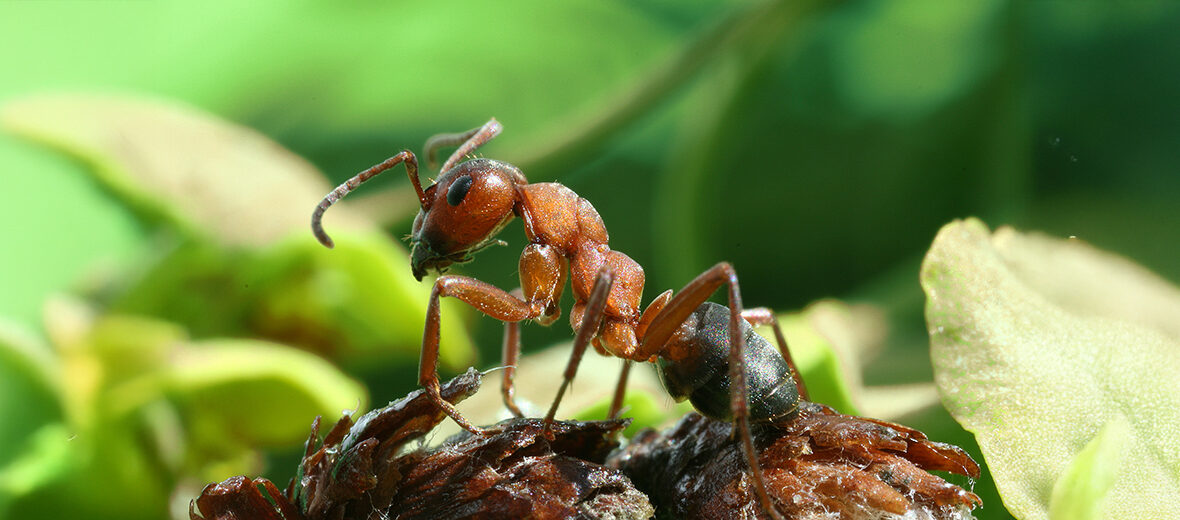
The Southern Wood Ant

  • 7 January, 2026
  • Critterman
  • No Comments
  • 26 Views
  • 1 Likes
Arthropod Facts, Daily Critter Facts, Insect Facts

The southern wood ant, aka horse ant or red wood ant, hails from Europe, but has a distribution all the way to eastern Asia. Unconfirmed reports state their presence in North America as well. They face the threats of habitat loss and destruction from residential and commercial developments, and clear-felling, which affects aphid production and harvesting, as well as unmanaged plantations which create too much shade, preventing sunlight from reaching nests; climate change, which causes warmer winters that interfere with their hibernation cycles, and increased rainfall can flood nests; air pollution, water pollution, and land pollution which all affect aphid reproduction; ranching, which brings about overgrazing livestock that can trample nests; pesticide overuse, that causes gradual and immediate death of colonies; and predators, both natural and introduced, that prey on these ants. The IUCN lists these insects as Near Threatened. Their population trend is listed as undetermined.

First the Stats…

Scientific name: Formica rufa
Weight: Up to 0.00018 ounce
Length: Up to .47 inch
Lifespan: Up to 3 years for workers, up to 20+ years for queens

Now on to the Facts!

1.) While aphid honeydew is their primary source of food, they will also prey on various insects and arachnids. They’re also intense scavengers.

2.) They are frequently used in forestry management and often are introduced into an area as a form of pest control.

3.) Worker ants often perform parental care or cocoon nursing.

4.) The foraging behavior of wood ants varies based on their environment. Some have been documented attending to and harvesting aphids as well as preying on and competing with other predators for food resources.

5.) These ants have shown aggressive behavior towards their own species in various situations. Intraspecific competition usually occurs early in spring between workers of competing nests. This aggression might be linked to the protection of maintaining territory and trails.

But wait, there’s more on the southern wood ant!

6.) Like all ants, they recognize their nestmates via chemical signals. Failure to recognize each other typically causes the integrity of the colony to quickly decay.

7.) These ants are capable of spraying formic acid from their abdomens as a defense.

Did you know…?
Formic acid was originally extracted by the English naturalist John Ray, in 1671, by distilling a large number of crushed southern wood ants.

8.) Formic acid not only acts as a natural antibiotic, but it can also be a powerful defense that is corrosive and causes burns; respiratory issues; and irritation to skin, eyes, and mucous membranes.

9.) These critters collect resins from coniferous trees and incorporate them into their nests for various uses. Resin provides them with structural soundness and predator defense to their nests; as well as antimicrobial, antifungal, and pathogen defense in conjunction with formic acid from their venom gland.

10.) Wood ants perform organized and planned attacks on other ant colonies or insects. These orchestrated attacks are motivated by territory expansion, resource acquisition, and brood capture.

But wait, there’s still more on the southern wood ant!

11.) Colonies usually house multiple reproducing queens.

12.) They typically have multiple nests, enabling them to relocate in the event of dramatic environmental changes. This splitting of nests lends to the formation of additional daughter nests.

Did you know…?
While these ants don’t have stingers, like some other species of ants, they do have powerful jaws and will bite and spray formic acid as both an attack and a defense.

13.) Nest turnover rates are quite high with this species. Over a 3-year period, researchers counted 248 nests within a 6.33 mile area under study.

14.) In 2008, the chronic bee paralysis virus (CBPV) was reported for the first time in this and another ant species. CBPV affects bees, ants, and mites. CBPV causes bloated abdomens and severe paralysis, leading to death.

15.) Queens can produce 1,000s of eggs in their long lifetime.

Now a Short Southern Wood Ant Video!

Be sure to share & comment below! Also, check out the Critter Science YouTube channel. Videos added regularly!

Subscribe


Want to suggest a critter for me to write about? Let me know here.

Some source material acquired from: Wikipedia & IUCN

Photo credit: Richard Bartz

Trending
The Woolly Monkey

acidantantsAsiabitecoloniescolonydefenseeggsEuropeinsectinsectsnorth americaqueenqueen antsouthern wood antwood ant
Critterman

With over 50 years of critter experience to my credit and hundreds of zoology teaching hours to people around the world, I have amassed not only a continuing thirst for critter knowledge but a desire to teach others all I can about the majesty and wonder of our natural world. Critter Science is a culmination of such knowledge. I have hands on as well as book acquired intel on all kinds of critters. Whether they're on land, sea, or in the air. I will never say that I know everything about all animals. That's impossible, even for a savant. But, that being said, ask me any animal question and I'll answer it. If I don't know the answer, I'll get an answer for you!

The Eastern Tube-Nosed Bat
The Snowy Albatross
Related Posts
  • snowy albatross
    The Snowy Albatross 8 January, 2026
  • eastern tube-nosed bat
    The Eastern Tube-Nosed Bat 6 January, 2026
  • Eurasian bittern
    The Eurasian Bittern 5 January, 2026
  • Daily Critter Facts
  • Guest Articles
  • BYET
  • Teachers
  • Study Guides
  • Contact

Copyright © 2025, Critter Science. All Rights Reserved.