Critter Science
  • Zoology
    • Ecology
      • Animal Conservation
        • CITES: Protecting Wildlife
        • Dame Jane Goodall
        • Endangered Animals
        • Ex Situ Explained
        • In Situ Explained
        • IUCN Statuses
        • Zoological Branches
      • Chromatophores and Survival
      • Ecosystems
        • Animal Habitats
        • The Biomes
        • Coastal Erosion
        • Rainforest Types
      • Evolution. The Facts.
        • Animal Devolution
        • Animal Mimicry
        • Convergent Evolution
        • Carl Linnaeus
        • Charles Darwin
        • Evolution of Amphibians
        • Evolution of Birds
        • Genetic Drift in the Animal Kingdom
        • Naturalism
        • Natural Selection
        • Venom vs Poison
      • Invertebrate Families Explored
        • What are Arachnids?
          • Spider Webs
      • Predator vs Prey
      • Producers and Consumers
      • Vertebrate Animal Families
        • Snakes vs Legless Lizards
        • What is a Marsupial?
    • Sustainability
      • Climate Change
      • Global Warming
      • Pollution
        • Air Pollution
        • Land Pollution
        • Light Pollution
        • Microplastics Pollution
        • Noise Pollution
        • Water Pollution
      • Recycling
        • Recycling Plastics
      • Renewable Energy
    • Animal Behavioral Patterns
      • Avian Communication
      • Cetacean Communication
      • Elephant Communication
      • Herpetofauna Communication
      • Primate Language: The Debate
      • Types of Animal Dormancy
    • What are Species?
      • Amphibians vs Reptiles
      • Animal Reproduction
      • Animal Skin and Scales
      • Claws, Nails, and Talons
      • Fur and Hair
      • Gecko Feet
      • Invasive Species
      • Speciation
      • Species Complex
      • The Enigmatic Purr
    • About the Critterman
  • Daily Critter Facts
    • Amphibian Facts
      • Frog Facts
      • Newt Facts
      • Salamander Facts
      • Toad Facts
    • Arthropod Facts
      • Arachnid Facts
      • Insect Facts
    • Bird Facts
      • Flightless Bird Facts
      • Predatory Bird Facts
      • Scavenger Bird Facts
      • Wading Bird Facts
    • Cryptozoology
    • Fish Facts
      • Cephalopod Facts
      • Crustacean Facts
      • Jellyfish Facts
      • Reefs
      • Shark and Ray Facts
      • Shellfish Facts
    • Flying Mammal Facts
    • Gastropod Facts
    • Land Mammal Facts
      • Canine Facts
      • Feline Facts
      • Lagomorph Facts
      • Marsupial Facts
      • Mustelid Facts
      • Primate Facts
      • Rodent Facts
      • Ungulate Facts
    • Parasite Facts
    • Reptile Facts
      • Crocodilian Facts
      • Lizard Facts
      • Snake Facts
      • Turtle Facts
    • Sea Mammal Facts
      • Dolphin Facts
      • Porpoise Facts
      • Sea Lion Facts
      • Seal Facts
      • Whale Facts
    • Worm Facts
  • For Teachers
    • Animal Quizzes
      • Amphibian Quiz
      • Bird Quiz
      • Cat Quiz
      • Dog Quiz
      • Dolphin Quiz
      • Insect Quiz
      • Reptile Quiz
    • Animal Word Search
    • Butterfly Life Cycle
      • Butterfly Metamorphosis
      • World’s Largest Butterfly
      • World’s Largest Moth
    • The Cellular Structure of an Animal
    • Coloring Pages
    • Fish and Sharks
    • Frogs vs Toads
    • Insect vs Bug
    • Metamorphosis – A Frog’s Life Cycle
  • Study Guides
    • African Animals
    • Antarctica Animals
    • Asian Animals
    • Australian Animals
    • Central American Animals
    • European Animals
    • North American Animals
    • South American Animals
  • Diseases & Parasites
    • Bsal
    • Canine Distemper Virus (CDV)
    • Chronic Wasting Disease (CWD)
    • The Deadly Chytrid Fungus
    • All About Parasites
    • The Rabies Virus
    • Toxoplasmosis
    • White-Nose Syndrome
  • Contact
    • General Contact
    • Guest Article Submission
      • Guest Articles
        • Guest Articles – 2024
    • What Critter is This?
    • Animal Welfare Organizations
    • Privacy Policy
Subscribe
white-sided jackrabbit

The Quick and Agile White-Sided Jackrabbit

  • 15 December, 2025
  • Critterman
  • No Comments
  • 71 Views
  • 1 Likes
Daily Critter Facts, Lagomorph Facts, Land Mammal Facts

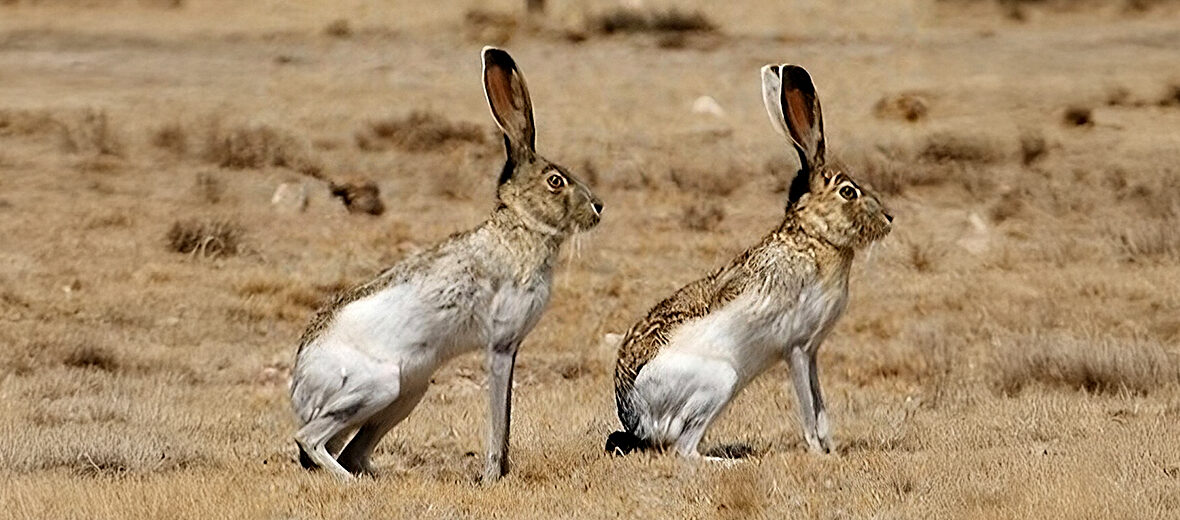
The white-sided jackrabbit, aka Mexican hare, is a species of jackrabbit the hails from central Mexico upwards to parts of southwestern United States. They face the threats of habitat loss and destruction at the hands of residential and commercial developments, farming, and ranching; hunting; trapping; invasive species, that can bring about disease and competition for food from black-tailed jackrabbits; and climate change, that can cause severe droughts and habitat altering storms. The IUCN lists these lagomorphs as Vulnerable. Their population trend is listed as decreasing.

First the Stats…

Scientific name: Lepus callotis
Weight: Up to 10 lbs.
Length: Up to 30 inches, plus up to a 4 inch tail
Lifespan: Up to 8 years

Now on to the Facts!

1.) Their front legs can grow to be up to 6 inches long, while their back legs can grow up to 12 inches long.

2.) There are 2 recognized subspecies: Lepus callotis callotis and Lepus callotis gallardi.

3.) They prefer to dwell among plateaus at high elevations, including the grassy plains of southwestern New Mexico and the open plains habitats of the southern Mexican tableland. These jackrabbits tend to steer clear of hills and mountains.

4.) These jackrabbits are primarily nocturnal (active at night) and crepuscular (active at dawn and dusk).

5.) Breeding season lasts from mid-April – mid-August.

But wait, there’s more on the white-sided jackrabbit!

6.) These lagomorphs can jump upwards of 20 feet horizontally and up to 4 feet vertically.

7.) Females undergo up to a 42 day gestation (pregnancy) that yields up to 2 leverets.

Did you know…?
If confronted by a predator, an individual will leap into the air exposing their white sides and stretching their legs in what is called a deimatic display. Then they will flee at speeds of up to 45 mph!

8.) A female can have multiple litters throughout the breeding season.

9.) Grasses, such as buffalograss, tobosagrass, fiddleneck, wolftail, blue grama, vine mesquite, ring muhly, wooly Indian wheat, and Wright buckwheat are grazed upon daily. They consume upwards of 1 lb. of vegetation per day.

10.) A 2011 study by the New Mexico Department of Game and Fish revealed that the main cause of death of these lagomorphs in New Mexico was due to road kill caused by nighttime U.S. Border Patrol traffic.

11.) Bobcats, coyotes, golden eagles, hawks, and owls all prey on the white-sided jackrabbit.

Now a Short White-Sided Jackrabbit Video!

Be sure to share & comment below! Also, check out the Critter Science YouTube channel. Videos added regularly!

Subscribe


Want to suggest a critter for me to write about? Let me know here.

Some source material acquired from: Wikipedia & IUCN

Photo credit: Juan Cruzado Cortés

Trending
The Greater Flamingo

hareharesjackrabbitjackrabbitslagomorphlagomorphsMexican hareMexicorabbitrabbitsUnited Statesvulnerablewhite-sided jackrabbit
Critterman

With over 50 years of critter experience to my credit and hundreds of zoology teaching hours to people around the world, I have amassed not only a continuing thirst for critter knowledge but a desire to teach others all I can about the majesty and wonder of our natural world. Critter Science is a culmination of such knowledge. I have hands on as well as book acquired intel on all kinds of critters. Whether they're on land, sea, or in the air. I will never say that I know everything about all animals. That's impossible, even for a savant. But, that being said, ask me any animal question and I'll answer it. If I don't know the answer, I'll get an answer for you!

The Gray Hawk
The Masked Lapwing
Related Posts
  • Asiatic long-tailed climbing mouse
    The Asiatic Long-Tailed Climbing Mouse 26 January, 2026
  • California tiger salamander
    The California Tiger Salamander 23 January, 2026
  • imperial shag
    The Imperial Shag 22 January, 2026
  • Daily Critter Facts
  • Guest Articles
  • BYET
  • Teachers
  • Study Guides
  • Contact

Copyright © 2025, Critter Science. All Rights Reserved.