
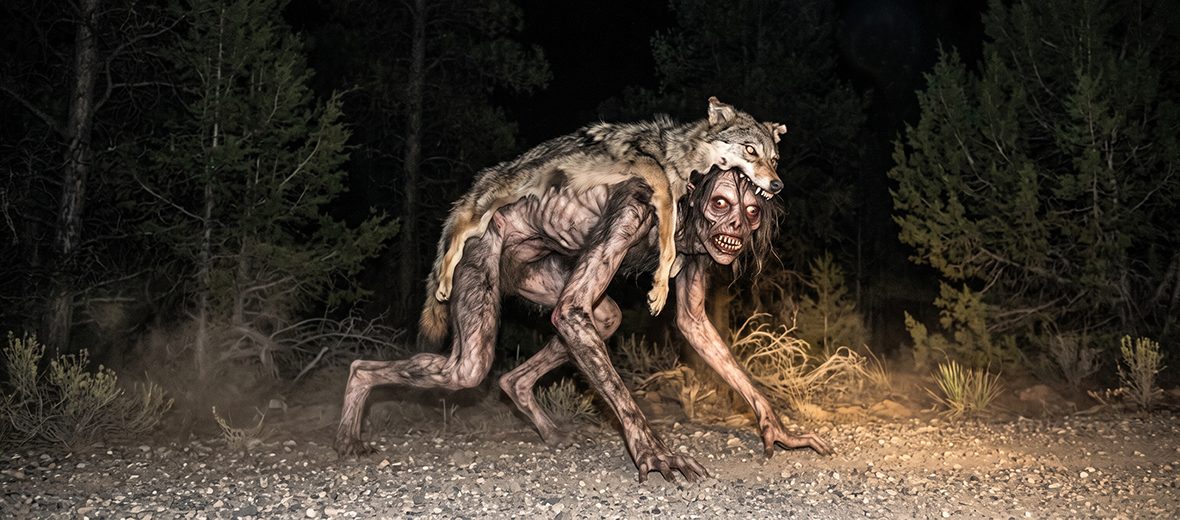
In Navajo folklore, the skin-walker—known as the yee naaldlooshii—is a malevolent witch who has gained the ability to transform into or possess various animals. By subverting traditional medicine and violating sacred cultural taboos, these practitioners are said to acquire dark supernatural powers, including unnatural speed and the capacity to mimic human voices. They most commonly disguise themselves as coyotes, wolves, owls, or bears to stalk victims under the cover of night. Within traditional communities, discussing them openly is considered dangerous, as even speaking their name is believed to attract their malevolent attention. Today, while popularized globally as a paranormal creature, the skin-walker remains a deeply serious and feared element of Indigenous spiritual belief. Seeing as this being has not officially been captured it is not listed with the IUCN. Is this creature real or just a myth? You decide. This article is dedicated to Ethan. Happy Samhain!
First the Stats…
Scientific name: Mimiothrix noxiosus
Weight: Up to 2,550 lbs.
Length: Up to 15 feet
Lifespan: Up to 200 years
Now on to the Facts!
1.) Their scientific name hails from the Greek mimio- (imitator/mimic) and thrix (fur/pelt) with noxiosus (harmful/malevolent), referencing the creature’s lore of mimicking human voices and wearing predatory hides to cause harm.
2.) The term yee naaldlooshii, translates to “by means of it, it goes on all fours”, is 1 of numerous types of skin-walkers within Navajo beliefs.
3.) These witches are viewed as the antithesis of Navajo values, performing malevolent ceremonies and utilizing manipulative magic in stark contrast to the beneficial works of traditional medicine people.
4.) The legend of skin-walkers is deeply entrenched in Navajo tradition and rarely ever discussed with outsiders. This reticence is partly due to cultural taboos and the lack of general understanding by non-Navajo individuals.
5.) These beings use their powers for evil, and they are considered a source of fear and mystery within Navajo communities.
But wait, there’s more on the skin-walker!
6.) They are powerful sorcerers who, after engaging in a variety nefarious acts, have obtained the ability to transform into animals at will.
7.) While likely the most common variety seen in horror fiction by non-Navajo people, the yee naaldlooshii is among several varieties of skin-walkers in Navajo culture; specifically, they are a type of ‘ánti’įhnii (a type of witch or sorcerer who practices malevolent or harmful magic).
Did you know…?
The animals associated with witchcraft typically include tricksters like the coyote; however, it may include other creatures, often those associated with death or bad omens.
8.) As of circa 1986, the legend of the skin-walkers is not too well understood outside of Navajo culture, both due to reluctance to discuss the subject with outsiders, as well as what Cherokee Nation academic Adrienne Keene states as a lack of the necessary cultural context the stories are embedded within.
9.) Traditional Navajo people are very reluctant to reveal skin-walkers to non-Navajos, or to even discuss it at all among those they do not trust, for fear of retribution.
10.) They might also possess living animals or people and walk around in their bodies!
But wait, there’s still more on the skin-walker!
11.) These creatures can be either male or female.
12.) Encounter stories can comprise Navajo victory stories, with the skin-walkers approaching a hogan (dwelling) and being scared away.
13.) Not only can they shape-shift into a variety of animals, but they can also mimic human voices, travel at super-human speeds, curse and/or harm others, and engage in forbidden acts like grave desecration, cannibalism, and/or the murder of a close family member.
14.) Are these creatures real or just a myth or legend? You decide for yourself. Be careful out there!
Now a Short Skin-Walker Video!
Be sure to share & comment below! Also, check out the Critter Science YouTube channel. Videos added regularly. Be sure to like and subscribe!

Want to suggest a critter for me to write about? Let me know here.
Some source material acquired from: Wikipedia & IUCN

Leave a Reply