
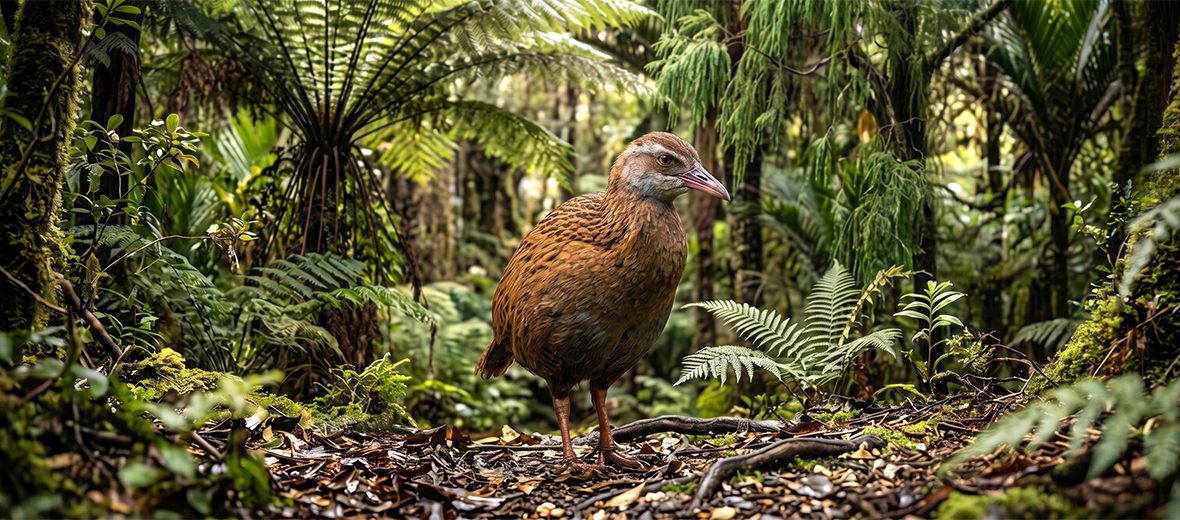
The weka, aka Māori hen or woodhen, is a omnivorous, flightless species of bird from the rail family. They hail from mainland New Zealand as well as the north island. Even though 4 subspecies are recognized, only 2 are supported by genetic evidence. They face the threats of habitat clearance and degradation. They also face the threat of habitat division at the hands of roads, which can also result in vehicle strike (being hit by vehicles). Accidental poisoning from baits used for possum and rabbit control is another issue faced. These birds have been eradicated from several islands due to possible risks to other native biota, such as the kiwi. Climate change has caused both flooding and severe droughts. Finally introduced mammalian predators have also caused a strain on their numbers. The IUCN lists these birds as Vulnerable. Their population trend is listed as decreasing as well. This article is for my good friend Molly.
First the Stats…
Scientific name: Gallirallus australis
Weight: Up to 3.54 lbs.
Length: Up to 24 inches
Wingspan: Up to 24 inches
Lifespan: Up to 19 years
Now on to the Facts!
1.) Their 2 inch long beak is strong and utilized as a weapon.
2.) They were originally and formally described by the Swedish naturalist Anders Erikson Sparrman in 1786.
3.) These birds are host to 2 species of feather lice: Rallicola harrisoni and Pseudomenopon pilgrii.
4.) The preferred habitats are forests, sub-alpine grasslands, sand dunes, rocky shores, and modified semi-urban locales.
5.) Ants, beetles, earthworms, larvae, wētās, grass grubs, slugs, snails, insect eggs, slaters (woodlice), frogs, spiders, rats, mice, and small birds are all preyed on. Berries, grass, leaves, and seeds are also feasted upon.
But wait, there’s more on the weka!
6.) They are very curious and are known for searching for and stealing unfamiliar and transportable objects. Shiny objects are especially interesting to these birds.
7.) Females lay up to 4 eggs, in up to 4 clutches each year. The eggs hatch in up to 1 month.
Did you know…?
As of 2018, there were only an estimated 118,000 wild individuals remaining.
8.) The chicks fledge in up to 10 weeks and both parents participate in incubation and parenting duties.
9.) Wekas are known to raid the nests of kiwis, where they will destroy and eat their eggs and kill as well as eat their chicks.
10.) They are preyed on by ferrets, cats, dogs, stoats, and rats.
But wait, there’s still more on the weka!
11.) Wekas have been utilized by the Māori people as food, perfume, oil to cure inflammations, feathers in clothing, and sadly even lures to catch dogs.
12.) In October 2023 a 2-person team competing in the reality show Race to Survive: New Zealand were disqualified after 1 killed and ate a weka in what he claimed was an act of desperation and hunger, even knowing they are a protected species.
Now a Short Weka Video!
Be sure to share & comment below! Also, check out the Critter Science YouTube channel. Videos added regularly. Be sure to like and subscribe!

Want to suggest a critter for me to write about? Let me know here.
Some source material acquired from: Wikipedia & IUCN

Leave a Reply