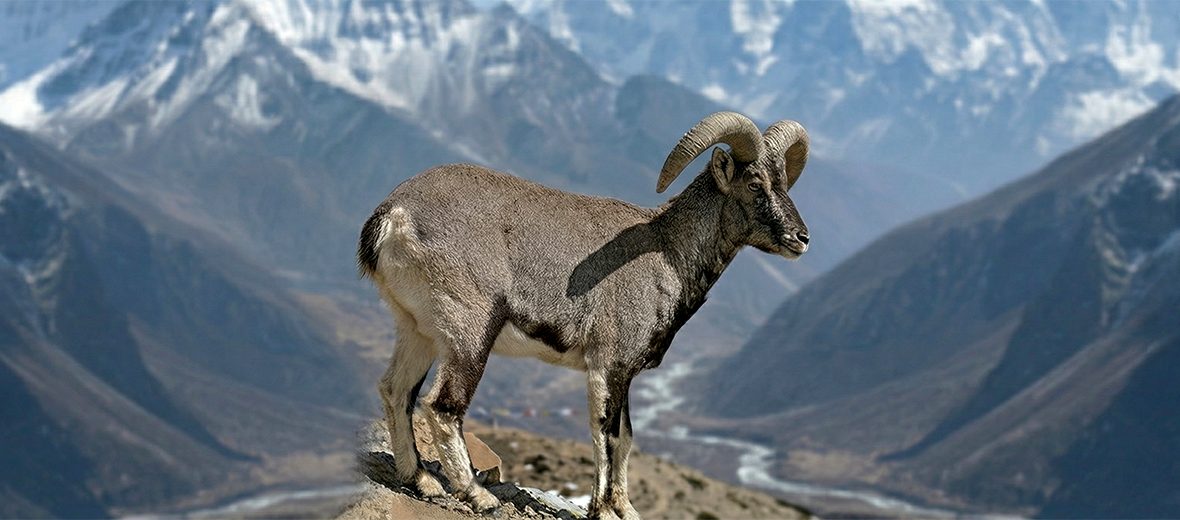
The bharal, aka blue sheep, dwell among the Himalayan alpine meadows and rocky slopes across Bhutan, China, India, Myanmar, Nepal, and Pakistan. These ungulates are threatened by habitat loss due to farming and ranching; competition for food from domestic livestock; hunting, for their meat and horns; trapping for trade. However, they are abundant and thus listed as Least Concern by the IUCN. Their population trend is listed as unknown at this time.
First the Stats…
Scientific name: Pseudois nayaur
Weight: Up to 165 lbs.
Length: Up to 65 inches, plus up to a 7.9 inch tail
Height: Up to 36 inches, at the shoulders
Lifespan: Up to 24 years
Now on to the Facts!
1.) These critters are genetically closer to caprines (goats) than they are to sheep.
2.) Their horns can measure up to 31 inches.
3.) These herbivorous (eat plant matter) grazers feed primarily on grasses, but will switch to browsing on shrubs if grass is scarce.
4.) The genus name Pseudois is a combination of Greek words ‘pseudes’ and ‘ois’ and translates to false and sheep respectively.
5.) Their native names include yanyang in Mandarin; bharal, barhal, bharar, or bharut in Hindi; na or sna in Tibetan and Ladakhi; nabo in Spitian; and na or gnao in Bhutanese.
But wait, there’s more on the bharal!
6.) They can be found at elevations of up to 18,000 feet.
7.) The preferred habitats for these critters are high-altitude, rocky alpine zones in the Himalayas and Tibetan Plateau, typically inhabiting steep terrain, grassy slopes, and cliffs between the snowline and forests.
Did you know…?
There are approximately 414,000 wild individuals remaining, to date.
8.) Bharals are diurnal (active during the day).
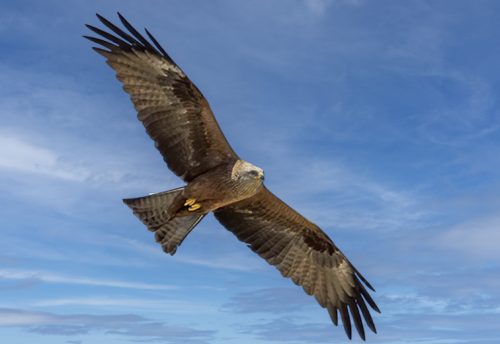
9.) Adults are preyed on by snow leopards and Himalayan wolves, while lambs are preyed on by foxes and eagles.
10.) Females undergo up to a 160 day gestation (pregnancy) that yields a single kid.
Now a Short Bharal Video!
Be sure to share & comment below! Also, check out the Critter Science YouTube channel. Videos added regularly!

Want to suggest a critter for me to write about? Let me know here.
Some source material acquired from: Wikipedia & IUCN