Critter Science
  • Zoology
    • Ecology
      • Animal Conservation
        • CITES: Protecting Wildlife
        • Endangered Animals
        • Ex Situ Explained
        • In Situ Explained
        • Zoological Branches
      • Chromatophores and Survival
      • Ecosystems
        • Animal Habitats
        • The Biomes
        • Coastal Erosion
      • Evolution. The Facts.
        • Animal Devolution
        • What are Arachnids?
          • Spider Webs
        • Carl Linnaeus
        • Charles Darwin
        • Dame Jane Goodall
        • Evolution of Amphibians
        • Evolution of Birds
        • Fish and Sharks
        • Genetic Drift in the Animal Kingdom
        • Naturalism
        • Natural Selection
        • What is a Marsupial?
      • Invertebrate Families Explored
      • Predator vs Prey
      • Producers and Consumers
      • Vertebrate Animal Families
    • Sustainability
      • Climate Change
      • Global Warming
      • Pollution
        • Air Pollution
        • Land Pollution
        • Light Pollution
        • Microplastics Pollution
        • Noise Pollution
        • Water Pollution
      • Recycling
        • Recycling Plastics
      • Renewable Energy
    • Animal Behavioral Patterns
      • Elephant Communication
      • Herpetofauna Communication
      • Primate Language: The Debate
      • Types of Animal Dormancy
    • What are Species?
      • Amphibians vs Reptiles
      • Animal Reproduction
      • Claws, Nails, and Talons
      • Frogs vs Toads
      • Fur and Hair
      • Gecko Feet
      • Invasive Species
      • IUCN Statuses
      • Speciation
      • Species Complex
      • The Enigmatic Purr
      • Venom vs Poison
      • What is a Marsupial?
    • About the Critterman
  • Daily Critter Facts
    • Amphibian Facts
      • Frog Facts
      • Newt Facts
      • Salamander Facts
      • Toad Facts
    • Arthropod Facts
      • Arachnid Facts
      • Insect Facts
    • Bird Facts
      • Flightless Bird Facts
      • Predatory Bird Facts
      • Scavenger Bird Facts
      • Wading Bird Facts
    • Cryptozoology
    • Fish Facts
      • Cephalopod Facts
      • Crustacean Facts
      • Jellyfish Facts
      • Reefs
      • Shark and Ray Facts
      • Shellfish Facts
    • Flying Mammal Facts
    • Gastropod Facts
    • Land Mammal Facts
      • Canine Facts
      • Feline Facts
      • Lagomorph Facts
      • Marsupial Facts
      • Mustelid Facts
      • Primate Facts
      • Rodent Facts
      • Ungulate Facts
    • Parasite Facts
    • Reptile Facts
      • Crocodilian Facts
      • Lizard Facts
      • Snake Facts
      • Turtle Facts
    • Sea Mammal Facts
      • Dolphin Facts
      • Porpoise Facts
      • Sea Lion Facts
      • Seal Facts
      • Whale Facts
    • Worm Facts
  • For Teachers
    • Animal Quizzes
      • Amphibians Quiz
      • Bird Quiz
      • Cat Quiz
      • Dolphin Quiz
      • Insect Quiz
      • Reptile Quiz
    • Butterfly Life Cycle
      • Butterfly Metamorphosis
      • World’s Largest Butterfly
      • World’s Largest Moth
    • Metamorphosis – A Frog’s Life Cycle
    • The Cellular Structure of an Animal
    • Insect vs Bug
    • Animal Word Search
    • Coloring Pages
  • Study Guides
    • African Animals
    • Antarctica Animals
    • Asian Animals
    • Australian Animals
    • Central American Animals
    • European Animals
    • North American Animals
    • South American Animals
  • Diseases & Parasites
    • Bsal
    • Canine Distemper Virus (CDV)
    • Chronic Wasting Disease (CWD)
    • The Deadly Chytrid Fungus
    • All About Parasites
    • The Rabies Virus
    • Toxoplasmosis
    • White-Nose Syndrome
  • Contact
    • General Contact
    • Guest Article Submission
      • Guest Articles
        • Guest Articles – 2024
    • What Critter is This?
    • Animal Welfare Organizations
    • Privacy Policy
Subscribe
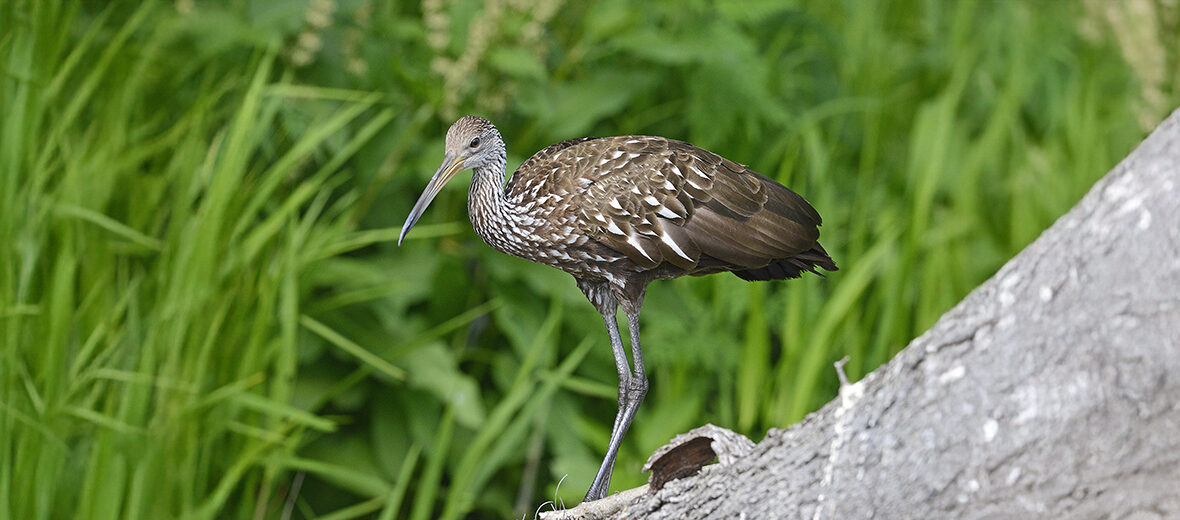
limpkin

The Limpkin

  • 22 December, 2025
  • Critterman
  • No Comments
  • 55 Views
  • 1 Likes
Bird Facts, Daily Critter Facts, Wading Bird Facts

The limpkin, aka carrao, courlan, and/or crying bird, is a sizable wading bird related to cranes and rails. They’re the only extant species in the family Aramidae. While found mostly in wetlands in the warmer parts of the Americas, from Florida, to Mexico, to Central America, down to South America, they have been spotted as far north as Wisconsin, in the U.S. and Southern Ontario, Canada. They face the threats of habitat loss and destruction at the hands of wetland conversion for agriculture, residential and commercial developments; a decrease in apple snails, due to pollution, as well as destruction of the snail’s habitat; invasive vegetation, that makes it more difficult to access food; land pollution; water pollution; and climate change, that causes a rise in sea water levels that encroach upon the freshwater wetlands. However, these birds are abundant enough to be listed as Least Concern by the IUCN. Their population trend is listed as stable.

First the Stats…

Scientific name: Aramus guarauna
Weight: Up to 2.9 lbs.
Length: Up to 29 inches
Wingspan: Up to 42 inches
Lifespan: Up to 20 years

Now on to the Facts!

1.) They get their primary common name from the way the walk with a sort of limp.

2.) These birds were formally described scientifically by Carl Linnaeus in 1766.

3.) Between 1856 – 1934, these birds were treated as 2 species, 1 in South America and the other located in Central America, the Caribbean, and Florida.

4.) There are 4 recognized subspecies with the difference between them relating to slight variances in size and plumage: Aramus guarauna dolosus, Aramus guarauna elucus, Aramus guarauna pictus, and of course Aramus guarauna guarauna.

5.) Their primary vocalization is a loud, wild scream or wail with a hint of a rattling quality, that sounds like “kwEEEeeer or klAAAar.” This call is most frequently produced at night, at dawn, and at dusk. Other calls include “wooden clicking”, clucks, and an alarm call, which is a “piercing bihk, bihk…”.

But wait, there’s more on the limpkin!

6.) These birds are both nocturnal (active at night) and crepuscular (active at dawn and dusk).

7.) The preferred habitats are freshwater marshes and swamps, typically with tall reeds, as well as mangrove areas.

Did you know…?
There are an estimated 687,000 wild individuals remaining, to date.

8.) Limpkins are not aggressive for the most part, being rather unbothered by other species and seldom ever fight with members of their own kind.

9.) Due to their long toes, they have the ability to stand on floating water plants. They also swim quite well, but they seldom do.

10.) Besides apple snails and other snails, they also feast on insects, frogs, lizards, crustaceans (like crayfish), worms, seeds, water hyacinth, and water lettuce.

But wait, there’s still more on the limpkin!

11.) When feeding on apple snails, they will remove the operculum or “lid” and extract the snail, often times not breaking the shell. The extraction takes up to 20 seconds. The orange-yellow yolk gland of female snails is usually shaken loose and discarded. They often leave piles of empty shells at their favorite spots.

12.) Nests are constructed on the ground, in thick floating vegetation, in bushes, or even in trees.

Did you know…?
Most of the limpkin’s names throughout their range are onomatopoeic (imitate the actual sounds they describe) and are reflective of the bird’s call; for instance, carau in Argentina, carrao in Venezuela, and guareáo in Cuba.

13.) Females lay up to 8 eggs that hatch in up to 27 days.

14.) The young hatch precocial (self sufficient) and covered with down. They are capable of walking, running, and even swimming soon after hatching.

15.) Common predators include: American alligators, snakes, raccoons, crows, and muskrats. Snail kites also engage in kleptoparasitism (stealing of food from another animal).

Now a Short Limpkin Video!

Be sure to share & comment below! Also, check out the Critter Science YouTube channel. Videos added regularly!

Subscribe


Want to suggest a critter for me to write about? Let me know here.

Some source material acquired from: Wikipedia & IUCN

Photo credit: V.J. Anderson

Trending
The Fascinating Okapi

birdbirdsCentral Americalimpkinlimpkinsnorth americapredatorpreysnailsnailsSouth Americawading birdwading birds
Critterman

With over 50 years of critter experience to my credit and hundreds of zoology teaching hours to people around the world, I have amassed not only a continuing thirst for critter knowledge but a desire to teach others all I can about the majesty and wonder of our natural world. Critter Science is a culmination of such knowledge. I have hands on as well as book acquired intel on all kinds of critters. Whether they're on land, sea, or in the air. I will never say that I know everything about all animals. That's impossible, even for a savant. But, that being said, ask me any animal question and I'll answer it. If I don't know the answer, I'll get an answer for you!

The European Wasp
The Italian Wolf
Related Posts
  • Santa Catalina rattlesnake
    The Fate of the Santa Catalina Rattlesnake 24 December, 2025
  • Italian wolf
    The Italian Wolf 23 December, 2025
  • European wasp
    The European Wasp 19 December, 2025
  • Daily Critter Facts
  • Guest Articles
  • BYET
  • Teachers
  • Study Guides
  • Contact

Copyright © 2025, Critter Science. All Rights Reserved.