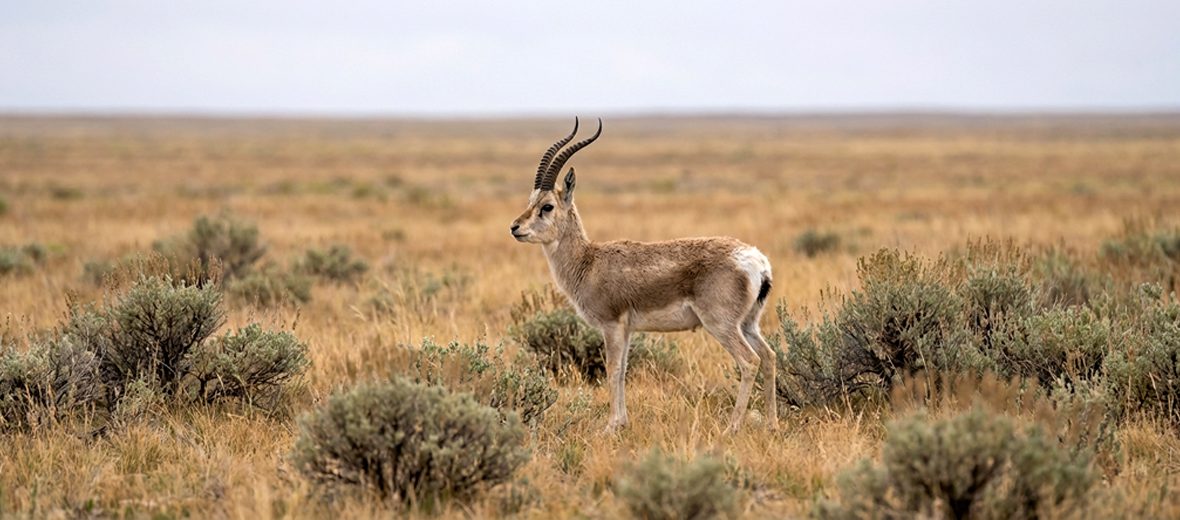
The Tibetan gazelle, aka goa, is a diminutive species of antelope that dwells in the Tibetan Plateau, in central Asia. These gazelles are widespread throughout the region. They face the threats of habitat loss and destruction at the hands of farming and ranching; competition for food with domestic cattle, goats, and sheep; habitat division at the hands of roads and railroads, that can result in vehicle strike (being hit by vehicles), as well as fencing that interrupts their migratory routes and ability to travel; hunting, for their meat and pelts; and trapping. The IUCN lists these gazelles as Near Threatened. Their population trend is listed as decreasing as well.
First the Stats…
Scientific name: Procapra picticaudata
Weight: Up to 51 lbs.
Length: Up to 3.2 feet
Height: Up to 26 inches, at the shoulders
Lifespan: Up to 5.7 years
Now on to the Facts!
1.) Males have horns the measure up to 13 inches.
2.) These gazelles are capable of running at speeds of up to 50 mph.
3.) They can be found at elevations of up to 18,860 feet!
4.) To date, there are no subspecies of these antelopes.
5.) As scattered as they are, there are typically only up to 2.8 individuals per .62 mile, with some instances of up to 10 individuals being recorded.
But wait, there’s more on the Tibetan gazelle!
6.) These critters are crepuscular (active at dawn and dusk).
7.) Forbs, legumes, and relatively small amounts of grasses and sedges are all feasted upon.
Did you know…?
There are only an estimated 100,000 wild individuals remaining.
8.) They are preyed on by Himalayan wolves and snow leopards.
9.) Females undergo up to a 6 month gestation (pregnancy) that yields a single fawn.
10.) These gazelles are suffering not only from unfavorable pasture conditions, but also from the problems associated with small populations like the lack of genetic diversity in their populations, which makes them more subject to inbreeding which, in turn, makes them less resistant to diseases.
Now a Short Tibetan Gazelle Video!
Be sure to share & comment below! Also, check out the Critter Science YouTube channel. Videos added regularly!

Want to suggest a critter for me to write about? Let me know here.
Some source material acquired from: Wikipedia & IUCN