Critter Science
  • Ecology
    • Animal Conservation
      • Apex Awakening
      • CITES: Protecting Wildlife
      • Dame Jane Goodall
      • Endangered Animals
      • Ex Situ Explained
      • In Situ Explained
      • IUCN Statuses
      • Steve Irwin
      • Zoological Branches
    • Animal Immortality and Regeneration
    • Animal Mimicry
    • Chromatophores and Survival
    • Ecosystems
      • Animal Habitats
      • The Biomes
      • Coastal Erosion
      • Desert Biomes
      • Deserts and Wildlife
      • Earth’s Living Canopies
      • Ocean Habitats
      • Rainforest Types
    • Evolution. The Facts.
      • Animal Devolution
      • Convergent Evolution
      • Carl Linnaeus
      • Charles Darwin
      • Evolution of Amphibians
      • Evolution of Birds
      • Genetic Drift in the Animal Kingdom
      • Insular Dwarfism
      • Naturalism
      • Natural Selection
    • Genetic Pollution
      • Genetic Bottlenecks in Animal Populations
    • Invertebrate Families Explored
      • Arthropod Diversity and Adaptations
      • Cephalopod Consciousness
      • Insect vs Bug
      • The Wonder and Warfare of Coral Reefs
      • What are Arachnids?
        • Spider Webs
    • Predator vs Prey
    • Producers and Consumers
    • Venom vs Poison
    • Vertebrate Families Explored
      • Amphibians: Unseen Guardians
      • Bone and Cartilage
      • Snakes vs Legless Lizards
      • The Triumph of the Ratites
      • What is a Marsupial?
    • The Wild Apothecary
  • Zoology
    • Sustainability
      • Climate Change
      • Earth Day: Past, Present, Future
      • Global Warming
      • Pollution
        • Air Pollution
        • Chemical Pollution
        • Land Pollution
        • Light Pollution
        • Microplastics Pollution
        • Noise Pollution
        • Water Pollution
      • Recycling
        • Recycling Plastics
      • Renewable Energy
    • Animal Behavioral Patterns
      • Aposematic Coloration
      • Avian Communication
      • Animal Thermoregulation
      • Beyond DNA: The Animal Accent
      • Cetacean Communication
      • Cold-Adapted Hypermetabolism
      • Elephant Communication
      • Herpetofauna Communication
      • Primate Language: The Debate
      • The Framework of Ethology
      • The Hidden Sensory Realm
      • Types of Animal Dormancy
    • What are Species?
      • Animal Reproduction
      • Introduced Species
      • Invasive Species
      • John Edward Gray
      • John Gould
      • Keystone Species
      • Lazarus Species: Rediscovered Life
      • Monotypic Species
      • Speciation
      • Species Complex
      • Understanding Animal Subspecies
    • About the Critterman
      • Amphibians Book
  • Daily Critter Facts
    • Amphibian Facts
      • Caecilian Facts
      • Frog Facts
      • Newt Facts
      • Salamander Facts
      • Toad Facts
    • Arthropod Facts
      • Arachnid Facts
      • Insect Facts
    • Bird Facts
      • Flightless Bird Facts
      • Predatory Bird Facts
      • Scavenger Bird Facts
      • Sea Bird Facts
      • Wading Bird Facts
    • Cryptozoology
    • Fish Facts
      • Bivalve Facts
      • Cephalopod Facts
      • Crustacean Facts
      • Jellyfish Facts
      • Reefs
      • Shark and Ray Facts
      • Shellfish Facts
    • Flying Mammal Facts
    • Gastropod Facts
    • Land Mammal Facts
      • Canine Facts
      • Feline Facts
      • Lagomorph Facts
      • Marsupial Facts
      • Mustelid Facts
      • Primate Facts
      • Rodent Facts
      • Ungulate Facts
    • Parasite Facts
    • Reptile Facts
      • Crocodilian Facts
      • Lizard Facts
      • Snake Facts
      • Turtle Facts
    • Sea Mammal Facts
      • Dolphin Facts
      • Porpoise Facts
      • Sea Lion Facts
      • Seal Facts
      • Whale Facts
    • Worm Facts
  • For Teachers
    • Animal Quizzes
      • Amphibian Quiz
      • Bird Quiz
      • Cat Quiz
      • Dog Quiz
      • Dolphin Quiz
      • Insect Quiz
      • Reptile Quiz
    • Amphibians vs Reptiles
    • Animal Skin and Scales
      • Claws, Nails, and Talons
      • Feather Anatomy, Function, & Types
      • Fur and Hair
      • Gecko Feet
    • The Enigmatic Purr
    • Animal Word Search
    • Butterfly Metamorphosis
      • World’s Largest Butterfly
      • World’s Largest Moth
    • The Cellular Structure of an Animal
    • Coloring Pages
    • Fish and Sharks
    • Frogs vs Toads
      • Metamorphosis – A Frog’s Life Cycle
    • Tunnels and Burrows
    • The Science of Naming Animals
    • Study Guides
      • African Animals
      • Antarctica Animals
      • Asian Animals
      • Australian Animals
      • Central American Animals
      • European Animals
      • North American Animals
      • South American Animals
  • Diseases & Parasites
    • Understanding Bird Flu
    • Bsal
    • Canine Distemper Virus (CDV)
    • Chronic Wasting Disease (CWD)
    • The Deadly Chytrid Fungus
    • Plagues of the Wild: Epizootic Diseases
    • All About Parasites
      • Toxoplasmosis
    • The Rabies Virus
    • White-Nose Syndrome
  • Contact
    • Critter Identification
    • General Contact
    • Guest Article Submission
      • Guest Articles
        • Guest Articles – 2024
    • Animal Welfare Organizations
    • Privacy Policy
GET MY BOOK
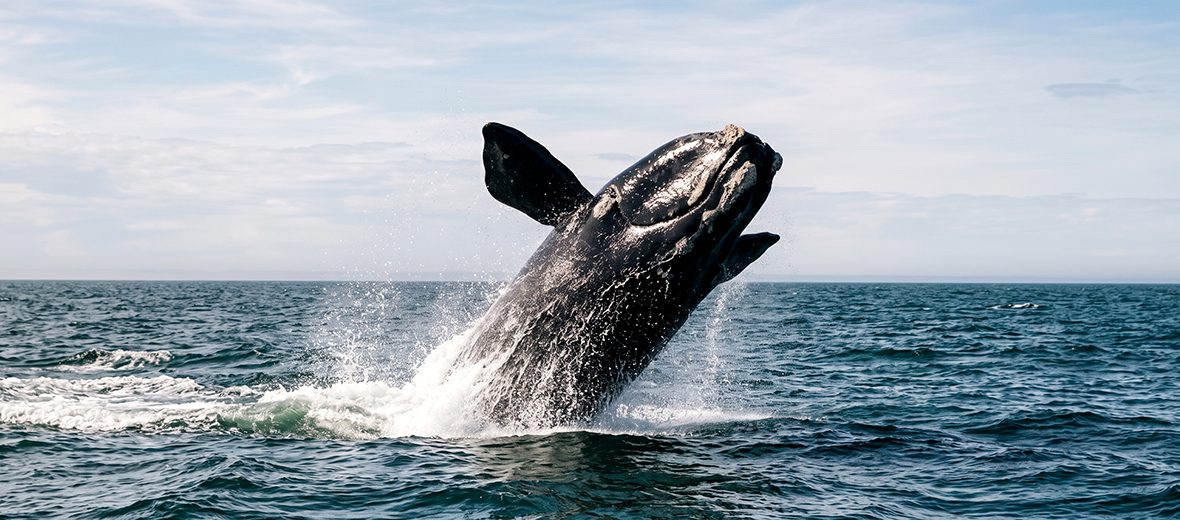
North Atlantic right whale

The North Atlantic Right Whale

  • 5 November, 2026
  • Critterman
  • No Comments
  • 0 Views
  • 0 Likes
Daily Critter Facts, Sea Mammal Facts, Whale Facts

The North Atlantic right whale is a baleen whale that is 1 of 3 species of right whale. They’re among the most endangered species of whale in the world. Fortunately, these whales are no longer hunted, and the most serious current threat is death or injury from entanglements in fishing gear as well as ship strikes (being hit by shipping vessels) off the east coast of North America. Photo-identification images show that the majority of individuals (82.9%) display evidence of being entangled at least once while over half (59.0%) of the individuals have been entangled more than once in fishing gear. Many acquire new entanglement scars on a near annual basis, young whales at a higher rate than adults. Ship strikes were discovered to be the cause of death for 53% of the 40 individuals necropsied between 1970 – 2006, and could likely have been responsible for up to 10 individual deaths per year. Low-frequency in-water noise from shipping activity and naval vessels has been linked to physiological stress (increased glucocorticoid levels). Acoustic masking from anthropogenic noise (primarily ship noise) can negatively impact both reproduction by interfering with courtship vocalizations and prey acquisition by interfering with communication and reducing their feeding opportunities. Environmental neurotoxins produced due to harmful algal blooms can affect reproduction and development. Paralytic shellfish toxin and domoic acid that were found in fecal samples show that they are exposed to environmental neurotoxins on an annual basis for up to 6 months out of the year. Lastly, climate change seems to have caused a northern shift in the summer distribution of these whales, most likely because of the effects on prey distribution, which exposes the these creatures to shipping and entanglement risks over a larger area. Due to these adversities, these whales are listed as Critically Endangered by the IUCN. Their population trend is listed as decreasing as well.

First the Stats…

Scientific name: Eubalaena glacialis
Weight: Up to 238,000 lbs. (99 short tons)
Length: Up to 61 feet
Lifespan: Up to 70+ years

Now on to the Facts!

1.) Due to their gentle nature, their slow surface-skimming feeding behaviors, their habit of staying close to the coast, and their high blubber content (which makes them float when they are killed, and which yields large amounts of whale oil), these whales were once a preferred target for whalers.

2.) They are protected under the U.S. Endangered Species Act and Marine Mammal Protection Act as well as Canada’s Species at Risk Act.

3.) Sadly, it is believed that they may become functionally extinct in the next 2 decades. Functionally extinct means a species or group of organisms that has dropped to such low numbers that they no longer play a significant role in their ecosystem, even though some individuals are still alive.

4.) They have between 200 – 270 baleen plates on each side of the upper jaw. These are up to 9.8 feet long.

5.) Up to 45% of their body weight is comprised of blubber.

But wait, there’s more on the North Atlantic right whale!

6.) Their age can be determined by examining their earwax, postmortem (after death).

7.) These whales have been known to interact with other baleen whales especially with humpback whales, as well as with bottlenose dolphins.

Did you know…?
There are only an estimated 380 individuals remaining, to date. This includes up to 70 breeding females.

8.) Like other whales, they utilize low frequency sounds to navigate the ocean, find food, and communicate with one another.

9.) Females, aka cows, undergo up to a 12 month gestation (pregnancy) that yields a single calf.

10.) Calves are born measuring up to 15 feet and weighing up to 3,000 lbs.

But wait, there’s still more on the North Atlantic right whale!

11.) Their only known predator is the orca and there has only been 1 documented case of an attack.

12.) Copepods, krill, pteropods, and larval barnacles are all readily feasted upon, and in mass quantities.

Did you know…?
Their massive head takes up roughly 1/3 of their entire 61-foot body length!

13.) These whales consume up to 5,500 lbs. of food a day!

14.) They were first described by Danish zoologist Otto Friedrich Müller in 1776.

15.) Seeing as they would float long after being killed, ‘flensing’ or stripping them of blubber without having to take them on board, combined with their lack of speed in the water, feeding habits, and coastal habitat preference, made them easy prey, even for whalers equipped only with wooden boats and hand-held harpoons.

But wait, there’s still a little more on the North Atlantic right whale!

16.) A UME (unusual mortality event) for their population has been active since 2017, a single year where the population of less than 400 individuals experienced 35 mortalities and morbidities, due to unknown events.

17.) There have been a few sightings close to Iceland in 2003. There was speculation that these could be the remains of a virtually extinct Eastern Atlantic pod, but examination of old whalers’ records suggests that they are more likely to be strays from further west.

18.) On April 9, 2020, Judge James Boasberg issued an opinion finding that the National Marine Fisheries Service violated the Endangered Species Act when it issued a biological opinion in 2014 allowing for the accidental killings of these whales (of which only 400+/- remained as of April 8, 2020) by the American lobster fishery, which consists of 7 areas spanning the east coast from Maine to North Carolina.

19.) Right whale sightings can be valuable to researchers, who recommend that all sightings be reported. In Florida, the Marine Resources Council runs a volunteer sighting network to receive sighting information from the public and verify sightings with trained volunteers.

Now a Short North Atlantic Right Whale Video!

Be sure to share & comment below! Also, check out the Critter Science YouTube channel. Videos added regularly. Be sure to like and subscribe!

Subscribe


Want to suggest a critter for me to write about? Let me know here.

Some source material acquired from: Wikipedia & IUCN

Trending
The Tawny Owl

Atlantic Oceanblubbercetaceancritically endangereddeclinedecliningNorth Atlantic right whaleright whalewhalewhaling
Critterman

With over 51 years of critter experience to my credit and hundreds of zoology teaching hours to people around the world, I have amassed not only a continuing thirst for critter knowledge but a desire to teach others all I can about the majesty and wonder of our natural world. Critter Science is a culmination of such knowledge. I have hands on as well as book acquired intel on all kinds of critters. Whether they're on land, sea, or in the air. I will never say that I know everything about all animals. That's impossible, even for a savant. But, that being said, ask me any animal question and I'll answer it. If I don't know the answer, I'll get an answer for you!

The Beautiful Tūī
Related Posts
  • tūī
    The Beautiful Tūī 4 November, 2026
  • pink whipray
    The Pink Whipray 3 November, 2026
  • thick-billed murre
    The Thick-Billed Murre 2 November, 2026

Leave a Reply Cancel Reply

Your email address will not be published. Required fields are marked *

  • Daily Critter Facts
  • Guest Articles
  • BYET
  • Teachers
  • Study Guides
  • Contact

Copyright © 2026, Critter Science. All Rights Reserved.