Critter Science
  • Zoology
    • Ecology
      • Animal Conservation
        • CITES: Protecting Wildlife
        • Endangered Animals
        • Ex Situ Explained
        • In Situ Explained
        • Zoological Branches
      • Chromatophores and Survival
      • Ecosystems
        • Animal Habitats
        • The Biomes
        • Coastal Erosion
      • Evolution. The Facts.
        • Animal Devolution
        • What are Arachnids?
          • Spider Webs
        • Carl Linnaeus
        • Charles Darwin
        • Dame Jane Goodall
        • Evolution of Amphibians
        • Evolution of Birds
        • Fish and Sharks
        • Genetic Drift in the Animal Kingdom
        • Naturalism
        • Natural Selection
        • What is a Marsupial?
      • Invertebrate Families Explored
      • Predator vs Prey
      • Producers and Consumers
      • Vertebrate Animal Families
    • Sustainability
      • Climate Change
      • Global Warming
      • Pollution
        • Air Pollution
        • Land Pollution
        • Light Pollution
        • Microplastics Pollution
        • Noise Pollution
        • Water Pollution
      • Recycling
        • Recycling Plastics
      • Renewable Energy
    • Animal Behavioral Patterns
      • Elephant Communication
      • Herpetofauna Communication
      • Primate Language: The Debate
      • Types of Animal Dormancy
    • What are Species?
      • Amphibians vs Reptiles
      • Animal Reproduction
      • Claws, Nails, and Talons
      • Frogs vs Toads
      • Fur and Hair
      • Gecko Feet
      • Invasive Species
      • IUCN Statuses
      • Speciation
      • Species Complex
      • The Enigmatic Purr
      • Venom vs Poison
      • What is a Marsupial?
    • About the Critterman
  • Daily Critter Facts
    • Amphibian Facts
      • Frog Facts
      • Newt Facts
      • Salamander Facts
      • Toad Facts
    • Arthropod Facts
      • Arachnid Facts
      • Insect Facts
    • Bird Facts
      • Flightless Bird Facts
      • Predatory Bird Facts
      • Scavenger Bird Facts
      • Wading Bird Facts
    • Cryptozoology
    • Fish Facts
      • Cephalopod Facts
      • Crustacean Facts
      • Jellyfish Facts
      • Reefs
      • Shark and Ray Facts
      • Shellfish Facts
    • Flying Mammal Facts
    • Gastropod Facts
    • Land Mammal Facts
      • Canine Facts
      • Feline Facts
      • Lagomorph Facts
      • Marsupial Facts
      • Mustelid Facts
      • Primate Facts
      • Rodent Facts
      • Ungulate Facts
    • Parasite Facts
    • Reptile Facts
      • Crocodilian Facts
      • Lizard Facts
      • Snake Facts
      • Turtle Facts
    • Sea Mammal Facts
      • Dolphin Facts
      • Porpoise Facts
      • Sea Lion Facts
      • Seal Facts
      • Whale Facts
    • Worm Facts
  • For Teachers
    • Animal Quizzes
      • Amphibians Quiz
      • Bird Quiz
      • Cat Quiz
      • Dolphin Quiz
      • Insect Quiz
      • Reptile Quiz
    • Butterfly Life Cycle
      • Butterfly Metamorphosis
      • World’s Largest Butterfly
      • World’s Largest Moth
    • Metamorphosis – A Frog’s Life Cycle
    • The Cellular Structure of an Animal
    • Insect vs Bug
    • Animal Word Search
    • Coloring Pages
  • Study Guides
    • African Animals
    • Antarctica Animals
    • Asian Animals
    • Australian Animals
    • Central American Animals
    • European Animals
    • North American Animals
    • South American Animals
  • Diseases & Parasites
    • Bsal
    • Canine Distemper Virus (CDV)
    • Chronic Wasting Disease (CWD)
    • The Deadly Chytrid Fungus
    • All About Parasites
    • The Rabies Virus
    • Toxoplasmosis
    • White-Nose Syndrome
  • Contact
    • General Contact
    • Guest Article Submission
      • Guest Articles
        • Guest Articles – 2024
    • What Critter is This?
    • Animal Welfare Organizations
    • Privacy Policy
Subscribe
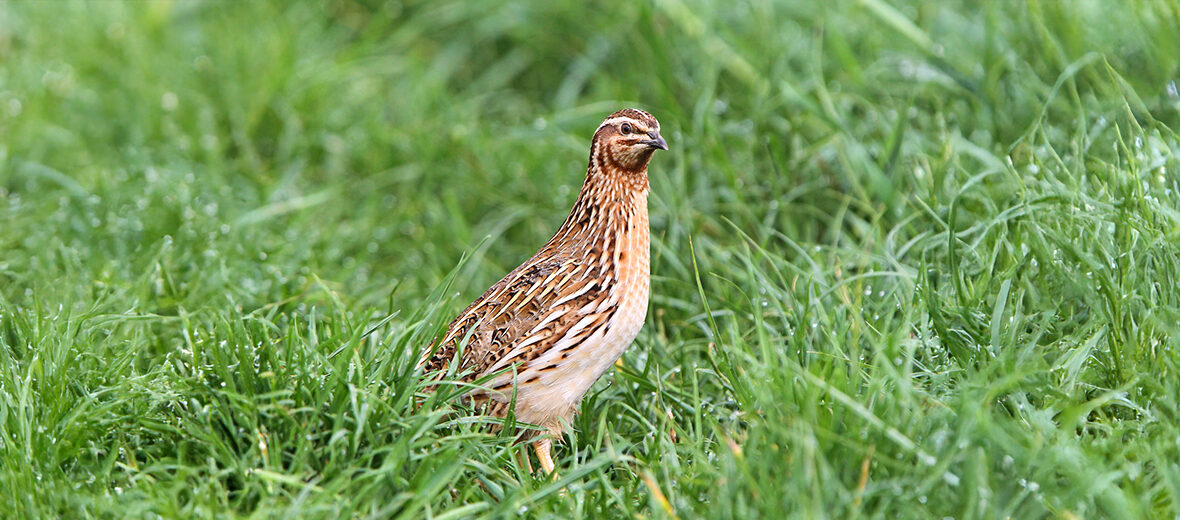
common quail

The Common Quail

  • 29 December, 2025
  • Critterman
  • No Comments
  • 3 Views
  • 1 Likes
Bird Facts, Daily Critter Facts

The common quail, aka European quail, is a small ground-nesting game bird that hails from the pheasant family. They are migratory, breeding in the western Palearctic and wintering in Africa and southern India. These birds face the threats of habitat loss and destruction at the hands of farming, ranching, residential, and commercial developments. This leads to the loss of rough grass and uncultivated land. Other threats are the overuse of herbicides and pesticides that reduce the availability of the foods they eat; and hybridization with the Japanese quail, which can reduce their lineages via genetic swamping. Genetic swamping occurs when extensive gene flow (hybridization) from a common or introduced species overwhelms and replaces the unique genetic makeup of a rare or distinct population, leading to the loss of local adaptations and potentially the “genome extinction” of the rare lineage itself. Due to the large population of these birds the IUCN lists them as Least Concern. However, their populations are decreasing.

First the Stats…

Scientific name: Coturnix coturnix
Weight: Up to 5 ounces
Length: Up to 7 inches
Wingspan: Up to 14 inches
Lifespan: Up to 5 years

Now on to the Facts!

1.) These quails can be found in Europe, Northern Africa, and Asia.

2.) With their characteristic call of 3 repeated chirps (repeated 3 times in quick succession), these quails are more often heard than seen.

3.) Common quails are often kept as poultry.

4.) They were formally described by the Swedish naturalist Carl Linnaeus in 1758 in the tenth edition of his Systema Naturae.

5.) There are 5 subspecies recognized: C. c. conturbans, C. c. inopinata, C. c. africana, C. c. erlangeri, and of course C. c. coturnix.

But wait, there’s more on the common quail!

6.) Beetles, true bugs, ants, earwigs, orthopterans, as well as weed and grass seeds are all on the menu.

7.) These birds are heavily migratory, unlike other game birds.

Did you know…?
There are approximately 35,000,000 wild individuals, to date.

8.) Females lay up to 13 eggs, 24 hours apart, that hatch in up to 20 days.

9.) Chicks fledge at about 19 days of age, but stay in the family group for up to 50 days.

10.) The young are precocial (self sufficient) and can leave the nest & feed themselves soon after birth.

But wait, there’s still more on the common quail!

11.) Huge numbers are caught in nets along the Mediterranean coast of Egypt. It is surmised that in 2012, during their autumn migration, approximately 3.4 million birds were caught in northern Sinai and possibly as many as 12.9 million in the entirety of Egypt.

12.) In 1537, Queen Jane Seymour, 3rd wife of Henry VIII, when pregnant with the future King Edward VI, acquired an unstoppable desire for quail. Courtiers and diplomats abroad were commanded to find adequate quantities for the Queen’s appetite.

13.) If these quails have eaten certain plants, although what plants is still in question, the meat from the quail can be tainted and poisonous, with 1 in 4 who eat the poisonous flesh becoming ill with coturnism, which is described as muscle soreness, and which could lead to kidney failure.

Now a Short Common Quail Video!

Be sure to share & comment below! Also, check out the Critter Science YouTube channel. Videos added regularly!

Subscribe


Want to suggest a critter for me to write about? Let me know here.

Some source material acquired from: Wikipedia & IUCN

Photo credit: christoph_moning

Trending
Australia’s Turtle Frog

AfricaAsiabirdbirdscommon quaileggsEuropeEuropean quailgame birdgame birdsmigratemigratorypheasantquailquails
Critterman

With over 50 years of critter experience to my credit and hundreds of zoology teaching hours to people around the world, I have amassed not only a continuing thirst for critter knowledge but a desire to teach others all I can about the majesty and wonder of our natural world. Critter Science is a culmination of such knowledge. I have hands on as well as book acquired intel on all kinds of critters. Whether they're on land, sea, or in the air. I will never say that I know everything about all animals. That's impossible, even for a savant. But, that being said, ask me any animal question and I'll answer it. If I don't know the answer, I'll get an answer for you!

The Boyd’s Forest Dragon
Related Posts
  • Boyd's forest dragon
    The Boyd’s Forest Dragon 26 December, 2025
  • bicolored hawk
    The Bicolored Hawk 25 December, 2025
  • Santa Catalina rattlesnake
    The Fate of the Santa Catalina Rattlesnake 24 December, 2025

Leave a Reply Cancel Reply

Your email address will not be published. Required fields are marked *

  • Daily Critter Facts
  • Guest Articles
  • BYET
  • Teachers
  • Study Guides
  • Contact

Copyright © 2025, Critter Science. All Rights Reserved.