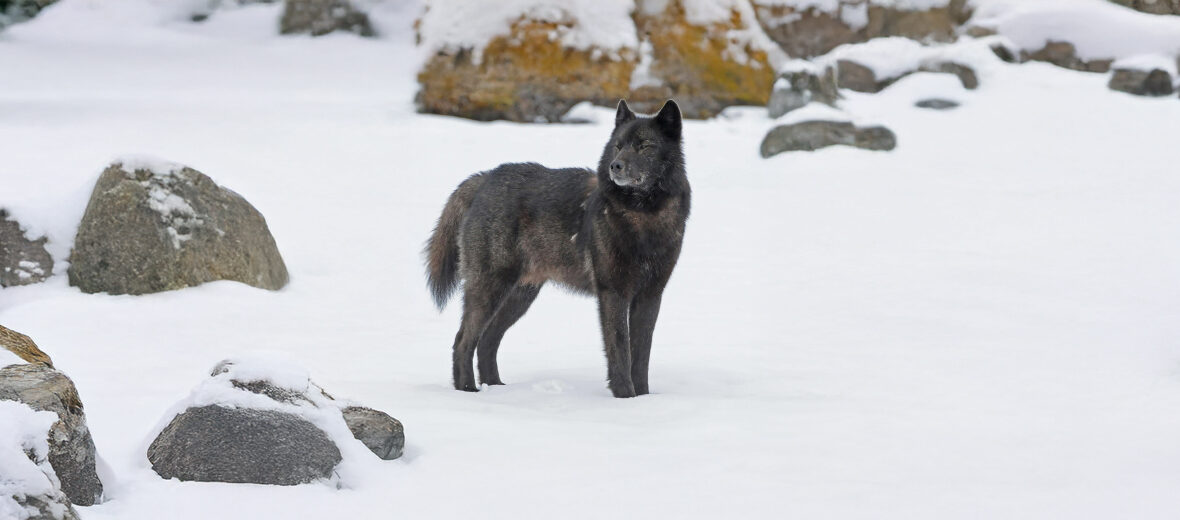
The Alexander Archipelago wolf, aka islands wolf, is a subspecies of the famous grey wolf. They are biologically isolated from the rest of North America by the Coast Mountains. These wolves are threatened by habitat loss and destruction at the hands of the logging industry; habitat division due to roads and railroads, which can result in vehicle strike (being hit by vehicles); hunting; and trapping. The IUCN lists these canines as Vulnerable. Their population trend is listed as decreasing. Enjoy Critter Science’s 1,900th hand written article!
First the Stats…
Scientific name: Canis lupus ligoni
Weight: Up to 50 lbs.
Length: Up to 3.5 feet, plus up to a 19 inch tail
Height: Up to 2 feet, at the shoulders
Lifespan: Up to 13 years
Now on to the Facts!
1.) Studies using mitochondrial DNA have determined that the wolves of coastal southeast Alaska are genetically distinct from the inland gray wolves, which also reflects a pattern observed in other taxa.
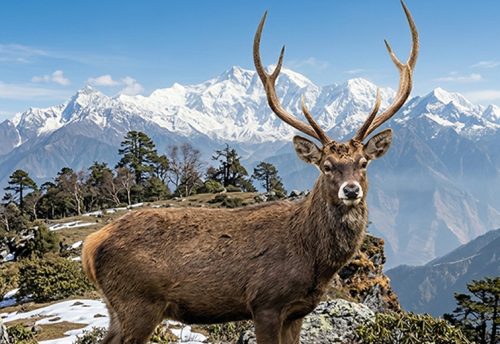
2.) Sitka black-tailed deer make up to 90% of their diet, with the North American Beaver comprising the remaining 10%.
3.) The average individual eats an estimated 26 deer per year.
4.) These critters are 1 of the world’s rarest wolf subspecies, and the islands that make up the Tongass National Forest, Alaska are their only remaining homes in the United States.
5.) They were among the first species of wolf to arrive in Alaska sometime between 7,000 – 8,000 years ago, after the end of the Wisconsin glaciation period.
But wait, there’s more on the Alexander Archipelago wolf!
6.) Sadly, in 1994, the US Fish & Wildlife Service issued a memo stating, “not protecting the wolf would be the ‘least controversial option'”. This was in regards to the logging companies and lobbyists that opposed restrictions on logging in the area, which protecting the Alexander Archipelago wolf would create.
7.) Females undergo up to a 63 day gestation (pregnancy) that yields up to 7 pups.
Did you know…?
In 2014, these wolves’ population fell from 200 to around 60 wolves; a drop of roughly 70% in just 1 year!
8.) In 2008, Greenpeace and the Cascadia Wildlands Project sued to stop the Forest Service from continuing with 4 timber sales on the Tongass NF slated to extract around “30 million board-feet of Tongass timber”, an amount close to the annual volume being logged at that time.
9.) In January 2010, the Forest Service was sued over its 73 million-board-ft Logjam timber sale located on Prince of Wales Island, by Tongass Conservation Society, Cascadia Wildlands, and Greenpeace.
10.) The plaintiff’s motion for summary judgement was later denied by the US District Court, Alaska, in September, and the case has been appealed to the 9th US Circuit Court of Appeals.
11.) These wolves are primarily crepuscular (active at dawn and dusk) and nocturnal (active at night).
Now a Short Alexander Archipelago Wolf Video!
Be sure to share & comment below! Also, check out the Critter Science YouTube channel. Videos added regularly!

Want to suggest a critter for me to write about? Let me know here.
Some source material acquired from: Wikipedia & IUCN
Photo credit: U.S. Fish and Wildlife Service