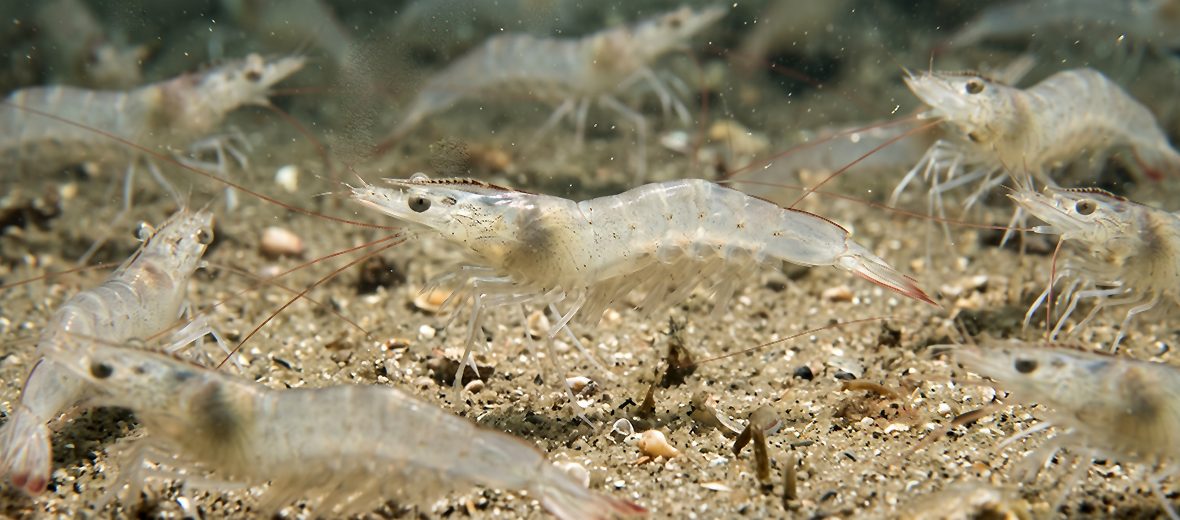
The Atlantic white shrimp, aka white shrimp, lake shrimp, green shrimp, green-tailed shrimp, gray shrimp, blue-tailed shrimp, rainbow shrimp, Daytona shrimp, Mayport Shrimp, common shrimp, southern shrimp, and, in Mexico, camaron blanco) is a species of prawn that dwells along the Atlantic coast of North America and also in the Gulf of Mexico. They are afflicted by shrimp black fin which is caused by the parasitic ciliate Hyalophysa lynni triggers an immune response that damages and blackens gill tissue. It impairs breathing and makes infected shrimp much easier prey for fish and crabs. Often introduced via imported frozen bait shrimp or escaped farmed species, white spot syndrome virus is a highly contagious virus that can cause rapid, widespread mortality. Juveniles rely heavily on coastal salt marshes, seagrass beds, and mangroves as nurseries. Coastal development, dredging, and erosion shrink these critical habitats. Agricultural pesticides, urban sewage discharge, as well as oil industry operations contaminate coastal lagoons and estuaries. Upstream land-use changes can also alter freshwater runoff, causing sudden salinity shifts that stress developing shrimp. Due to the fact that white shrimp are short-lived and sensitive to cold, sudden winter temperature drops—especially off the coasts of Georgia and South Carolina—can take out up to 80% or more of local overwintering populations. Climate change alters water temperatures and increases the severity of hurricanes and red tides, disrupting migrations and spawning cycles. Non-native, invasive Asian tiger shrimp have established populations in the Gulf of Mexico and the Southeast Atlantic. Growing twice as large as native white shrimp, they outcompete for food, prey on smaller native shrimp, and carry a host of foreign diseases. Even though federal and state agencies closely regulate the U.S. fishery with seasonal closures and gear rules, white shrimp support massive commercial and recreational fisheries. Overfishing remains a localized threat in parts of the southern Gulf of Mexico. However, despite these challenges, they are abundant enough to be listed as Not Evaluated by the IUCN. Their population trend is also listed as stable, at this time.
First the Stats…
Scientific name: Litopenaeus setiferus
Weight: Up to 1.9 ounces
Length: Up to 9.8 inches
Lifespan: Up to 2 years
Now on to the Facts!
1.) They can be found from Fire Island, New York down to Ciudad Campeche, Mexico.
2.) These shrimp can tolerate water temperatures as low as 37°F, but prefer temperatures of around 68°F.
3.) They were first scientifically described by Carl Linnaeus, the Swedish naturalist, in 1767.
4.) Their preferred depths are up to 260 feet.
5.) Seagrasses like Vallisneria americana and detritus are readily feasted upon.
But wait, there’s more on the Atlantic white shrimp!
6.) In turn, they are preyed on by various fish and loggerhead sea turtles.
7.) Females produce and release up to 1,000,000 purplish eggs each breeding season.
Did you know…?
Harvesting for these critters began during circa 1950s and since that time they have collected monthly throughout Gulf of Mexico.
8.) Fertilized eggs hatch in up to 24 hours.
9.) The spring rains flush the shrimp out into the ocean, where the larvae will continue to molt and develop.
10.) These critters are nocturnal (active at night)
Now a Short Atlantic White Shrimp Video!
Be sure to share & comment below! Also, check out the Critter Science YouTube channel. Videos added regularly. Be sure to like and subscribe!
Buy My Book
Select the image below to see everywhere my book is sold.

Want to suggest a critter for me to write about? Let me know here.
Some source material acquired from: Wikipedia & IUCN