
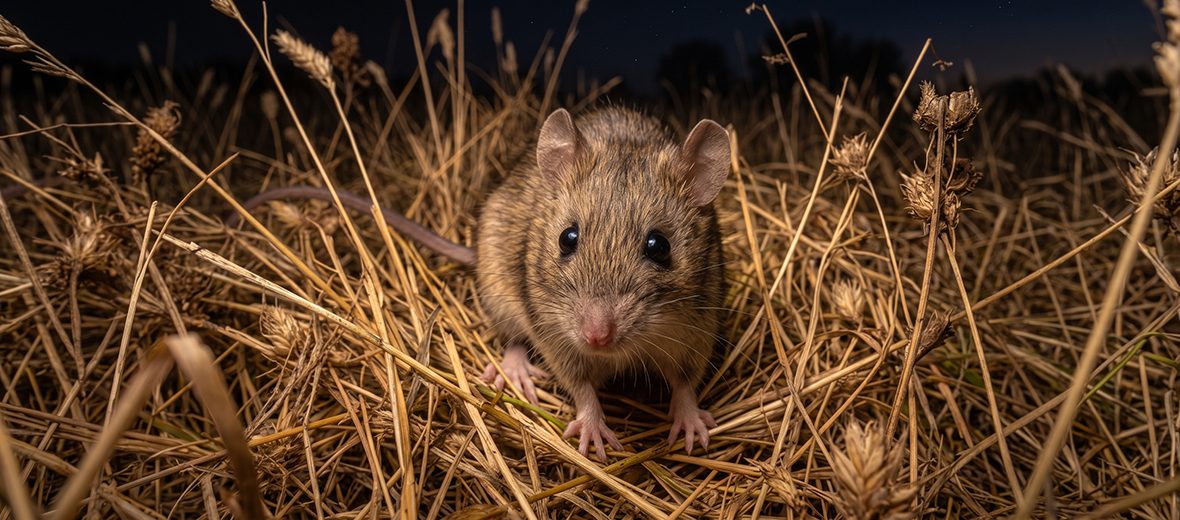
The pale field rat, aka Tunney’s rat, is a species of rodent that hails from northern and eastern Australia, as well as some of the surrounding islands. These rats face the threat of habitat loss and destruction at the hands of ranching, in that cattle often times trample their shallow burrows in search of food. Invasive, feral cats and red foxes also prey on these critters. However, they are abundant enough to be listed as Least Concern by the IUCN. Their population trend is listed as unknown.
First the Stats…
Scientific name: Rattus tunneyi
Weight: Up to 2.87 ounces
Length: Up to 7.68 inches, plus up to a 5.91 inch tail
Lifespan: Up to 2 years
Now on to the Facts!
1.) Like so many other rats, they are nocturnal (active at night).
2.) They were first described in 1904 by the British zoologist Oldfield Thomas.
3.) Besides ranching causing destruction to their burrows, farming has reduced their range to the grasslands, sedges, and cane-fields at the north and east of Australia.
4.) There are 2 recognized subspecies: Rattus culmorum apex and Rattus tunneyi.
5.) Their feet are covered in white hair on the upper side.
But wait, there’s more on the pale field rat!
6.) These rats are generally considered docile and dwell in loose groups
7.) Females undergo up to a 22 day gestation (pregnancy) that yields up to 4 pups. However, up to 11 have been recorded.
Did you know…?
These rats are also known as the Australian pale field rat.
8.) They don’t disperse easily and are not considered to be a rat prone to extremes in population size.
9.) Grass stems, seeds, tubers, and roots are all on the menu for these herbivores (eat plant matter).
10.) They have been identified as a damaging pest species in Queensland, where they are known to feed at the roots of hoop pine, and they also destroy partially matured trees in plantation crops.
11.) These rats are preyed on by owls, hawks, kites, venomous snakes, constrictors, and carnivorous species of marsupials.
Now a Short Pale Field Rat Video!
This video talks about general rat facts.
Be sure to share & comment below! Also, check out the Critter Science YouTube channel. Videos added regularly. Be sure to like and subscribe!

Want to suggest a critter for me to write about? Let me know here.
Some source material acquired from: Wikipedia & IUCN

Leave a Reply