
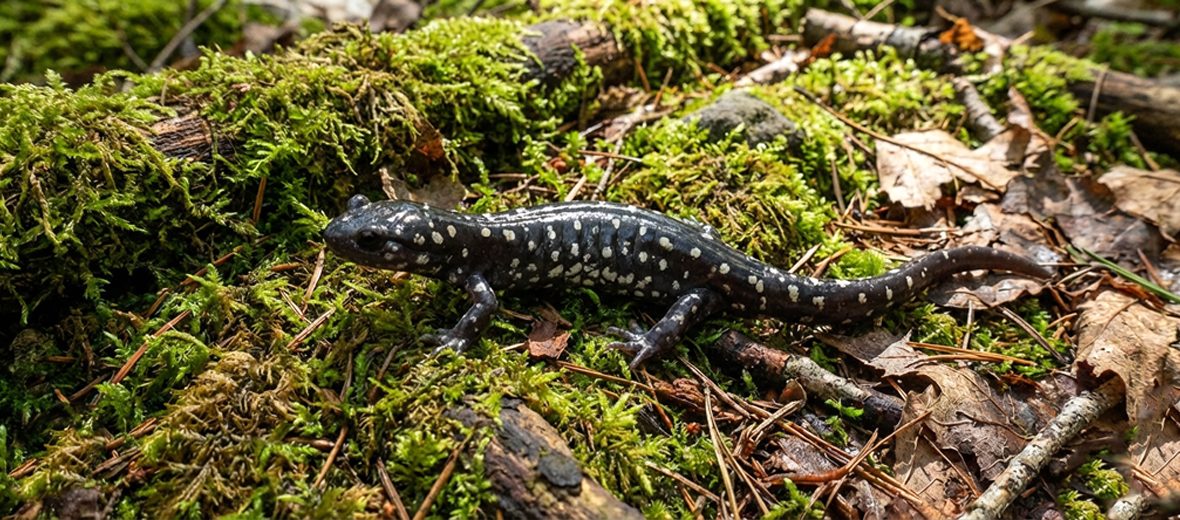
The northern slimy salamander, aka viscid salamander, grey-spotted salamander, slippery salamander, or sticky salamander, can be found throughout 2/3rds of the eastern United States. They face the threats of habitat loss and destruction, due to logging, and invasive species and with them competition for food and the potential for Batrachochytrium salamandrivorans, “Bsal”. However, these salamanders are abundant enough to be listed as Least Concern by the IUCN. Their population trend is listed as stable.
First the Stats…
Scientific name: Plethodon glutinosus
Weight: Up to .15 ounce
Length: Up to 6.7 inches
Lifespan: Up to 20 years
Now on to the Facts!
1.) They are but 1 of 57 known species in the genus Plethodon and was 1 of the first of its fellow salamanders to be described.
2.) These salamanders dwell among moist undisturbed woodlands, ravines, and caves.
3.) Clear-cutting of forests dramatically reduces populations in the particular area, and it takes up to 13 years for the population to return to just half of what it was before the clear-cutting.
4.) Ants, beetles, earthworms, sow bugs, and a variety of other insects are all on the menu.
5.) They are mostly nocturnal (active at night).
But wait, there’s more on the northern slimy salamander!
6.) Courtship entails the male performing a sort of dance to attract the female.
7.) When threatened they will whip their tail about, exposing the glands that secrete the sticky substance.
Did you know…?
They get their name due to their ability to produce large amounts of skin secretions that are incredibly adhesive. These adhesives bind to predators and can compromise both their ability to chew and move.
8.) Females lay several clutches of up to 12 eggs each.
9.) Hatchlings emerge from their eggs in up to 3 months.
10.) The hatchlings are born looking like the adults and forgo the larval stage.
Now a Short Northern Slimy Salamander Video!
Be sure to share & comment below! Also, check out the Critter Science YouTube channel. Videos added regularly!

Want to suggest a critter for me to write about? Let me know here.
Some source material acquired from: Wikipedia & IUCN

Leave a Reply