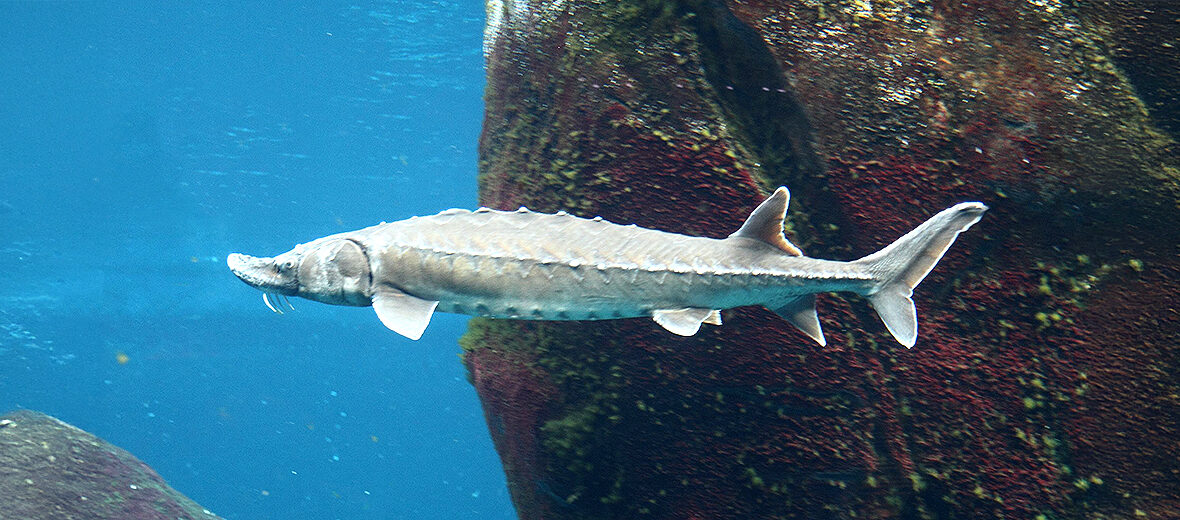
The Atlantic sturgeon is not only native to both sides of the Atlantic Ocean, but they are also associated with river basins as well. They are often considered a living fossil. These large fish face the threats of habitat loss and destruction at the hands of residential and commercial developments, marine and freshwater aquaculture, dams, and water management practices; overfishing; over harvesting, for their roe (eggs); diseases; parasites; water pollution; and microplastics pollution. These issues, coupled with their slow reproduction rates have earned them the IUCN status of Vulnerable. However, their population trend is listed as increasing.
First the Stats…
Scientific name: Acipenser oxyrinchus
Weight: Up to 800 lbs.
Length: Up to 15 feet
Lifespan: Up to 60 years
Now on to the Facts!
1.) They existed in great numbers when the first European settlers came to North America. However, they are now considered threatened, endangered, and even locally extinct in many of their original habitats. This is due, in part, to over exploitation.
2.) Along with the European sea sturgeon, Atlantic sturgeons are 1 of the most basal members of the sturgeon lineage.
3.) These, like all sturgeons, can tolerate wide spread salinities and spend a great deal of their lives in saltwater, yet migrate to spawn in freshwater bodies.
4.) The now nearly extinct sturgeon population in the Baltic Sea region belongs to the Atlantic sturgeon rather than to the European species, as once believed.
5.) Rather than having true scales, these sturgeons have 5 rows of bony plates known as scutes.
But wait, there’s more on the Atlantic sturgeon!
6.) Crustaceans, mollusks, and worms are all readily feasted upon.
7.) Females can lay up to 3.75 million eggs in a single year, doing so every 2 – 6 years. However, most of these eggs will never even get to hatch.
Did you know…?
There are an estimated 10,000+/- individuals remaining, to date.
8.) These sturgeons are also known for their occasional ‘leaping’ behavior, during which they will emerge completely out of the water in a forceful manner that is hazardous to anything unlucky enough to be struck on their reentry.
9.) The exact reason why sturgeons leap from the water remains unclear, however some scientists believe leaping is a form of group communication.
10.) Even though they are caught for their skin and meat, the primary reason for catching sturgeons was the high-quality caviar that could be made cheaply from their eggs, often coined black gold by watermen.
But wait, there’s still more on the Atlantic sturgeon!
11.) The late 19th century saw an increase in demand for caviar, which led to overfishing of Atlantic sturgeons. Today, only 22 out of their 38 original spawning rivers still have viable populations of the species.
12.) Hypoxia (where the body is deprived of oxygen) combined with higher water temperatures in the summer have been shown to be consistent with decreased survival rates of young sturgeons in the Chesapeake Bay area.
13.) A German-Polish project was underway in 2009 to reintroduce these fish into the Baltic by releasing specimens caught in Canada’s Saint John River into the Oder, a river at the border between Germany and Poland where the species once spawned.
14.) The National Marine Fisheries Service (NMFS) believes that fewer than 300 spawning adult females exist in the Delaware River population. In contrast, just over 100 years ago the estimated population was 180,000 spawning adult females!
Now a Short Atlantic Sturgeon Video!
This video talks about sturgeons in general.
Be sure to share & comment below! Also, check out the Critter Science YouTube channel. Videos added regularly!

Want to suggest a critter for me to write about? Let me know here.
Some source material acquired from: Wikipedia & IUCN
Photo credit: Cephas