Critter Science
  • Zoology
    • Ecology
      • Animal Conservation
        • CITES: Protecting Wildlife
        • Dame Jane Goodall
        • Endangered Animals
        • Ex Situ Explained
        • In Situ Explained
        • IUCN Statuses
        • Zoological Branches
      • Chromatophores and Survival
      • Ecosystems
        • Animal Habitats
        • The Biomes
        • Coastal Erosion
        • Rainforest Types
      • Evolution. The Facts.
        • Animal Devolution
        • Animal Mimicry
        • Convergent Evolution
        • Carl Linnaeus
        • Charles Darwin
        • Evolution of Amphibians
        • Evolution of Birds
        • Genetic Drift in the Animal Kingdom
        • Naturalism
        • Natural Selection
        • Venom vs Poison
      • Invertebrate Families Explored
        • What are Arachnids?
          • Spider Webs
      • Predator vs Prey
      • Producers and Consumers
      • Vertebrate Animal Families
        • Snakes vs Legless Lizards
        • What is a Marsupial?
    • Sustainability
      • Climate Change
      • Global Warming
      • Pollution
        • Air Pollution
        • Land Pollution
        • Light Pollution
        • Microplastics Pollution
        • Noise Pollution
        • Water Pollution
      • Recycling
        • Recycling Plastics
      • Renewable Energy
    • Animal Behavioral Patterns
      • Avian Communication
      • Cetacean Communication
      • Elephant Communication
      • Herpetofauna Communication
      • Primate Language: The Debate
      • Types of Animal Dormancy
    • What are Species?
      • Amphibians vs Reptiles
      • Animal Reproduction
      • Animal Skin and Scales
      • Claws, Nails, and Talons
      • Fur and Hair
      • Gecko Feet
      • Invasive Species
      • Speciation
      • Species Complex
      • The Enigmatic Purr
    • About the Critterman
  • Daily Critter Facts
    • Amphibian Facts
      • Frog Facts
      • Newt Facts
      • Salamander Facts
      • Toad Facts
    • Arthropod Facts
      • Arachnid Facts
      • Insect Facts
    • Bird Facts
      • Flightless Bird Facts
      • Predatory Bird Facts
      • Scavenger Bird Facts
      • Wading Bird Facts
    • Cryptozoology
    • Fish Facts
      • Cephalopod Facts
      • Crustacean Facts
      • Jellyfish Facts
      • Reefs
      • Shark and Ray Facts
      • Shellfish Facts
    • Flying Mammal Facts
    • Gastropod Facts
    • Land Mammal Facts
      • Canine Facts
      • Feline Facts
      • Lagomorph Facts
      • Marsupial Facts
      • Mustelid Facts
      • Primate Facts
      • Rodent Facts
      • Ungulate Facts
    • Parasite Facts
    • Reptile Facts
      • Crocodilian Facts
      • Lizard Facts
      • Snake Facts
      • Turtle Facts
    • Sea Mammal Facts
      • Dolphin Facts
      • Porpoise Facts
      • Sea Lion Facts
      • Seal Facts
      • Whale Facts
    • Worm Facts
  • For Teachers
    • Animal Quizzes
      • Amphibian Quiz
      • Bird Quiz
      • Cat Quiz
      • Dog Quiz
      • Dolphin Quiz
      • Insect Quiz
      • Reptile Quiz
    • Animal Word Search
    • Butterfly Life Cycle
      • Butterfly Metamorphosis
      • World’s Largest Butterfly
      • World’s Largest Moth
    • The Cellular Structure of an Animal
    • Coloring Pages
    • Fish and Sharks
    • Frogs vs Toads
    • Insect vs Bug
    • Metamorphosis – A Frog’s Life Cycle
  • Study Guides
    • African Animals
    • Antarctica Animals
    • Asian Animals
    • Australian Animals
    • Central American Animals
    • European Animals
    • North American Animals
    • South American Animals
  • Diseases & Parasites
    • Bsal
    • Canine Distemper Virus (CDV)
    • Chronic Wasting Disease (CWD)
    • The Deadly Chytrid Fungus
    • All About Parasites
    • The Rabies Virus
    • Toxoplasmosis
    • White-Nose Syndrome
  • Contact
    • General Contact
    • Guest Article Submission
      • Guest Articles
        • Guest Articles – 2024
    • What Critter is This?
    • Animal Welfare Organizations
    • Privacy Policy
Subscribe
rocky mountain goat

The Rocky Mountain Goat

  • 25 September, 2019
  • Critterman
  • No Comments
  • 912 Views
  • 0 Likes
Daily Critter Facts, Land Mammal Facts, Ungulate Facts

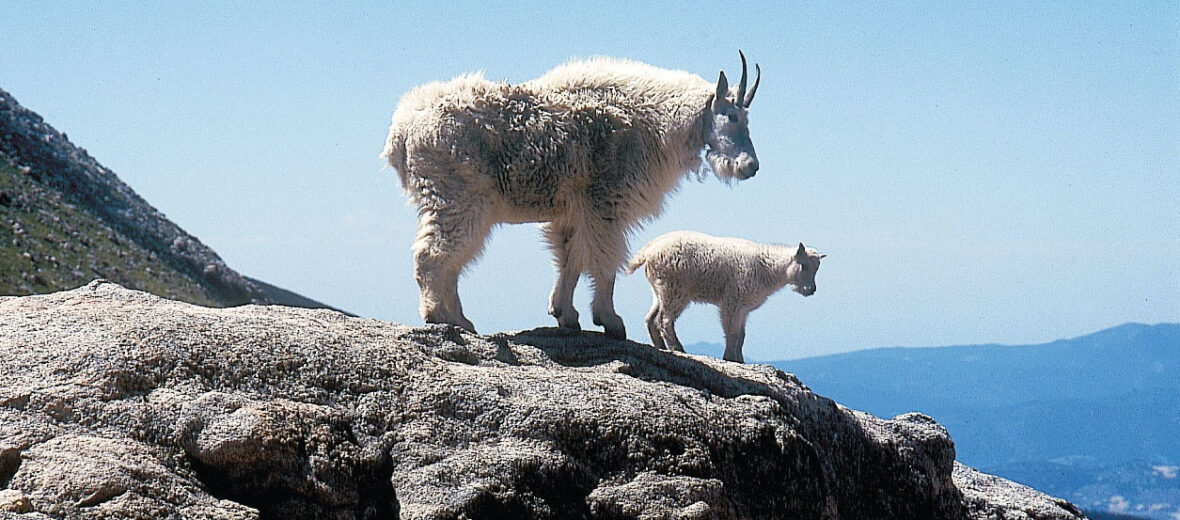
The rocky mountain goat, aka the mountain goat, is more than at home among the steep mountainous cliffs. With strong legs and split padded hooves they navigate effortlessly over the rugged terrain they call home. These goats can be spotted from Alaska all the way down through the rocky mountains, in alpine and sub alpine environments at elevations of over 13,000 feet! These critters can scale 1,500 feet in around 20 minutes! That’s taller than the Empire State Building!

First the Stats…

Scientific name: Oreamnos americanus
Weight: Up to 300+ lbs.
Length: Up to 78 inches
Height: Up to 3.5 feet
Lifespan: Up to 20 years

Now on to the Facts!

1.) One interesting fact is that mountain goats are not actually goats at all. They are more closely related to antelope and are a member of the bovidae (cloven-hoofed) family.

2.) Like others in their family, they are herbivores (eat plant matter) that consume herbs, grasses, sedges, mosses, lichens, ferns, twigs, and leaves.

3.) Like cows and a variety of other herbivores, they will engage in rumination, aka – chew their cud (regurgitated plant matter from their stomach). Mmm, tasty.

4.) Both males and females sport horns that can grow up to 12 inches.

5.) The meat from a goat is called cabrito or chevon.

But wait, there’s more on the rocky mountain goat!

6.) You can count how old a goat is by the rings on their horns.

7.) Females are called nannies, males are called billies, and their babies are called kids.

Did you know…?
These critters can leap at distances of over 12 feet!

8.) Females live in what are called bands or herds with their kids. Males live in smaller groups of 2 – 3.

9.) Their primary predators are mountain lions, bobcats, and golden eagles.

10.) Rocky mountain goats can be very aggressive towards humans. So keep your distance, if you see one in the wild.

But wait, there’s still more on the rocky mountain goat!

11.) The females birth 1 – 2 kids each spring season.

12.) After only 1 – 2 days of being born, the young goats are already hopping around rocky ledges with mom.

Now a Short Rocky Mountain Goat Video!

Also, check out the Critter Science YouTube channel. Videos added frequently!

Want to suggest a critter for me to write about? Let me know here.

Learn more about all kinds of cool critters, right here!
AmericaCanadagoatherbivorehoofmountainmountain goatmountainsnorth americarocky mountain goat
Critterman

With over 50 years of critter experience to my credit and hundreds of zoology teaching hours to people around the world, I have amassed not only a continuing thirst for critter knowledge but a desire to teach others all I can about the majesty and wonder of our natural world. Critter Science is a culmination of such knowledge. I have hands on as well as book acquired intel on all kinds of critters. Whether they're on land, sea, or in the air. I will never say that I know everything about all animals. That's impossible, even for a savant. But, that being said, ask me any animal question and I'll answer it. If I don't know the answer, I'll get an answer for you!

The Mule Deer
Here Comes the American Badger
Related Posts
  • swamp harrier
    The Swamp Harrier 30 January, 2026
  • black-tailed rattlesnake
    The Black-Tailed Rattlesnake 29 January, 2026
  • red mangrove crab
    The Red Mangrove Crab 28 January, 2026
  • Daily Critter Facts
  • Guest Articles
  • BYET
  • Teachers
  • Study Guides
  • Contact

Copyright © 2025, Critter Science. All Rights Reserved.