Critter Science
  • Zoology
    • Ecology
      • Animal Conservation
        • CITES: Protecting Wildlife
        • Dame Jane Goodall
        • Endangered Animals
        • Ex Situ Explained
        • In Situ Explained
        • IUCN Statuses
        • Steve Irwin
        • Zoological Branches
      • Animal Immortality and Regeneration
      • Chromatophores and Survival
      • Ecosystems
        • Animal Habitats
        • The Biomes
        • Coastal Erosion
        • Desert Biomes
        • Deserts and Wildlife
        • Ocean Habitats: Layers and Life
        • Rainforest Types
      • Evolution. The Facts.
        • Animal Devolution
        • Animal Mimicry
        • Convergent Evolution
        • Carl Linnaeus
        • Charles Darwin
        • Evolution of Amphibians
        • Evolution of Birds
        • Genetic Drift in the Animal Kingdom
        • Naturalism
        • Natural Selection
      • Genetic Pollution
        • Genetic Bottlenecks in Animal Populations
      • Invertebrate Families Explored
        • Arthropod Diversity and Adaptations
        • Insect vs Bug
        • The Wonder and Warfare of Coral Reefs
        • What are Arachnids?
          • Spider Webs
      • Predator vs Prey
      • Producers and Consumers
      • Venom vs Poison
      • Vertebrate Families Explored
        • Amphibians: Unseen Guardians
        • Bone and Cartilage
        • Snakes vs Legless Lizards
        • The Triumph of the Ratites
        • What is a Marsupial?
      • The Wild Apothecary
    • Sustainability
      • Climate Change
      • Earth Day: Past, Present, Future
      • Global Warming
      • Pollution
        • Air Pollution
        • Chemical Pollution
        • Land Pollution
        • Light Pollution
        • Microplastics Pollution
        • Noise Pollution
        • Water Pollution
      • Recycling
        • Recycling Plastics
      • Renewable Energy
    • Animal Behavioral Patterns
      • Aposematic Coloration
      • Avian Communication
      • Animal Thermoregulation
      • Cetacean Communication
      • Cold-Adapted Hypermetabolism
      • Elephant Communication
      • Herpetofauna Communication
      • Primate Language: The Debate
      • The Framework of Ethology
      • The Hidden Sensory Realm
      • Types of Animal Dormancy
    • What are Species?
      • Animal Reproduction
      • Introduced Species
      • Invasive Species
      • Keystone Species
      • Lazarus Species: Rediscovered Life
      • Monotypic Species
      • Speciation
      • Species Complex
      • Understanding Animal Subspecies
    • About the Critterman
  • Daily Critter Facts
    • Amphibian Facts
      • Frog Facts
      • Newt Facts
      • Salamander Facts
      • Toad Facts
    • Arthropod Facts
      • Arachnid Facts
      • Insect Facts
    • Bird Facts
      • Flightless Bird Facts
      • Predatory Bird Facts
      • Scavenger Bird Facts
      • Wading Bird Facts
    • Cryptozoology
    • Fish Facts
      • Cephalopod Facts
      • Crustacean Facts
      • Jellyfish Facts
      • Reefs
      • Shark and Ray Facts
      • Shellfish Facts
    • Flying Mammal Facts
    • Gastropod Facts
    • Land Mammal Facts
      • Canine Facts
      • Feline Facts
      • Lagomorph Facts
      • Marsupial Facts
      • Mustelid Facts
      • Primate Facts
      • Rodent Facts
      • Ungulate Facts
    • Parasite Facts
    • Reptile Facts
      • Crocodilian Facts
      • Lizard Facts
      • Snake Facts
      • Turtle Facts
    • Sea Mammal Facts
      • Dolphin Facts
      • Porpoise Facts
      • Sea Lion Facts
      • Seal Facts
      • Whale Facts
    • Worm Facts
  • For Teachers
    • Animal Quizzes
      • Amphibian Quiz
      • Bird Quiz
      • Cat Quiz
      • Dog Quiz
      • Dolphin Quiz
      • Insect Quiz
      • Reptile Quiz
    • Amphibians vs Reptiles
    • Animal Skin and Scales
      • Claws, Nails, and Talons
      • Feather Anatomy, Function, & Types
      • Fur and Hair
    • Gecko Feet
    • The Enigmatic Purr
    • Animal Word Search
    • Butterfly Metamorphosis
      • World’s Largest Butterfly
      • World’s Largest Moth
    • The Cellular Structure of an Animal
    • Coloring Pages
    • Fish and Sharks
    • Frogs vs Toads
    • Metamorphosis – A Frog’s Life Cycle
  • Study Guides
    • African Animals
    • Antarctica Animals
    • Asian Animals
    • Australian Animals
    • Central American Animals
    • European Animals
    • North American Animals
    • South American Animals
  • Diseases & Parasites
    • Understanding Bird Flu
    • Bsal
    • Canine Distemper Virus (CDV)
    • Chronic Wasting Disease (CWD)
    • The Deadly Chytrid Fungus
    • Plagues of the Wild: Epizootic Diseases
    • All About Parasites
    • The Rabies Virus
    • Toxoplasmosis
    • White-Nose Syndrome
  • Contact
    • General Contact
    • Guest Article Submission
      • Guest Articles
        • Guest Articles – 2024
    • What Critter is This?
    • Animal Welfare Organizations
    • Privacy Policy
BUY MY BOOK
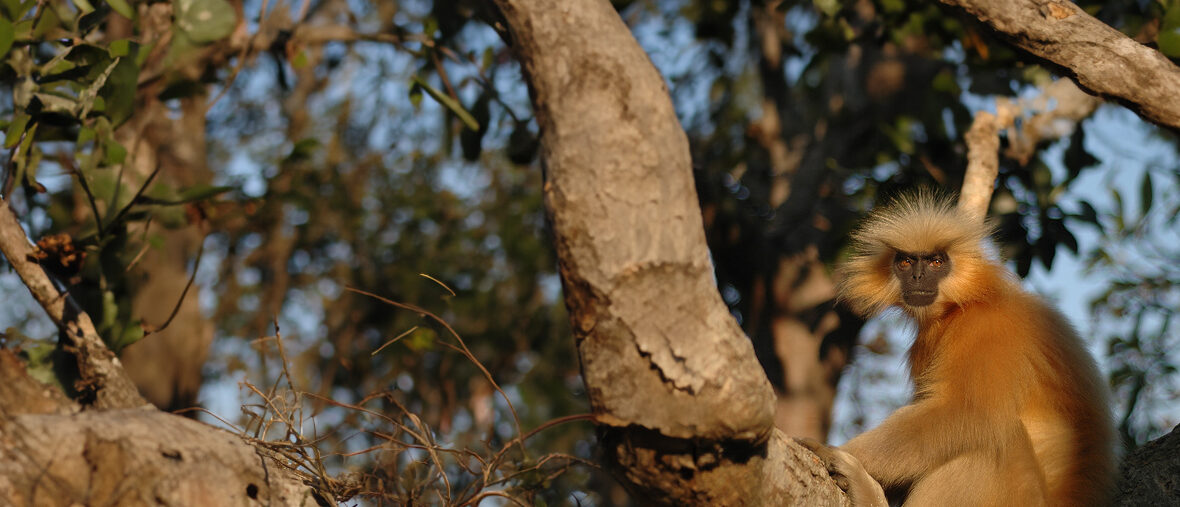
Gee's golden langur

The Gee’s Golden Langur

  • 21 June, 2024
  • Critterman
  • No Comments
  • 248 Views
  • 1 Likes
Daily Critter Facts, Land Mammal Facts, Primate Facts

The Gee’s golden langur, aka golden langur, hails only from Bhutan and India. They prefer moist tropical forest habitats. Due to the threats of habitat loss and destruction at the hands of residential & commercial developments, mining, quarrying, deforestation at the hands of the logging industry, and agriculture; habitat division at the hands of roads and railroads, which also results in vehicle strike – being hit by vehicles; and human intrusion, these primates are listed as Endangered by the IUCN. Their numbers are also decreasing.

First the Stats…

Scientific name: Trachypithecus geei
Weight: Up to 24 lbs.
Length: Up to 37 inches, plus up to a 19.69 inch tail
Lifespan: Up to 15 years

Now on to the Facts!

1.) As of November, 2015 there were only 2,500 wild individuals remaining. There are now likely far less.

2.) These primates were first described by naturalist Edward Pritchard Gee in circa 1950s.

3.) They are arboreal (live in trees) and seldom travel to the ground.

4.) Ripened and unripened fruit, new growth and old growth leaves, buds, flowers, and seeds are all on the menu for these herbivores (eat plant matter).

5.) Troops are comprised of up to 8 individuals, with a ratio of 1 male per several females. However, troops of up to 50 have been encountered.

But wait, there’s more on the Gee’s golden langur!

6.) Like other primates, they are diurnal (active during the day).

7.) A group of primates is called a barrel, cartload, tribe, troop, or wilderness.

Did you know…?
Gee’s golden langurs can jump up to 40 feet from branch to branch, and up to 30 feet to the ground!

8.) Just like all primates, social grooming is practiced and used to strengthen bonds.

9.) Females undergo up to a 6 month gestation (pregnancy) that yields a single infant.

10.) Alloparenting is practiced too. This is where other females in the troop will all participate in rearing the infants.

But wait, there’s still more on the Gee’s golden langur!

11.) Leopards and Asiatic wild dogs both prey on these langurs, when they get the chance.

12.) These primates are notoriously difficult to study in the wild, as they are very fearful of humans, and rightfully so.

Now a Short Gee’s Golden Langur Video!

Be sure to share & comment below! Also, check out the Critter Science YouTube channel. Videos added regularly. Be sure to like and subscribe!

Want to suggest a critter for me to write about? Let me know here.

Some source material acquired from: Wikipedia & IUCN

Photo credit: Amartyabag

BhutanendangeredGee'sGee's golden langurgolden langurIndialangurlangursmonkeyOld World monkeyprimate
Critterman

With over 51 years of critter experience to my credit and hundreds of zoology teaching hours to people around the world, I have amassed not only a continuing thirst for critter knowledge but a desire to teach others all I can about the majesty and wonder of our natural world. Critter Science is a culmination of such knowledge. I have hands on as well as book acquired intel on all kinds of critters. Whether they're on land, sea, or in the air. I will never say that I know everything about all animals. That's impossible, even for a savant. But, that being said, ask me any animal question and I'll answer it. If I don't know the answer, I'll get an answer for you!

The Checkered Keelback Snake
The Beautiful Scarlet Macaw
Related Posts
  • Costa Rican variable harlequin toad
    The Costa Rican Variable Harlequin Toad 24 July, 2026
  • flathead catfish
    The Flathead Catfish 23 July, 2026
  • Australian pelican
    The Australian Pelican 22 July, 2026
  • Daily Critter Facts
  • Guest Articles
  • BYET
  • Teachers
  • Study Guides
  • Contact

Copyright © 2025, Critter Science. All Rights Reserved.