Critter Science
  • Zoology
    • Ecology
      • Animal Conservation
        • CITES: Protecting Wildlife
        • Endangered Animals
        • Ex Situ Explained
        • In Situ Explained
        • Zoological Branches
      • Chromatophores and Survival
      • Ecosystems
        • Animal Habitats
        • The Biomes
        • Coastal Erosion
        • Rainforest Types
      • Evolution. The Facts.
        • Animal Devolution
        • What are Arachnids?
          • Spider Webs
        • Carl Linnaeus
        • Charles Darwin
        • Dame Jane Goodall
        • Evolution of Amphibians
        • Evolution of Birds
        • Genetic Drift in the Animal Kingdom
        • Naturalism
        • Natural Selection
        • What is a Marsupial?
      • Invertebrate Families Explored
      • Predator vs Prey
      • Producers and Consumers
      • Vertebrate Animal Families
    • Sustainability
      • Climate Change
      • Global Warming
      • Pollution
        • Air Pollution
        • Land Pollution
        • Light Pollution
        • Microplastics Pollution
        • Noise Pollution
        • Water Pollution
      • Recycling
        • Recycling Plastics
      • Renewable Energy
    • Animal Behavioral Patterns
      • Avian Communication
      • Elephant Communication
      • Herpetofauna Communication
      • Primate Language: The Debate
      • Types of Animal Dormancy
    • What are Species?
      • Amphibians vs Reptiles
      • Animal Reproduction
      • Claws, Nails, and Talons
      • Fur and Hair
      • Gecko Feet
      • Invasive Species
      • IUCN Statuses
      • Speciation
      • Species Complex
      • The Enigmatic Purr
      • Venom vs Poison
      • What is a Marsupial?
    • About the Critterman
  • Daily Critter Facts
    • Amphibian Facts
      • Frog Facts
      • Newt Facts
      • Salamander Facts
      • Toad Facts
    • Arthropod Facts
      • Arachnid Facts
      • Insect Facts
    • Bird Facts
      • Flightless Bird Facts
      • Predatory Bird Facts
      • Scavenger Bird Facts
      • Wading Bird Facts
    • Cryptozoology
    • Fish Facts
      • Cephalopod Facts
      • Crustacean Facts
      • Jellyfish Facts
      • Reefs
      • Shark and Ray Facts
      • Shellfish Facts
    • Flying Mammal Facts
    • Gastropod Facts
    • Land Mammal Facts
      • Canine Facts
      • Feline Facts
      • Lagomorph Facts
      • Marsupial Facts
      • Mustelid Facts
      • Primate Facts
      • Rodent Facts
      • Ungulate Facts
    • Parasite Facts
    • Reptile Facts
      • Crocodilian Facts
      • Lizard Facts
      • Snake Facts
      • Turtle Facts
    • Sea Mammal Facts
      • Dolphin Facts
      • Porpoise Facts
      • Sea Lion Facts
      • Seal Facts
      • Whale Facts
    • Worm Facts
  • For Teachers
    • Animal Quizzes
      • Amphibian Quiz
      • Bird Quiz
      • Cat Quiz
      • Dog Quiz
      • Dolphin Quiz
      • Insect Quiz
      • Reptile Quiz
    • Animal Word Search
    • Butterfly Life Cycle
      • Butterfly Metamorphosis
      • World’s Largest Butterfly
      • World’s Largest Moth
    • The Cellular Structure of an Animal
    • Coloring Pages
    • Fish and Sharks
    • Frogs vs Toads
    • Insect vs Bug
    • Metamorphosis – A Frog’s Life Cycle
  • Study Guides
    • African Animals
    • Antarctica Animals
    • Asian Animals
    • Australian Animals
    • Central American Animals
    • European Animals
    • North American Animals
    • South American Animals
  • Diseases & Parasites
    • Bsal
    • Canine Distemper Virus (CDV)
    • Chronic Wasting Disease (CWD)
    • The Deadly Chytrid Fungus
    • All About Parasites
    • The Rabies Virus
    • Toxoplasmosis
    • White-Nose Syndrome
  • Contact
    • General Contact
    • Guest Article Submission
      • Guest Articles
        • Guest Articles – 2024
    • What Critter is This?
    • Animal Welfare Organizations
    • Privacy Policy
Subscribe
pangolin

The Endangered Pangolin

  • 26 December, 2018
  • Critterman
  • No Comments
  • 1134 Views
  • 1 Likes
Daily Critter Facts, Land Mammal Facts

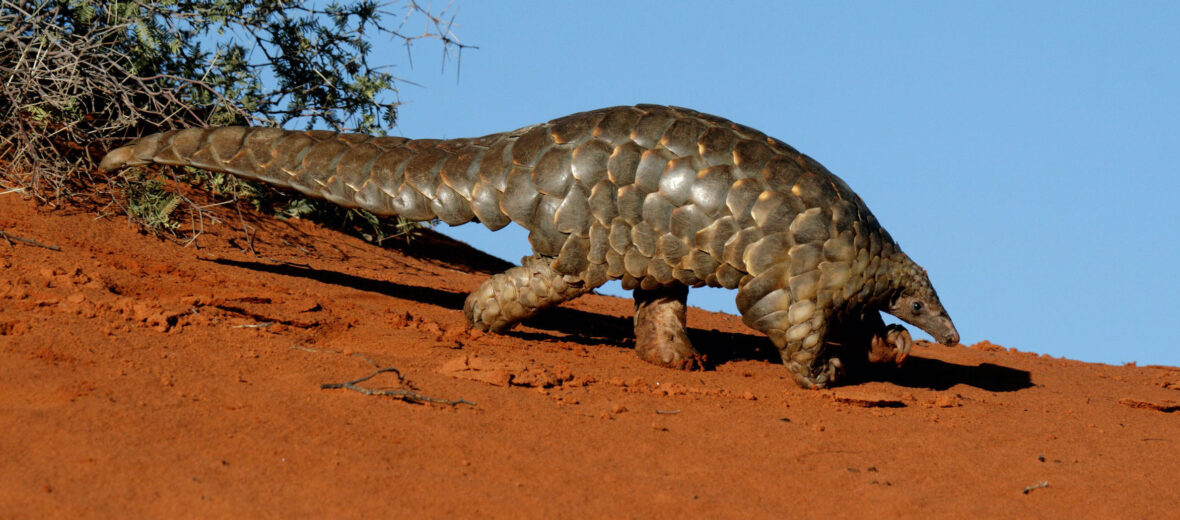
The pangolin, aka scaly anteater, is the only mammal to be covered (head to toe) in keratin scales (the same material in human hair and fingernails). Their scales make up about 20% of a Pangolin’s weight! Pangolins are all endangered to one degree or another and conservation efforts are struggling to fight off poaching of these amazing animals in order to save the species. The IUCN lists these wonderful creatures anywhere from Vulnerable, to Endangered, to Critically Endangered; based on the species.

First the Stats…

Scientific names: Pholidota
Weight: Up to 73 lbs.
Length: Up to 5 feet
Lifespan: Up to 20 years

Now on to the Facts!

1.) They are insectivorous (feed on insects).

2.) Pangolins have large, curved claws that they use for digging out ant and termite mounds They also use them for pulling bark off trees and logs to find larvae.

3.) There are a total of 8 species and 4 live in Africa.

4.) The pangolin has a special glands near their anus that secretes a pungent, odorous fluid that is used for marking its territory. As is the case with numerous other animals, they also scent mark with feces and urine.

5.) When pangolins are threatened, they curl up into a tight ball to protect their undersides.

But wait, there’s more on the pangolin!

6.) With their sharp edges, the pangolin can slice predators with their scales!

7.) They don’t have teeth and are not able to chew food. Instead, they have long sticky tongues that they use to catch insects.

Did you know…?
Their tongue is up to 16 inches long!

8.) These amazing critters can close their ears and nostrils in order to keep insects out while they are feeding.

9.) The pangolin will eat gravel and small pebbles to assist in digestion of their food.

10.) It is estimated that a single pangolin eats up to 70 million insects per year!

But wait, there’s still more on the pangolin!

11.) They are primarily nocturnal (active at night).

Did you know…?
Some pangolins are actually bipedal. They walk on their hind legs with the front limbs, and their tail is held off the ground and used as a counter-balance.

12.) The name pangolin comes from the Malay word ‘penggulung,’ which means “the roller”.

13.) Over the past 10 years, over 1 million pangolins have been illegally taken from the wild to support demand in Vietnam & China. Their meat is considered a delicacy, and their scales are used in traditional Chinese medicine. They are believed to treat a host of ailments from arthritis, to asthma, to rheumatism. Scientific evidence shows that this is completely false. Their scales are just keratin, like our fingernails. They have no medicinal value at all.

14.) Abandoned porcupine, aardvark, and warthog burrows are used to shelter. Sometimes hollowed out termite mounds are also used.

15.) These critters are the only known scaled mammal.

Now a Short Pangolin Video!

Also, check out the Critter Science YouTube channel. Videos added frequently!

Want to suggest a critter for me to write about? Let me know here.

Learn more about all kinds of cool critters, right here!
Africaanteaterendangeredinsectivoreinsectsnocturnalpangolinscalescalestongue
Critterman

With over 50 years of critter experience to my credit and hundreds of zoology teaching hours to people around the world, I have amassed not only a continuing thirst for critter knowledge but a desire to teach others all I can about the majesty and wonder of our natural world. Critter Science is a culmination of such knowledge. I have hands on as well as book acquired intel on all kinds of critters. Whether they're on land, sea, or in the air. I will never say that I know everything about all animals. That's impossible, even for a savant. But, that being said, ask me any animal question and I'll answer it. If I don't know the answer, I'll get an answer for you!

Ho, Ho, Ho, It’s a Reindeer!
The Lumbering Eland
Related Posts
  • red diamond rattlesnake
    The Red Diamond Rattlesnake 2 January, 2026
  • forest raven
    The Forest Raven 1 January, 2026
  • Cape genet
    The Cape Genet 31 December, 2025
  • Daily Critter Facts
  • Guest Articles
  • BYET
  • Teachers
  • Study Guides
  • Contact

Copyright © 2025, Critter Science. All Rights Reserved.