
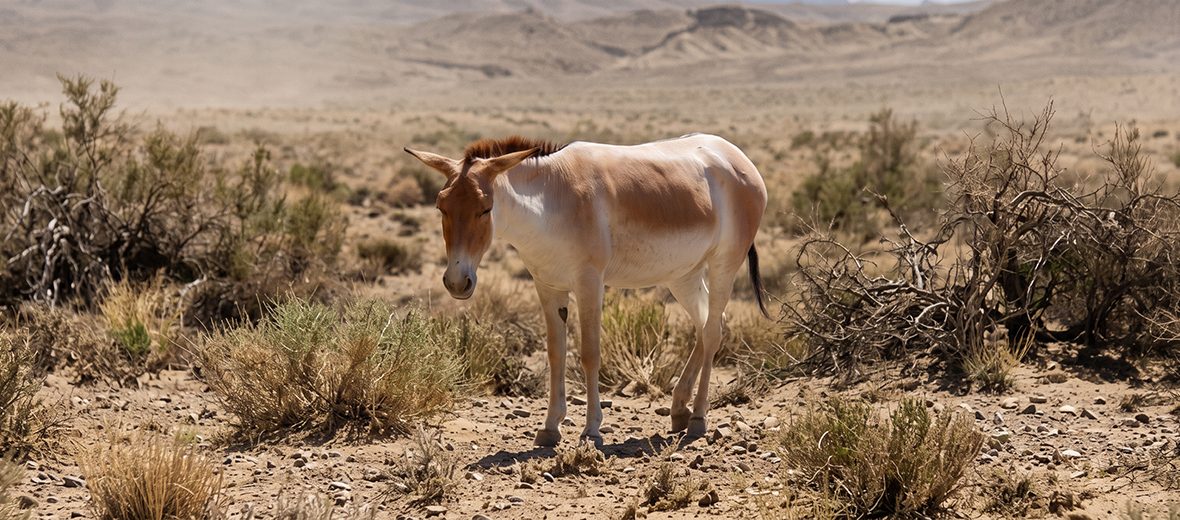
The onager, aka hemione or Asiatic wild ass, is an equine species that hails from Asia, Africa, and the Middle East. They, at 1 time, had a wider range from southwest and central to northern Asia including the Levant region, Arabian Peninsula, Afghanistan and Siberia. These creatures face the threats of habitat loss and destruction at the hands of residential and commercial developments, farming, ranching, mining, quarrying, oil & gas drilling, and logging. Roads and railroads divide their territories and can result in vehicle strike (being hit by vehicles). They are also hunted and trapped for food. Recreational activities, war, and civil unrest also threaten their way of life. Dams and water management restricts access to drinkable water. Due to climate change, droughts and temperature extremes can make life unbearable. These equines are listed as Near Threatened by the IUCN. Their population trend is listed as stable. Their green status assessment is listed as Largely Depleted.
First the Stats…
Scientific name: Equus hemionus
Weight: Up to 570 lbs.
Length: Up to 8.2 feet
Height: Up to 4.9 feet
Lifespan: Up to 40 years
Now on to the Facts!
1.) They were first described and given their binomial name by German zoologist Peter Simon Pallas in 1775.
2.) Being among the fastest ungulates, they can run at speeds of up to 43 mph.
3.) Their preferred habitats consist of flat or hilly arid and semi-arid environments. This includes deserts, semi-deserts, arid grasslands, steppes, and mountain steppes.
4.) The first part of their scientific name hails from the Latin word equus which translates to horse and the 2nd part is from the Ancient Greek ἡμίονος, hēmíonos, from ἡμι-, hēmi-, ‘half’, and ὄνος, ónos, ‘donkey’; therefore, ‘half-donkey’ or mule.
5.) The name onager hails from the ancient Greek ὄναγρος, again from ὄνος, ónos, ‘donkey’, and ἄγριος, ágrios, ‘wild’.
But wait, there’s more on the onager!
6.) They are also known as the Persian onager.
7.) These critters have been around since the Middle Pleistocene (which is approximately 800,000 years ago).
Did you know…?
There are only an estimated 65,000 remaining, to date.
8.) As is the case with the majority of equids, onagers are social animals. Stallions are either solitary or live in groups of up to 3. The males have been documented maintaining harems of females, but in other studies, the dominant stallions defend territories in order to attract females.
9.) Mares undergo up to an 11 month gestation (pregnancy) that yields a single foal. The birthing process last a mere 10 minutes.
10.) Grasses, herbs, leaves, fruits, and saline vegetation are primarily grazed upon. However, in drier habitats, they browse on shrubs, trees, seed pods, and succulents.
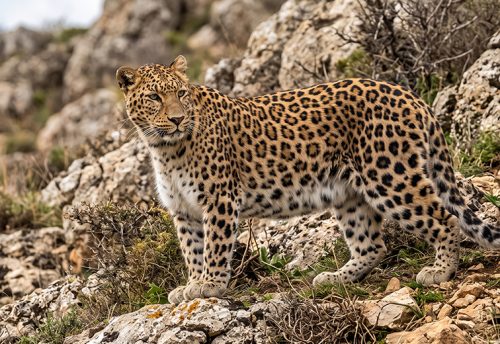
11.) They are preyed on by Persian leopards and striped hyenas.
Now a Short Onager Video!
Be sure to share & comment below! Also, check out the Critter Science YouTube channel. Videos added regularly. Be sure to like and subscribe!

Want to suggest a critter for me to write about? Let me know here.
Some source material acquired from: Wikipedia & IUCN

Leave a Reply