Critter Science
  • Zoology
    • Ecology
      • Animal Conservation
        • CITES: Protecting Wildlife
        • Dame Jane Goodall
        • Endangered Animals
        • Ex Situ Explained
        • In Situ Explained
        • IUCN Statuses
        • Steve Irwin
        • Zoological Branches
      • Animal Immortality and Regeneration
      • Chromatophores and Survival
      • Ecosystems
        • Animal Habitats
        • The Biomes
        • Coastal Erosion
        • Desert Biomes
        • Deserts and Wildlife
        • Ocean Habitats: Layers and Life
        • Rainforest Types
      • Evolution. The Facts.
        • Animal Devolution
        • Animal Mimicry
        • Convergent Evolution
        • Carl Linnaeus
        • Charles Darwin
        • Evolution of Amphibians
        • Evolution of Birds
        • Genetic Drift in the Animal Kingdom
        • Naturalism
        • Natural Selection
      • Genetic Pollution
        • Genetic Bottlenecks in Animal Populations
      • Invertebrate Families Explored
        • Arthropod Diversity and Adaptations
        • The Wonder and Warfare of Coral Reefs
        • What are Arachnids?
          • Spider Webs
      • Predator vs Prey
      • Producers and Consumers
      • Venom vs Poison
      • Vertebrate Families Explored
        • Amphibians: Unseen Guardians
        • Bone and Cartilage
        • Snakes vs Legless Lizards
        • The Triumph of the Ratites
        • What is a Marsupial?
      • The Wild Apothecary
    • Sustainability
      • Climate Change
      • Earth Day: Past, Present, Future
      • Global Warming
      • Pollution
        • Air Pollution
        • Chemical Pollution
        • Land Pollution
        • Light Pollution
        • Microplastics Pollution
        • Noise Pollution
        • Water Pollution
      • Recycling
        • Recycling Plastics
      • Renewable Energy
    • Animal Behavioral Patterns
      • Aposematic Coloration
      • Avian Communication
      • Animal Thermoregulation
      • Cetacean Communication
      • Cold-Adapted Hypermetabolism
      • Elephant Communication
      • Herpetofauna Communication
      • Primate Language: The Debate
      • The Framework of Ethology
      • The Hidden Sensory Realm
      • Types of Animal Dormancy
    • What are Species?
      • Animal Reproduction
      • Introduced Species
      • Invasive Species
      • Keystone Species
      • Lazarus Species: Rediscovered Life
      • Speciation
      • Species Complex
      • Understanding Animal Subspecies
    • About the Critterman
  • Daily Critter Facts
    • Amphibian Facts
      • Frog Facts
      • Newt Facts
      • Salamander Facts
      • Toad Facts
    • Arthropod Facts
      • Arachnid Facts
      • Insect Facts
    • Bird Facts
      • Flightless Bird Facts
      • Predatory Bird Facts
      • Scavenger Bird Facts
      • Wading Bird Facts
    • Cryptozoology
    • Fish Facts
      • Cephalopod Facts
      • Crustacean Facts
      • Jellyfish Facts
      • Reefs
      • Shark and Ray Facts
      • Shellfish Facts
    • Flying Mammal Facts
    • Gastropod Facts
    • Land Mammal Facts
      • Canine Facts
      • Feline Facts
      • Lagomorph Facts
      • Marsupial Facts
      • Mustelid Facts
      • Primate Facts
      • Rodent Facts
      • Ungulate Facts
    • Parasite Facts
    • Reptile Facts
      • Crocodilian Facts
      • Lizard Facts
      • Snake Facts
      • Turtle Facts
    • Sea Mammal Facts
      • Dolphin Facts
      • Porpoise Facts
      • Sea Lion Facts
      • Seal Facts
      • Whale Facts
    • Worm Facts
  • For Teachers
    • Animal Quizzes
      • Amphibian Quiz
      • Bird Quiz
      • Cat Quiz
      • Dog Quiz
      • Dolphin Quiz
      • Insect Quiz
      • Reptile Quiz
    • Amphibians vs Reptiles
    • Animal Skin and Scales
      • Claws, Nails, and Talons
      • Feather Anatomy, Function, & Types
      • Fur and Hair
    • Gecko Feet
    • The Enigmatic Purr
    • Animal Word Search
    • Butterfly Metamorphosis
      • World’s Largest Butterfly
      • World’s Largest Moth
    • The Cellular Structure of an Animal
    • Coloring Pages
    • Fish and Sharks
    • Frogs vs Toads
    • Insect vs Bug
    • Metamorphosis – A Frog’s Life Cycle
  • Study Guides
    • African Animals
    • Antarctica Animals
    • Asian Animals
    • Australian Animals
    • Central American Animals
    • European Animals
    • North American Animals
    • South American Animals
  • Diseases & Parasites
    • Bsal
    • Canine Distemper Virus (CDV)
    • Chronic Wasting Disease (CWD)
    • The Deadly Chytrid Fungus
    • All About Parasites
    • The Rabies Virus
    • Toxoplasmosis
    • White-Nose Syndrome
  • Contact
    • General Contact
    • Guest Article Submission
      • Guest Articles
        • Guest Articles – 2024
    • What Critter is This?
    • Animal Welfare Organizations
    • Privacy Policy
BUY MY BOOK
Baikal seal

The Baikal Seal

  • 17 August, 2023
  • Critterman
  • No Comments
  • 676 Views
  • 7 Likes
Daily Critter Facts, Sea Mammal Facts, Seal Facts

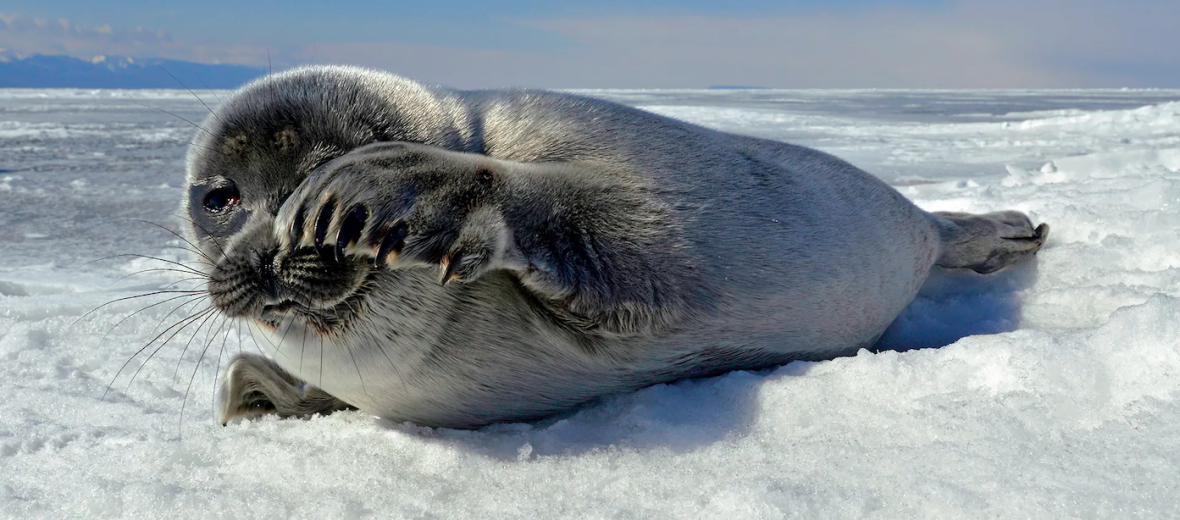
The Baikal seal, aka nerpa or Lake Baikal seal, hails only from Lake Baikal in Russia (the world’s deepest lake) and some nearby rivers that flow into and out of said lake. These seals are only found in freshwater and are the only known solely freshwater seal alive today. Even though they suffer from overfishing, pollution, invasive species (and with them disease and competition for food), and climate change, these cool critters are still listed as Least Concern by the IUCN. They number an estimated 54,000 wild individuals, and their population is stable.

First the Stats…

Scientific name: Pusa sibirica
Weight: Up to 200 lbs.
Length: Up to 4.2 feet
Lifespan: Up to 56 years

Now on to the Facts!

1.) During the winter months, they utilize breathing holes, since the ice can be over 35 inches thick.

2.) Although mostly solitary, these seals will gather into pods of up to 500 individuals during spring and summer.

3.) These seals tend towards being crepuscular (active during dawn and twilight).

4.) Baikals can dive upwards of 1,312+ feet!

5.) They consume up to 8+ lbs. of food per day. That equates to nearly a ton of food per year.

But wait, there’s more on the Baikal seal!

6.) Baikal seals prey on a variety of non-valued fish species.

7.) In May, they move to the northern end of the lake, where they will then molt.

Did you know…?
Baikal seals can swim at speeds of up to 15.53 mph.

8.) A group of seals is called a bob, colony, harem, herd, pod, or rookery.

9.) During the summer months, they move to the southeast corner of the lake to haul-out (leave the water for a period of time).

10.) As seals tend to be, these seals are polygynous (1 male mates with multiple females).

But wait, there’s still more on the Baikal seal!

11.) After mating, the female undergoes a brief delayed implantation, aka embryonic diapause (delay in pregnancy).

12.) Females undergo up to a 9 month gestation (pregnancy) that yields up to 2 pups.

Did you know…?
The Baikal seal is able to hold their breath for upwards of 70 minutes, due to the extra half gallon of blood they possess.

13.) Pups are born right on the lake ice.

14.) These seals, primarily the females, tend to be much more graceful swimmers than other seal species.

15.) They have been repeatedly blamed for over-consuming the fish called “omul.” But they don’t often prey on this species of fish, rather preferring the species called “golomyanka.” Further more, by eating “golomyanka,” they are actually helping to limit the competition for food which, in turn, helps increase the population of “omuls.”

Now a Short Baikal Seal Video!

Be sure to share & comment below! Also, check out the Critter Science YouTube channel. Videos added regularly!

Want to suggest a critter for me to write about? Let me know here.

BaikalBaikal sealfreshwaterfreshwater seallakepinnipedpredatorriverRussiasealseals
Critterman

With over 51 years of critter experience to my credit and hundreds of zoology teaching hours to people around the world, I have amassed not only a continuing thirst for critter knowledge but a desire to teach others all I can about the majesty and wonder of our natural world. Critter Science is a culmination of such knowledge. I have hands on as well as book acquired intel on all kinds of critters. Whether they're on land, sea, or in the air. I will never say that I know everything about all animals. That's impossible, even for a savant. But, that being said, ask me any animal question and I'll answer it. If I don't know the answer, I'll get an answer for you!

The Red-Shanked Douc
The Wild Onager
Related Posts
  • emerald ash borer
    The Emerald Ash Borer 6 July, 2026
  • water-holding frog
    The Water-Holding Frog 3 July, 2026
  • sulfur-crested cockatoo
    The Sulfur-Crested Cockatoo 2 July, 2026

Leave a Reply Cancel Reply

Your email address will not be published. Required fields are marked *

  • Daily Critter Facts
  • Guest Articles
  • BYET
  • Teachers
  • Study Guides
  • Contact

Copyright © 2025, Critter Science. All Rights Reserved.